
October 2022
Cork’s western coastline makes up the southern end of the Wild Atlantic Way. It begins in Kinsale and stretches West round to Kerry, taking in dramatic landscapes, rich foodie towns like Baltimore and Schull; Islands like Cape Clear and Dursey Island and national treasures like the Mizen Head and Skellig Michael.
This post is not about that. This is about the other part of the Cork coastline -From Kinsale heading East. We will also dip into history along the way and point out some famous explorers from these very shores.
Kinsale

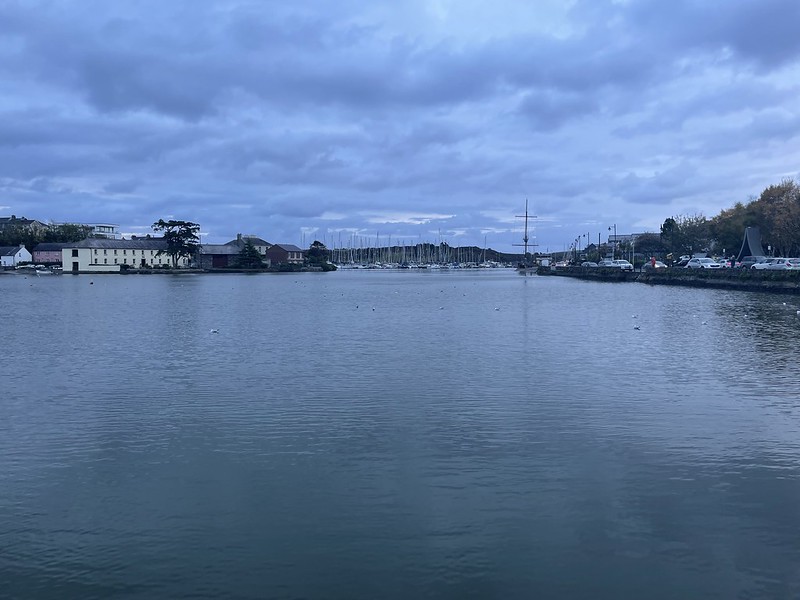
We start with the historic fishing town of Kinsale. Located about 35 mins drive south of Cork City it is nestled in the mouth of the Bandon River, protected by a bend in that river from the Irish Sea.
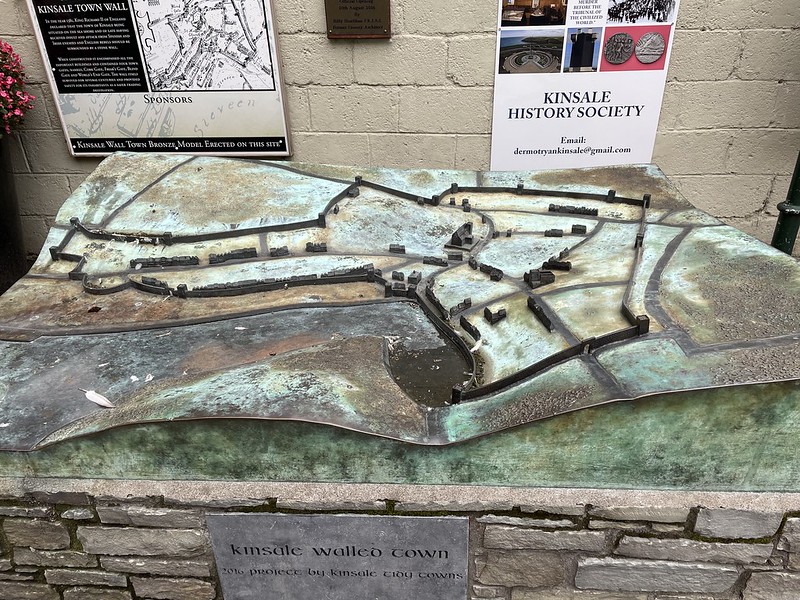
You can check out our previous post on Kinsale to discover the history of the town, it’s Spanish Connection and neighbouring Charles Fort and just how important a location this was for the British Navy.
Today Kinsale is a brightly coloured collection of cobblestone streets, full to the brim with restaurants, bars, fish and chip shops and all manner of galleries and stores.
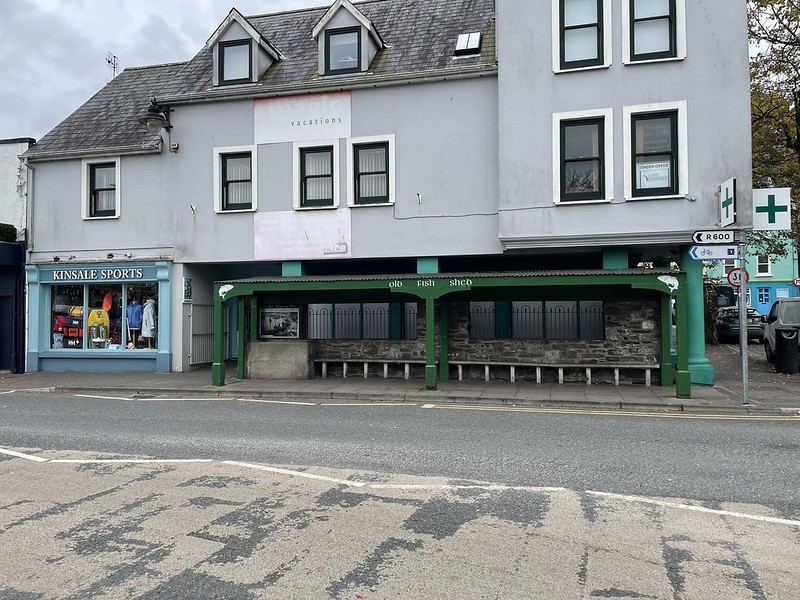




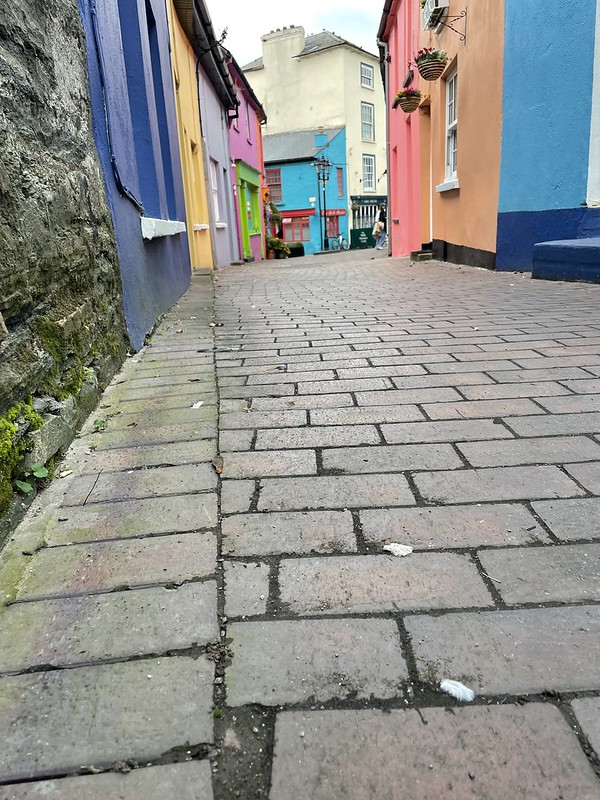
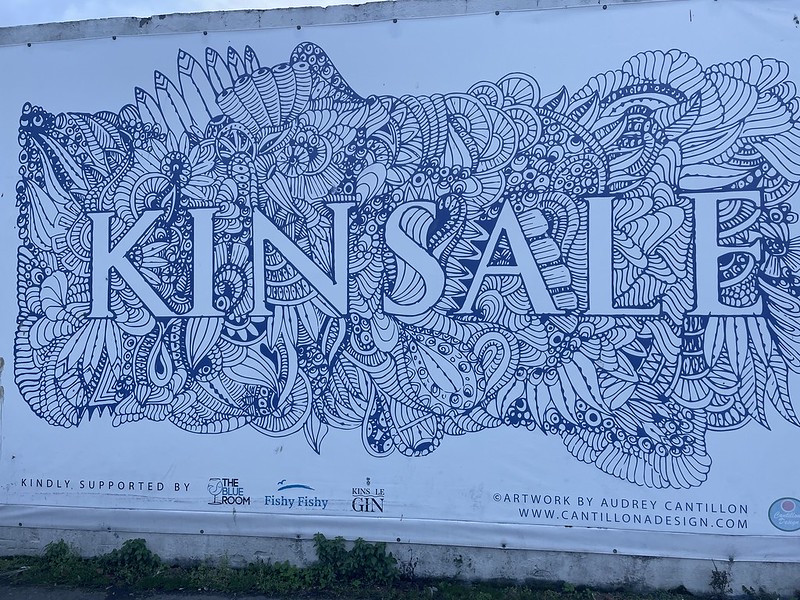
There is plenty for small ones to do and see, with a playground on Pier Road and a great book shop – Bookstór on Newman’s Mall. Dino’s Fish and Chips also has some good grub too.
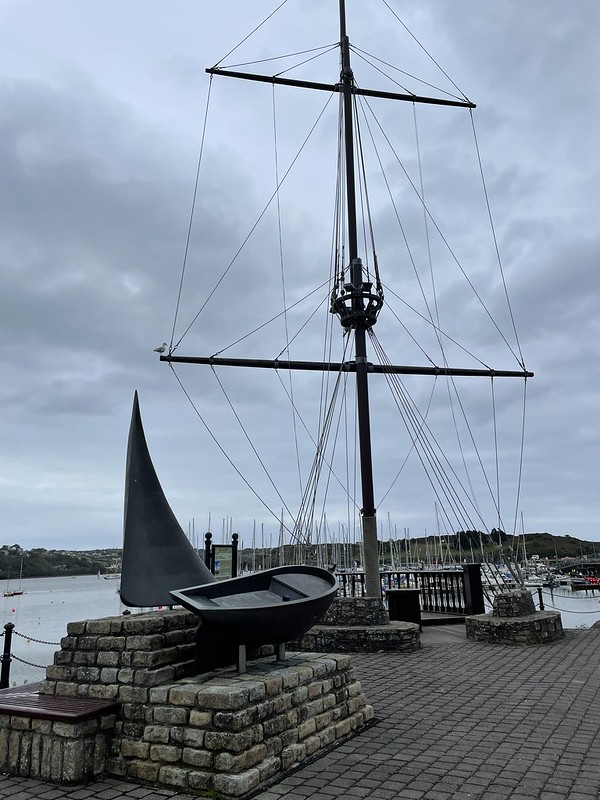
It is here that we also discover our first notable Cork explorers – brothers Timothy and Mortimer McCarthy. A memorial statue of the pair is located down by the Yacht Club on Pier Road.

After joining the Royal Navy, at the age of 12, and serving in the Boer War, Mortimer moved to New Zealand. Then in 1910 he joined the British Antarctic Expedition under Captain Robert Scott and made three voyages to Antarctica with him, including the failed 1912-1913 Terra Nova Expedition which attempted to reach the South Pole. Later he switched poles are explored the Arctic with the Northern Exploration Company in Norway. Mount McCarthy in Antarctica is named after him.
His younger brother, Tim, followed him in his chosen profession and was chosen as part of the Imperial Trans-Antarctic Expedition in 1914-1916. Here he joined Ernest Shackleton and Kerry explorer Tom Crean. The expedition failed in its mission but bore a great tale of survival and endurance that lives on today. McCarthy Island just off King Haakon Bay is named in his honour.
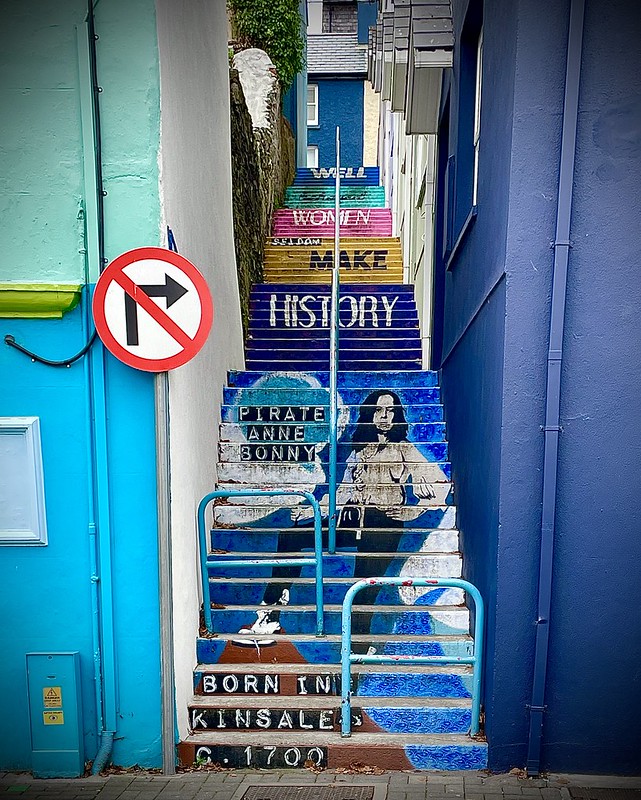
We also encounter another voyager of the seas – Pirate Queen Anne Bonney. She was born at the Old Head of Kinsale (to the south of the town) in 1698. She rose to infamy in the Caribbean as alongside her husband Captain Jack Rackham, capturing a number of ships and stealing their treasures. There is a fantastic mural of her on a set of steps. You can find this on the Stoney Steps just off Main Street.
Cobh
These days its known as Cobh, but for 170 years it was known as Queenstown. During that time it was an important cog in the machinery of Trans-Atlantic shipping – whether it was emigration or pleasure cruising between the old world and the new. It’s rise came about during the Napoleonic War as the Royal Navy were able to stash a great portion of their fleet in it’s deep harbour as well as developing a naval base on the nearby Haulbowline Island. They even went so far as to appoint an Admiral to oversee things there and the town rapidly grew in response.
Of the 6 million people who emigrated to North America in the century between 1850 and 1950 around 2.5 million of them left via the docks of Cobh. Another 40,000 Irish people were sent to Australia as ‘criminals’ by the English.
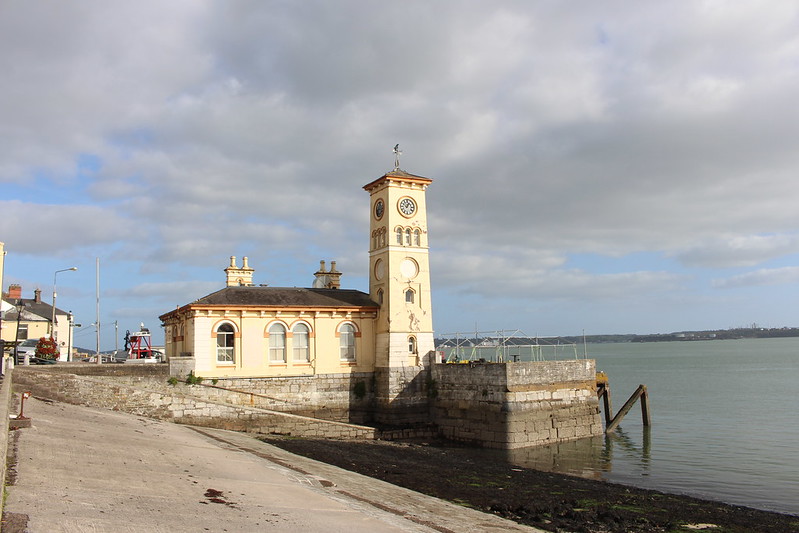
We parked next to the Cruise Terminal on the outskirts of town, it’s Ireland’s only dedicated cruise terminal, before walking along the waters edge along the Five Foot Way path. The first stop is a red bricked building that used to be part of the Cobh Railway Station. This is the Heritage Centre – the current custodian of the Queenstown Story.

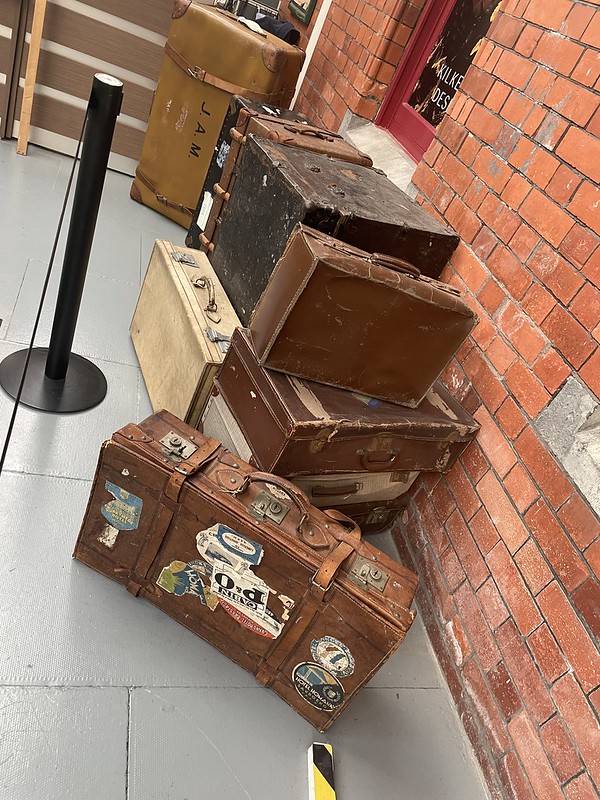


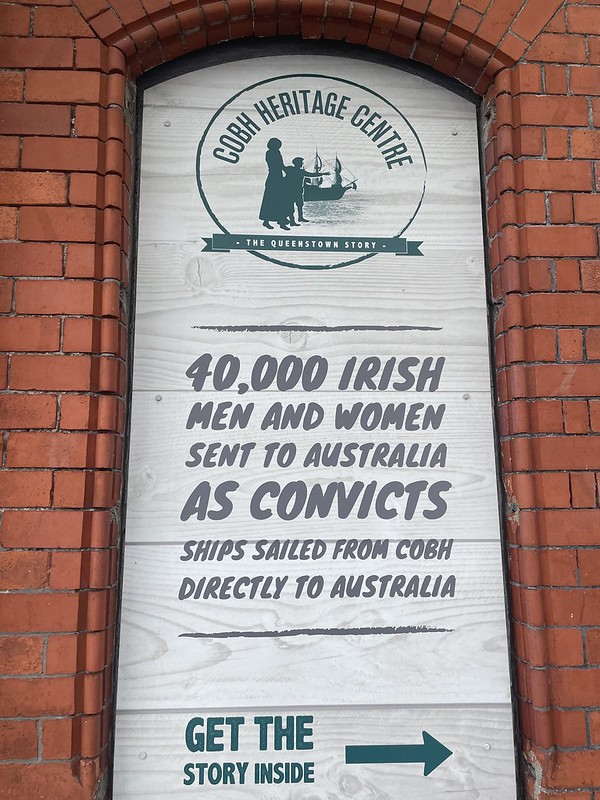


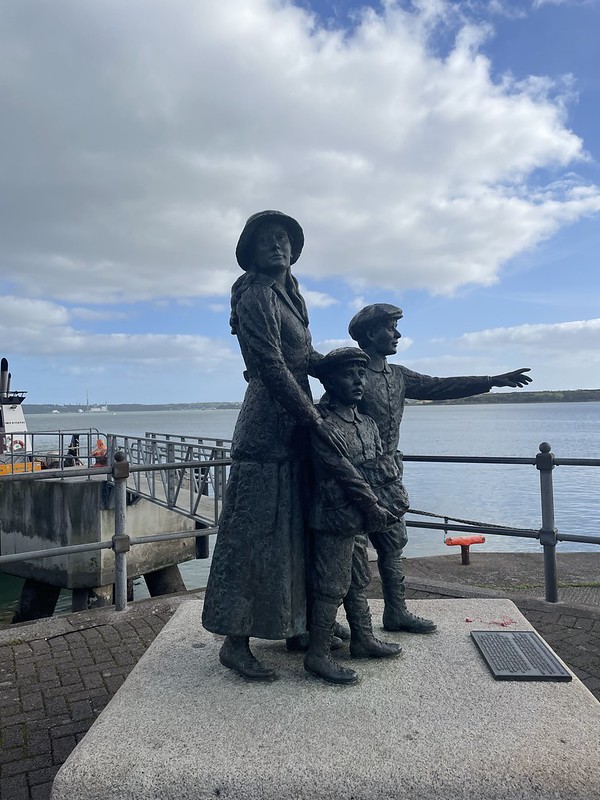
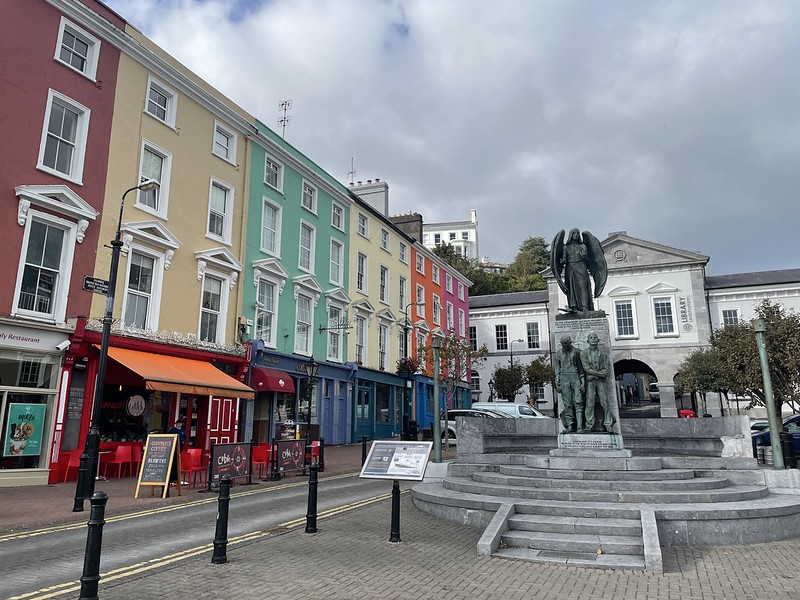
Outside the front entrance is a statue of three children. Annie Moore and her brothers were the first immigrants to the United States to pass through Ellis Island when it opened for business in 1892 after arriving on steamship Nevada. A sister statue, by the same sculptor Jeanne Rynhart, is located over on Ellis Island in New York Harbour. Rynhart is famous for also creating the Molly Malone statue in Dublin. Across the road is the Scots Church – a presbyterian chapel that has since the 1970s housed the Cobh Museum and its roll-call of everyone who was deported from the quay right across the road.
On the 11th April 1912, the an ocean liner belonging to the White Star Line entered the port on it’s final stop before its planned arrival in New York city. John Coffey, a 23 year old stoker and Cobh local hid himself among the mailbags and made it ashore undetected.
The boat he managed to smuggle himself off of – the RMS Titanic on its maiden voyage. The rest is history. Only 44 of the 123 passengers who boarded at Queenstown survived the sinking.
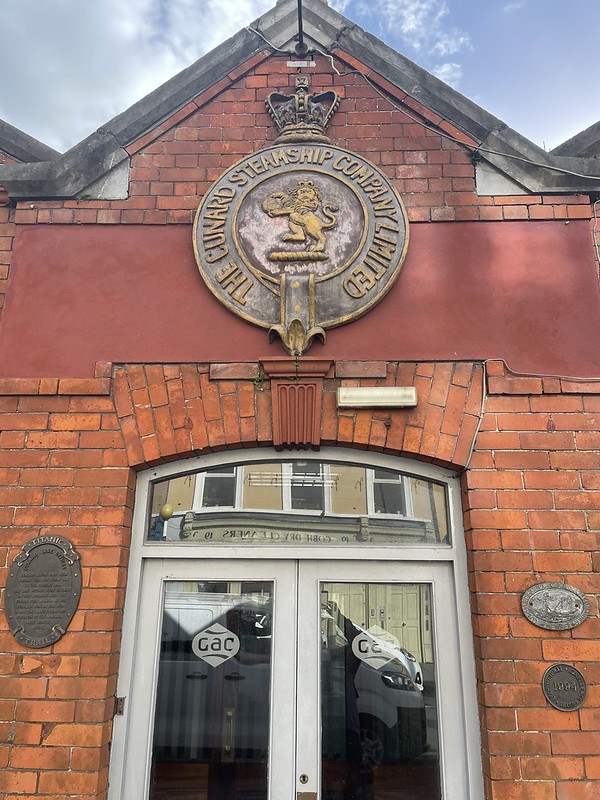
As we walked around the town there were little nods and memorials to both the boat and the White Star Lines company (which became part of the Cunard Line in the 1930s). There are also memorials to another Cunard ship – the RMS Lusitania. In 1915 it was sunk by a German U-Boat U-20 off the Old Head of Kinsale as it was travelling from the United States to Liverpool. The survivors and bodies of the dead were all brought ashore at Queenstown and 100 of them are buried in the Old Church Cemetery in town.
It’s sinking hardened anti-German views in America and helped lead the United States to enter WWI on the side of the allies in 1917. A squadron of destroyers sailed across the Atlantic to take up station in Queenstown shortly afterwards to help protect the convoys in the Atlantic.


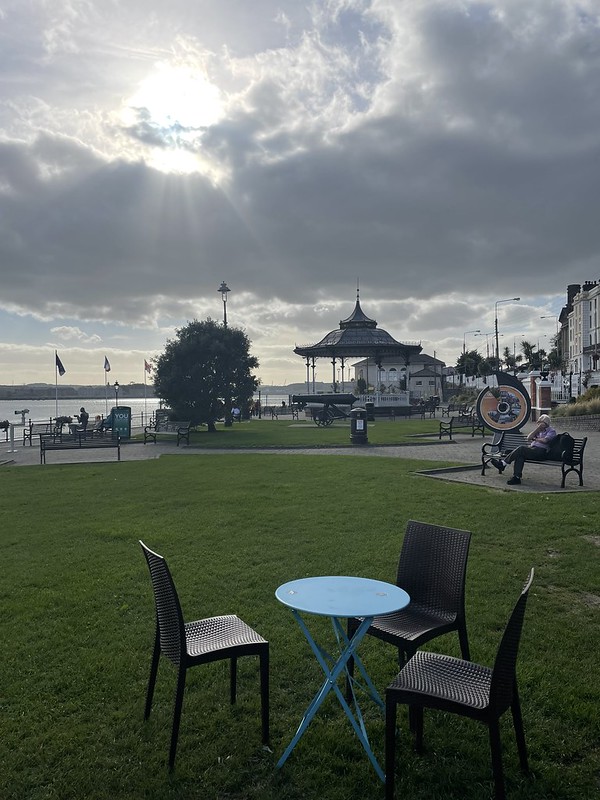
It was a hot day so we stopped in the park to grab an ice-cream from a kiosk before allowing Cillian to spend some time in the playground. This was Kennedy Park – named after the former U.S. President John F. Kennedy. It has a great bandstand in the centre as well and plenty of benches to sit on and relax. You can easily find it as it’s across the road from the Commodore Hotel. Formerly called the Queen’s Hotel it was used to house survivors from the sinking of the Lusitania and was named after Queen Victoria who visited Queenstown in 1854 coming ashore a few yards from where the hotel stands.




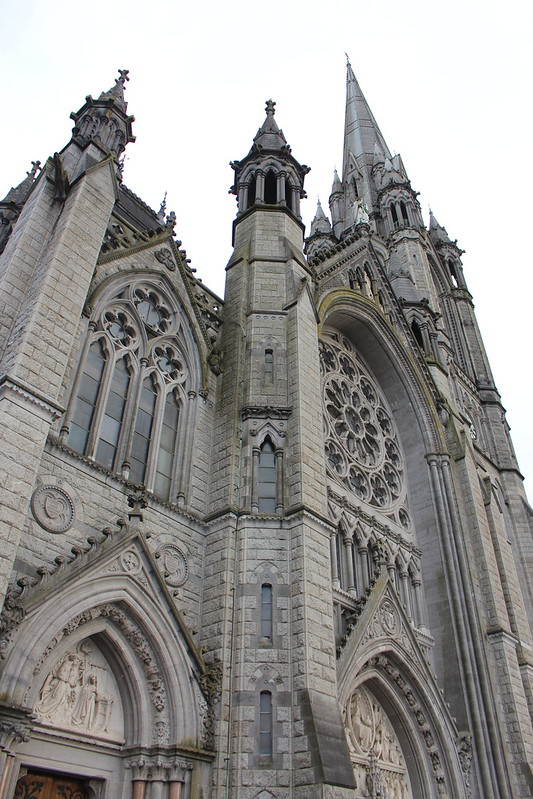
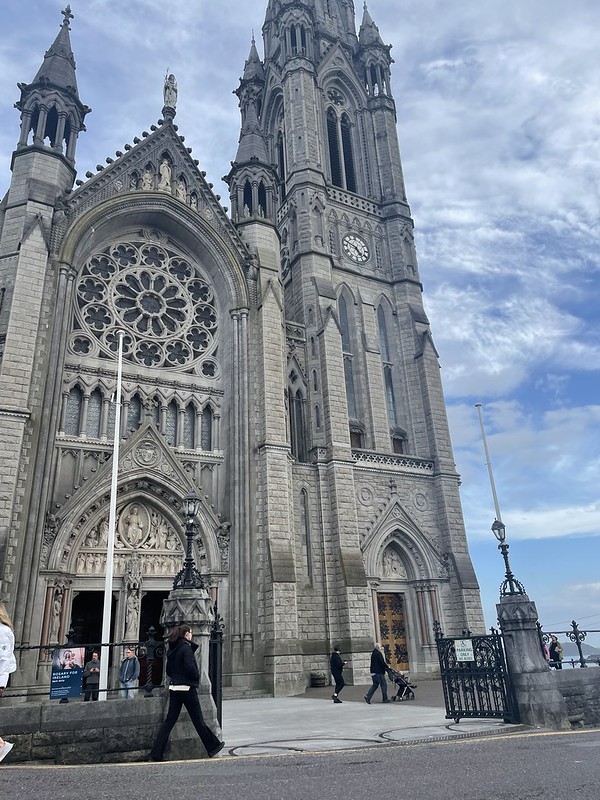
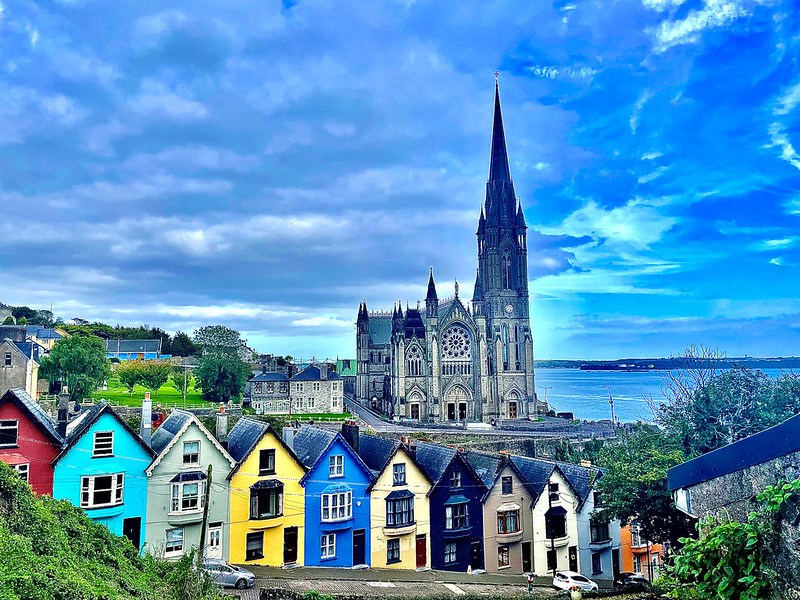
Standing tall above the town is St Colman’s Cathedral, the tallest church in Ireland. Completed in 1919 after 50 years of construction. The architects was Edward Welby Pugin, the father of Augustus Pugin who not only designed the Palace of Westminster (the original burned down in 1834) but a number of buildings in Tasmania and the ‘Midleton Arms’ building (55 Main Street Midleton) – where John’s family used to live as publicans.
It’s quite elaborate as its modelled on French Gothic Revival Style (similar to that of the Notre Dame Cathedral). The materials come from all over with the blue granite coming from Dalkey while the limestone dressing hails from Mallow. The sandstone used in the foundations is from Limerick while the roof is slate from Belgium.

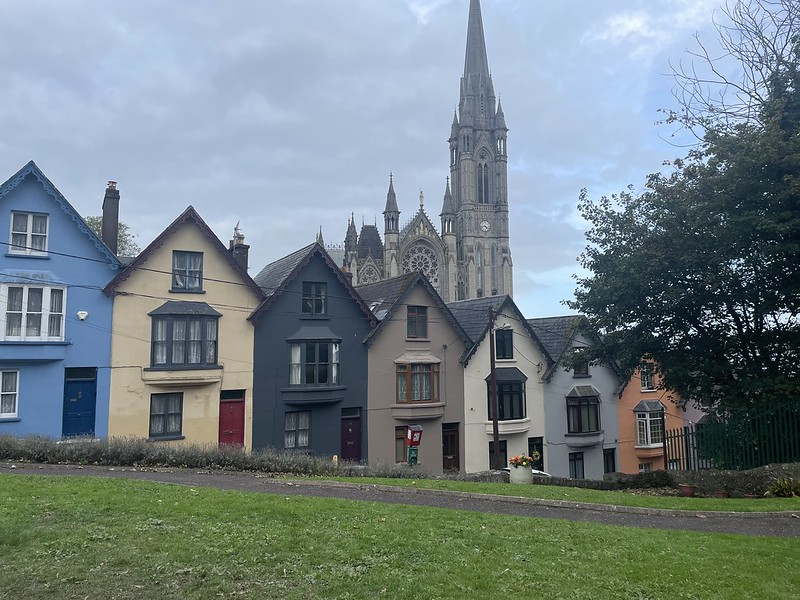
It is so big that to capture it all you have to go back a few streets. The best place to capture it is on Spy Hill Road. There is stone wall but you can easily position a camera over it. It allows you to take this photo. But be careful – there is a steep drop down the other side!
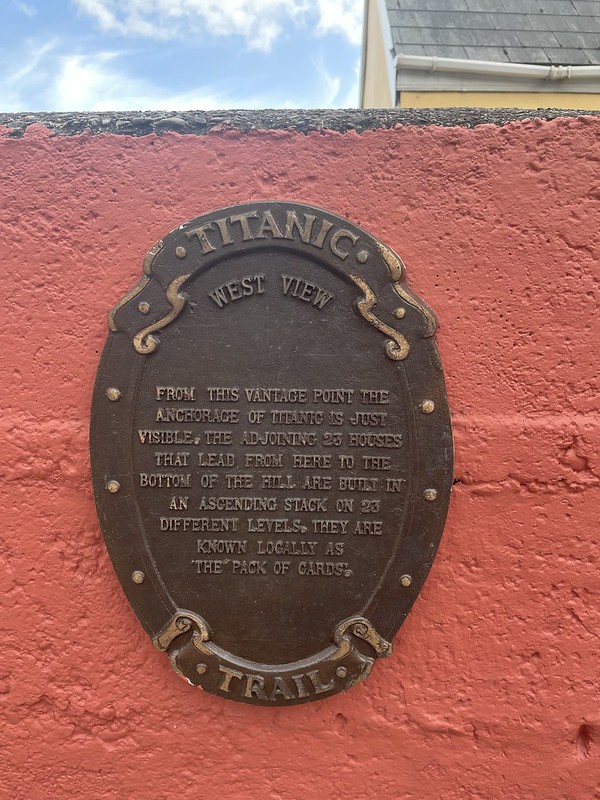
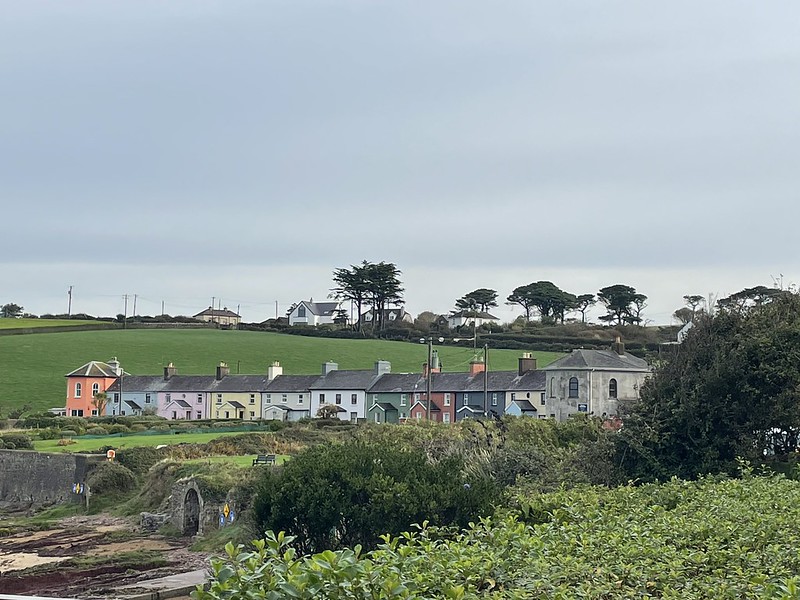
The row of colourful houses in the foreground are called the Deck of Cards Houses.

Another member of that Terra Nova Antarctic expedition with Captain Scott was Robert Forde. Originally from Bandon he joined the Royal Navy before retiring to Cobh after World War I. He suffered severe frostbite on part of that expedition and this is what saved him from not being on the final fatal attempt at the South Pole with Scott. Mount Forde is named after him and there is a small memorial in Cobh for him.
Ballinacurra
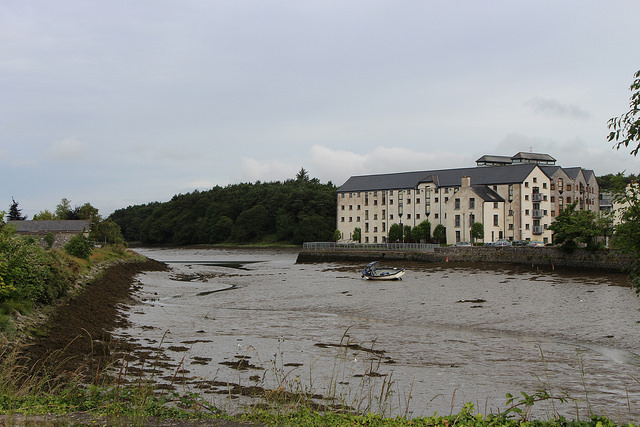
On the east side of the harbour is the village of Ballinacurra. In its heyday (and up to the 1960s) it was an bustling shipping port, full of schooners and malt-filled barges headed up to the Guinness brewery up in Dublin. The main keeping tally of the comings and goings was the Port of Cork harbour master Jacko Creenan. He was also the proprietor of a local pub – The Brooklands Bar – or ‘Jacko’s to the locals. The Brooklands was the name of the family schooner and was the last working ship of its type anywhere in the British Isles all the way up to World War II.
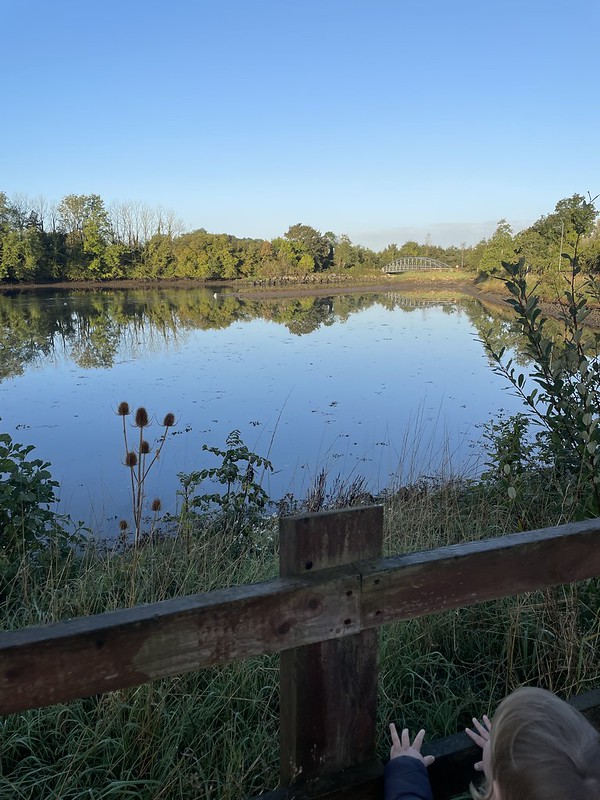
Ultimately the high cost of dredging the Owenacurra River led to the port’s closure in 1962. These days it has been re-generated with houses and apartments along the embankment and a walking trail has been created. It even has a kiosk where you can buy a cup of tea (or coffee). The trail takes you from the village all the way around to the top of Midleton or to the Ballyannan Woods which overlook the estuary.



It is here that we meet our next explorer – Ships Master and Antarctic Explorer – Edward Bransfield. At age 18 he was press-ganged by the Royal Navy, taken from his father’s fishing boat in 1803 at the outset of the Napoleonic Wars. His first bunkmate was a twelve year old boy named William Edward Parry who would also go on to have a successful exploration career. In 1817 he was posted to the Royal Navy’s new Pacific squadron based out of Chile. In 1819 he was sent to explore Antarctica and took was the first person to land on King George Island in the Southern Shetland, claiming it for the King. He was the second person to sight Antarctica after Russian Fabian Gottlieb von Bellingshausen who sighted it two days prior.
There is a stone memorial, unveiled on the 200th anniversary of his expedition to Antarctica, located in the village, on Bransfield Green (on Lower Road).

Roches Point
The furthest point of the eastern bank of Cork Harbour is an ideal spot to put a lighthouse and in 1817 the original one was erected. The current lighthouse dates back to its replacement in 1835. The point guards the entrance to Cork Harbour and every ship needs to pass close by it. It was fully automated in 1995 and has been closed off to the public for some time now. You can walk part of the way up to it before hitting a locked gate. It is named after the Roche family – who purchased the lands in 1640 and had a tower in the same spot.


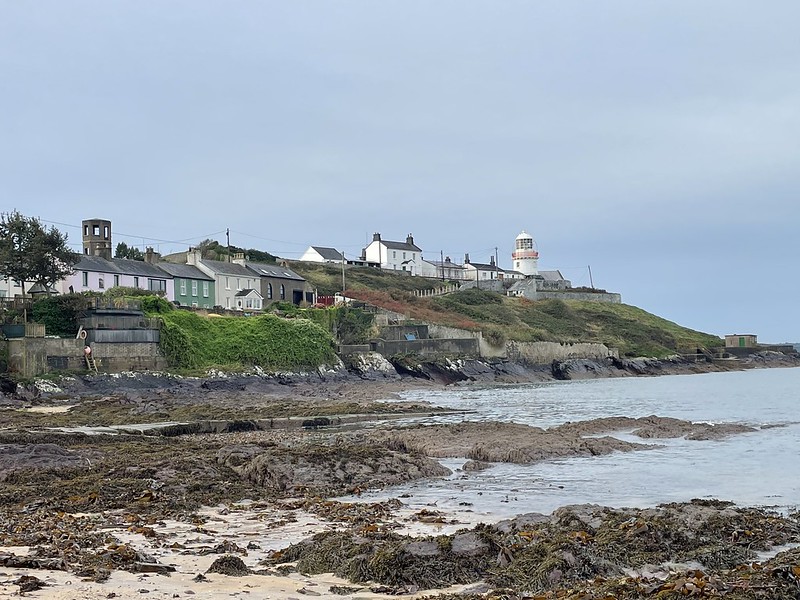
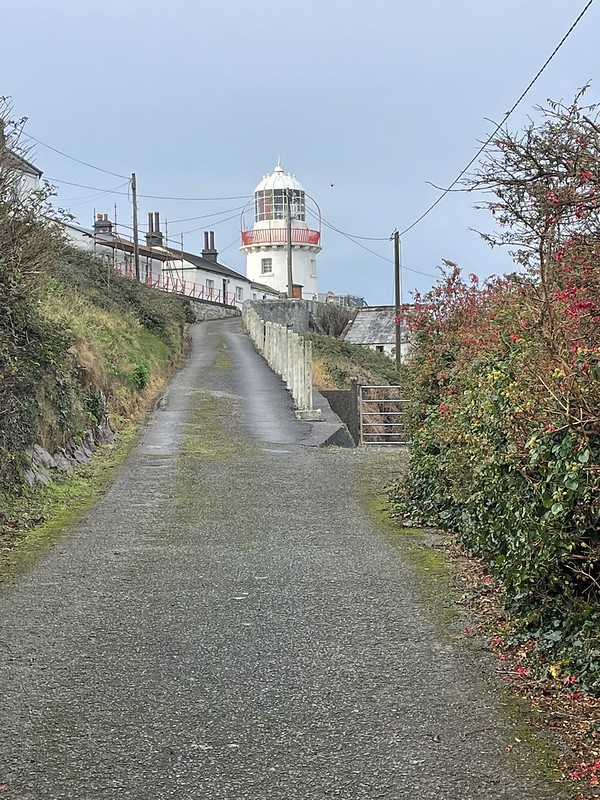
Near the lighthouse is a small beach. Ideal for collecting shells. You can access it from the grassy area next to the small carpark.
Ballycotton
Overlooking Ballycotton Bay and the beaches of Shanagarry and Garryvoe is the fishing village of Ballycotton. Its small in size but large in character with fantastic cliff walks and a tricky Pitch and Putt course. During the 1990s Hollywood arrived in the form of Johnny Depp and Marlon Brando. You can read more on that here.
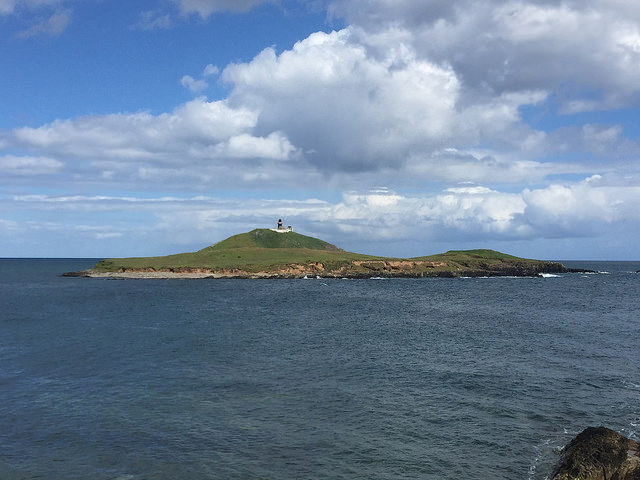
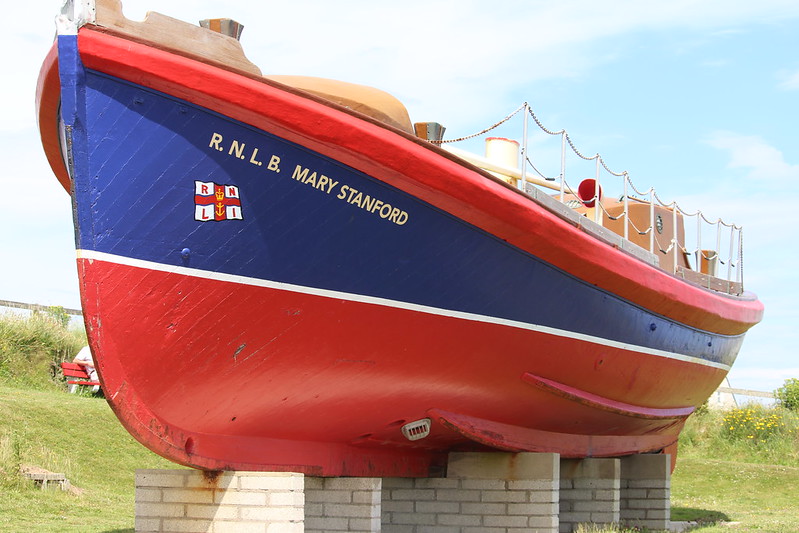
For over 160 years there has been a RNLI lifeboat stationed in the harbour and the crew are regularly kept busy. One of the previous service boats – the Mary Stanford is on display in the village. The Lighthouse is almost as old and is unusual in that it is painted black – to provide a contrast against the lightly coloured coastline.
If you are looking for some pub grub – you have come to the right place – The Schooner Bar, Blackbird Bar, Sea Church and the Salty Dog have you got you covered.
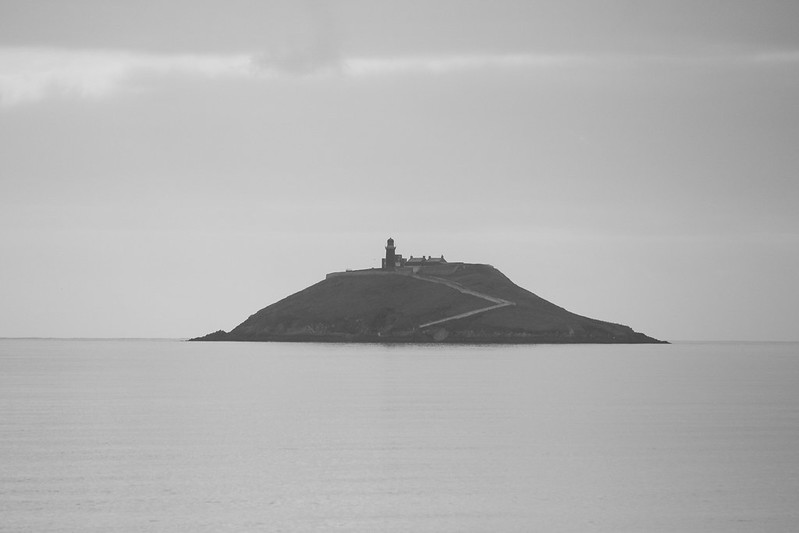
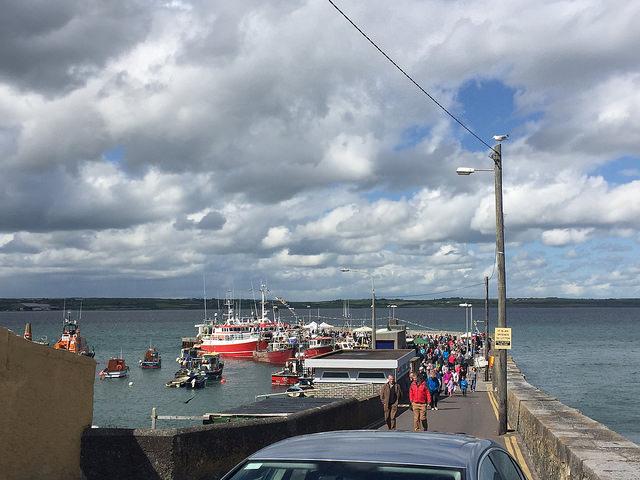




For those with little ones, there is a great playground on the outskirts of town – across the road from Sea Church.
The End?
Nope. There are plenty more spots on the coast that we will explore on future trips such as Ringaskiddy, Crosshaven and Youghal.
 JKRoaming - Travel Blog
What a wonderfully colorful image!
LikeLiked by 1 person
Yes. The houses really make that picture pop!
LikeLiked by 1 person