January 2020
Having returned from our trip to the Central Highlands of Tasmania and the amazing Lake St. Clair – it was time to get serious. The next morning we would be embarking on our 4 Day / 3 Night hike on the Three Capes Track.
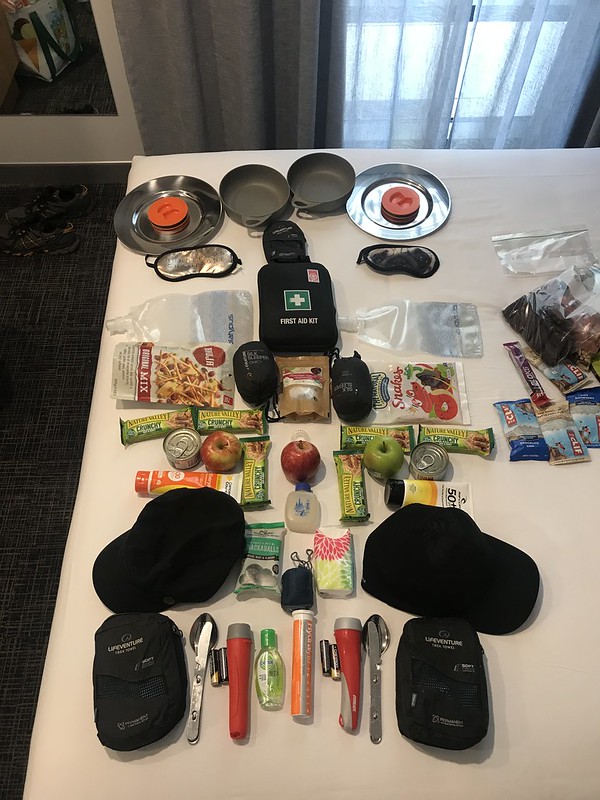
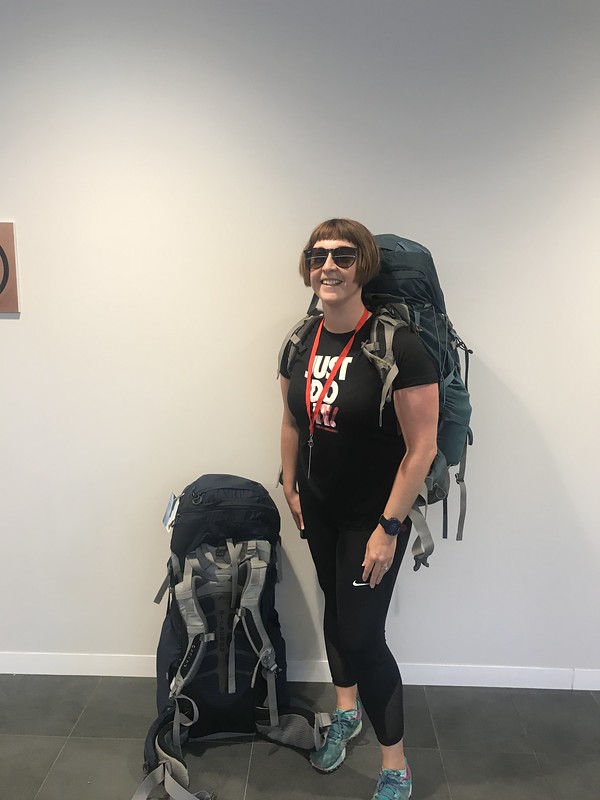
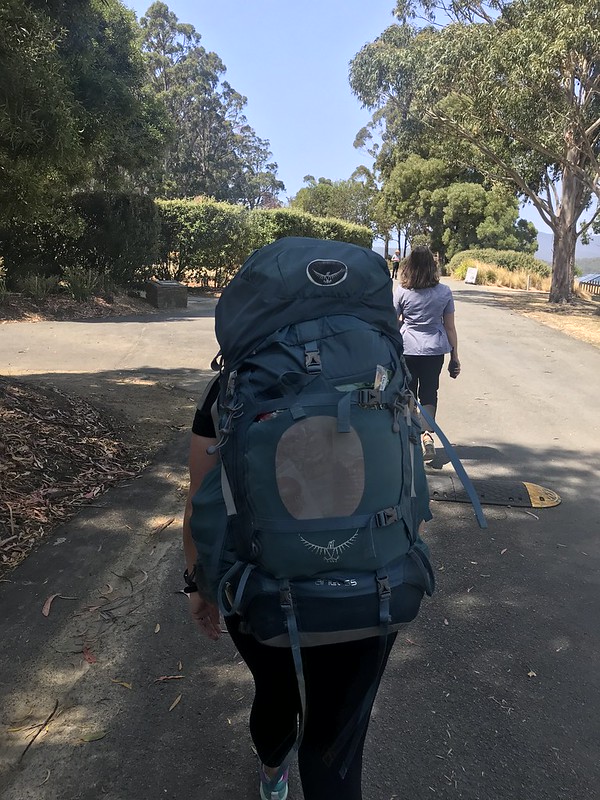
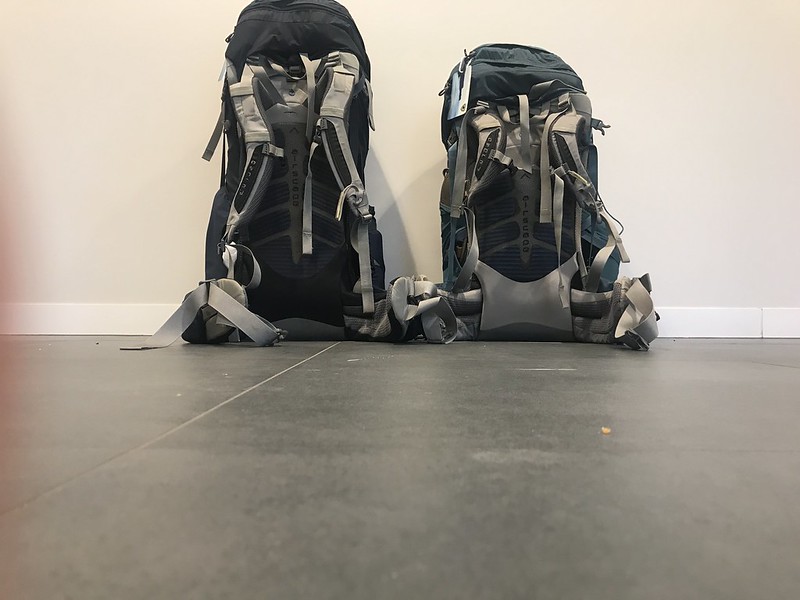
So we spent a couple of hours preparing our backpacks. You have to bring everything with you on the trek and carrry every single ounce on your backs. And we mean everything – plates, cutlery, food, first aid kits, water bottles, torches you name it. It was like we were backpacking through Asia again.
Creating Paradise
You are at the edge of the world and the terrain is harsh. To create this walk took a large investment. 400 specialists spent $25 million which included 18,000 helicopter flights to build the track, artwork and huts. An investment that has certainly paid off as it has been hailed as Australia’s premier coastal track. Two initial attempts were made in the 1960s and then the 1990s but it was not until Christmas Day 2015 that the goal was realised – and the Three Capes Track was brought to life.
The walk takes you through tall eucalyptic forests, coastal heath and right to the edge of Australia’s highest sea cliffs. It really is a walk on the wild side.
Getting There
We got up and made it to the pick-up point at the Hobart marina. Transfers to and from the walk and the entrance by boat are all managed by Pennicott Wilderness Journeys.
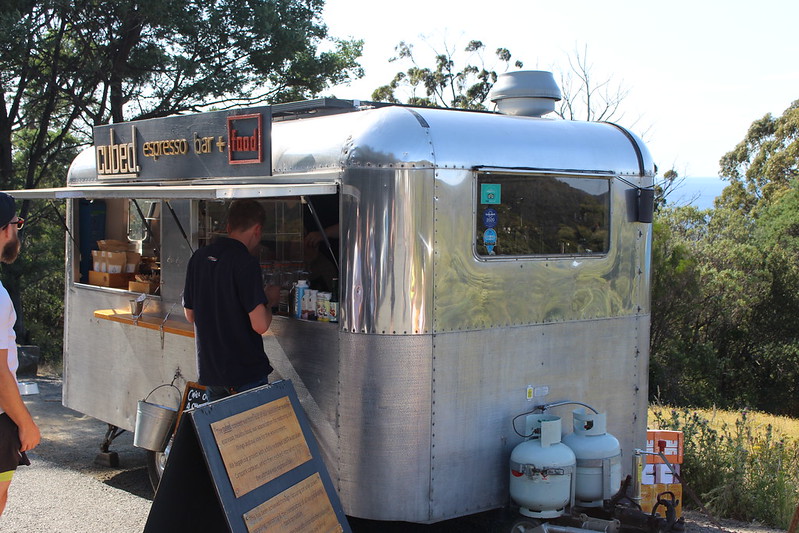
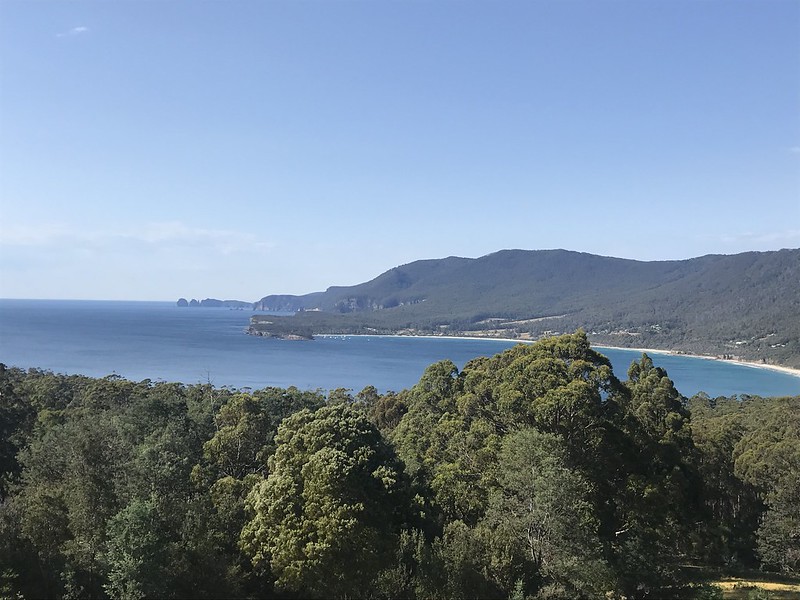
The first part of our journey was Northeast from the city before taking a big right turn and hurtling down to the Tasman peninsula before we stopped for a photo at the Tasman Bay National Park lookout just north of Eaglehawk Neck. From here we had a great vantage of Pirates Bay and the top of the National Park. We were also able to buy a coffee from a coffee van.
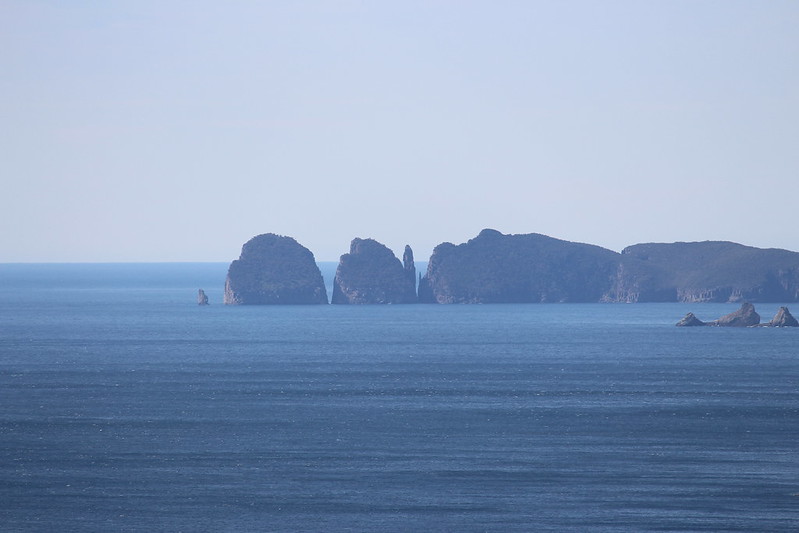
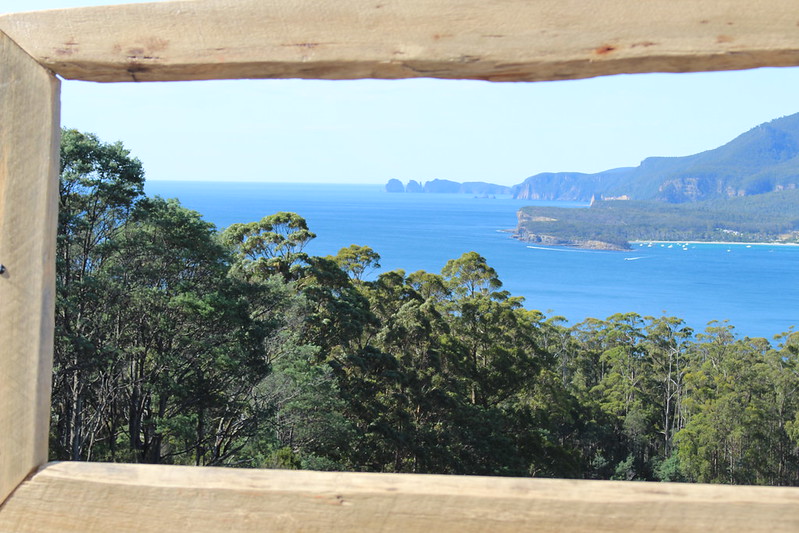


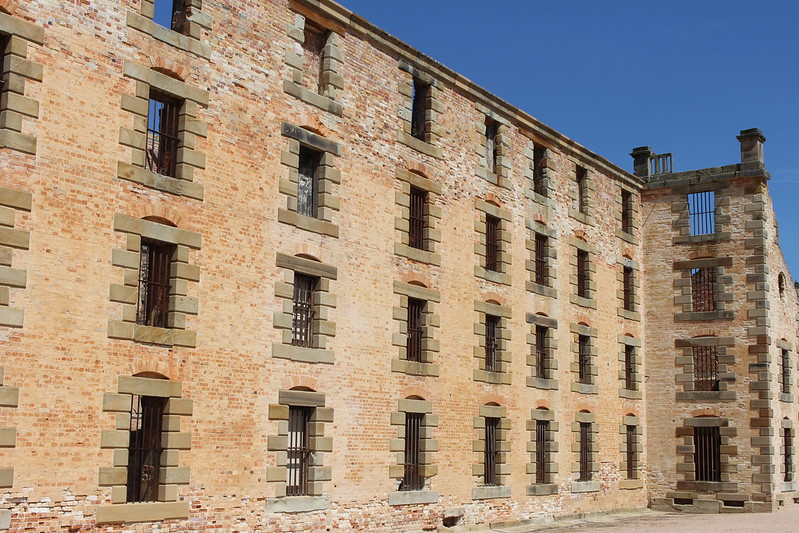
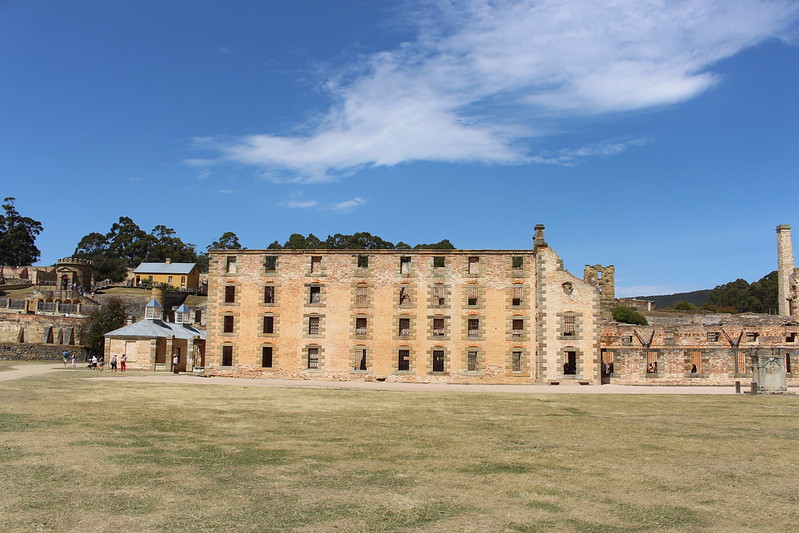
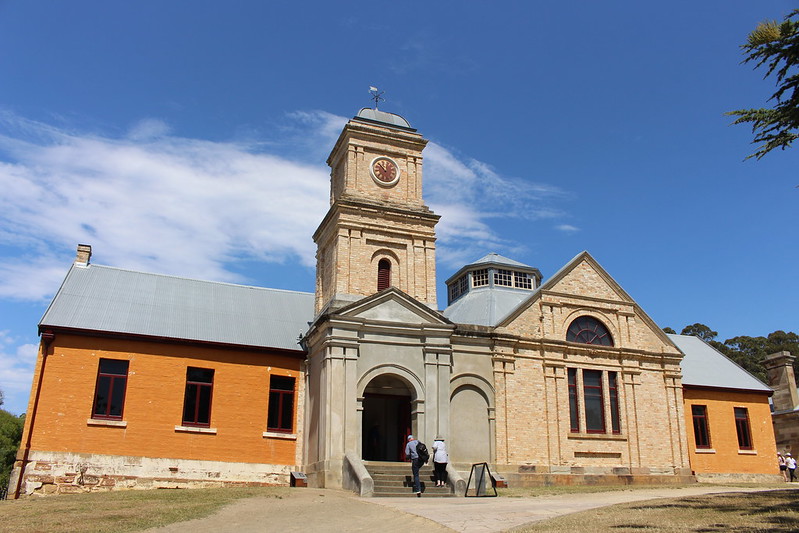
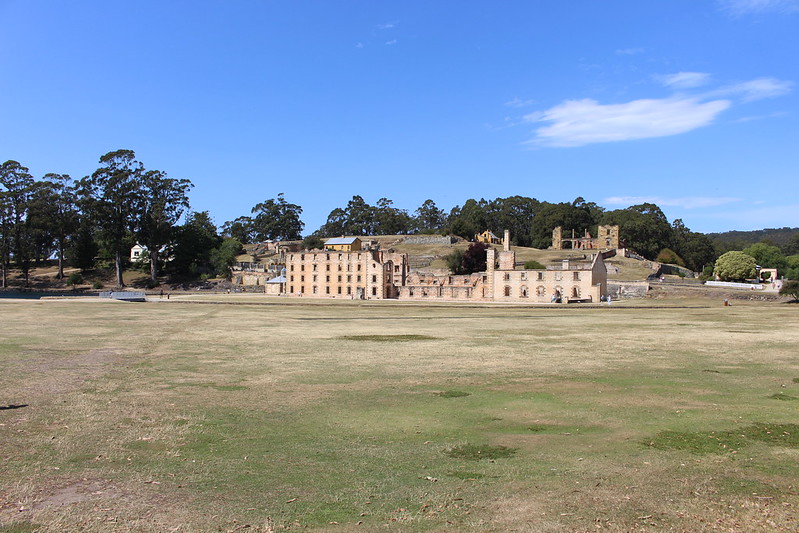
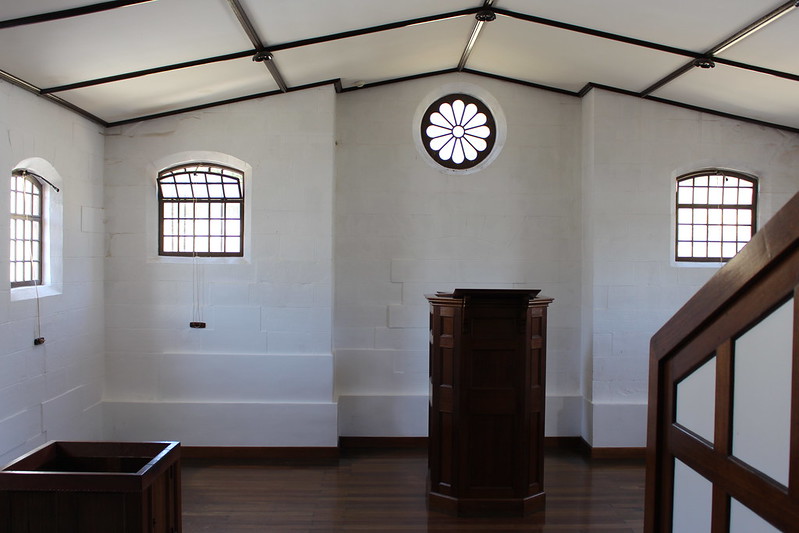
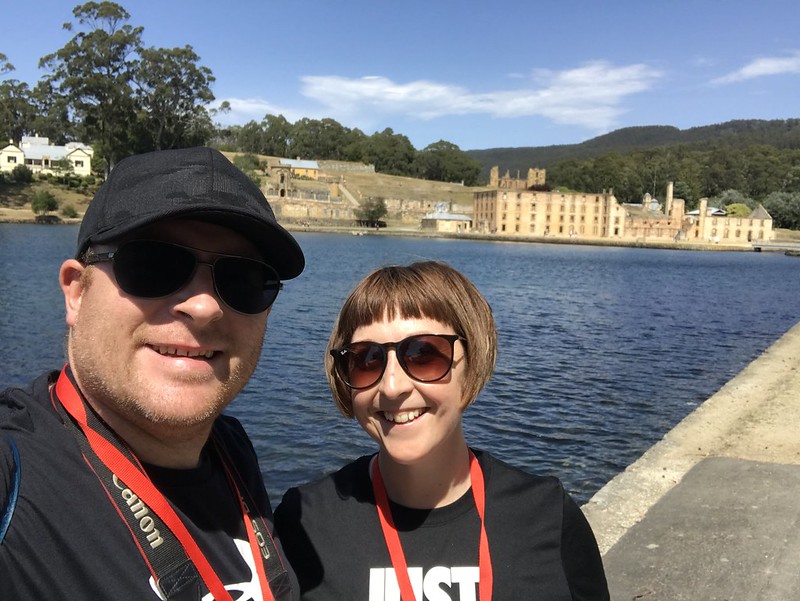
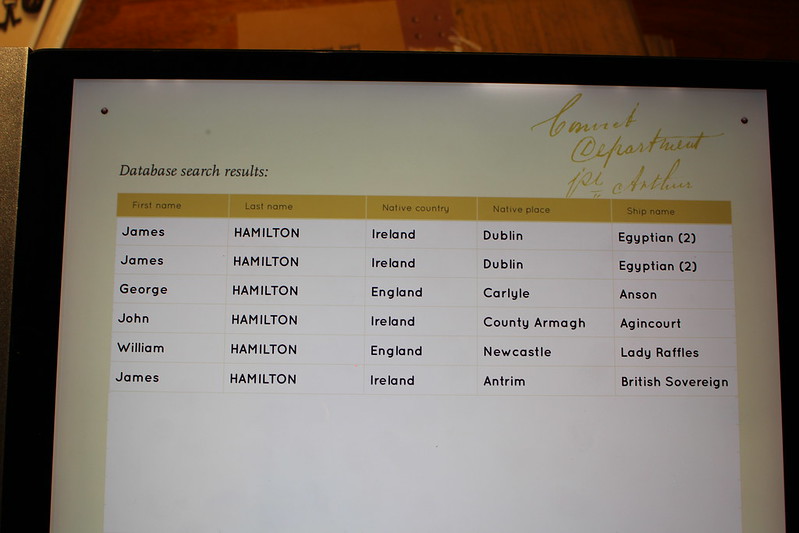
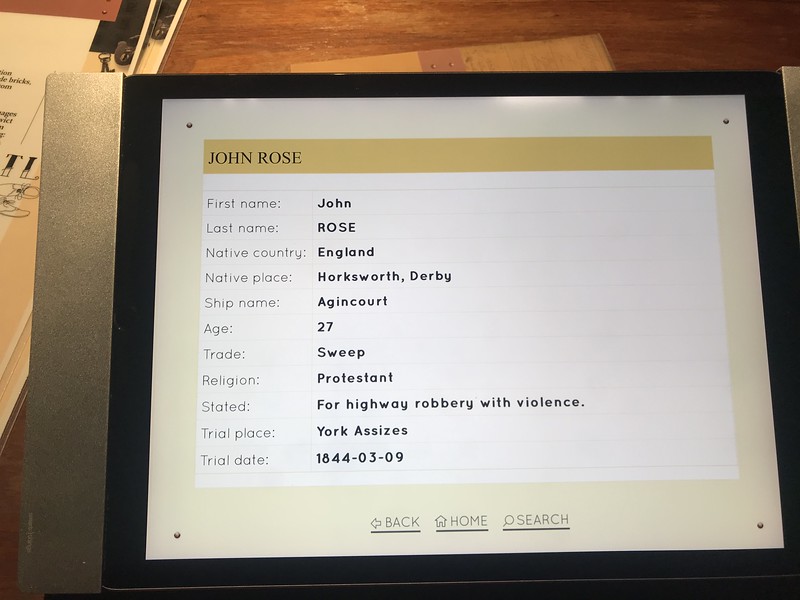
Just down the road was where we left the bus – the Port Arthur Historic Centre. This was a former penal colony and jail for some of the most hardened criminals in the British Empire. It was also where a lot of rebels, Irish or otherwise, were also abolished to. The Three Capes Track ticket includes free enty to the site and we had a good 2 hours until our departure so we did some exploring. Luckily we spent a day here back in 2015 so we knew what we wanted to see this time.
Another benefit of doing the walk is that you can leave any large luggage items in the downstairs office and they will hold it for the duration of you hike so we checked in the suitcases and they also minded our backpacks while we went about the prison site.
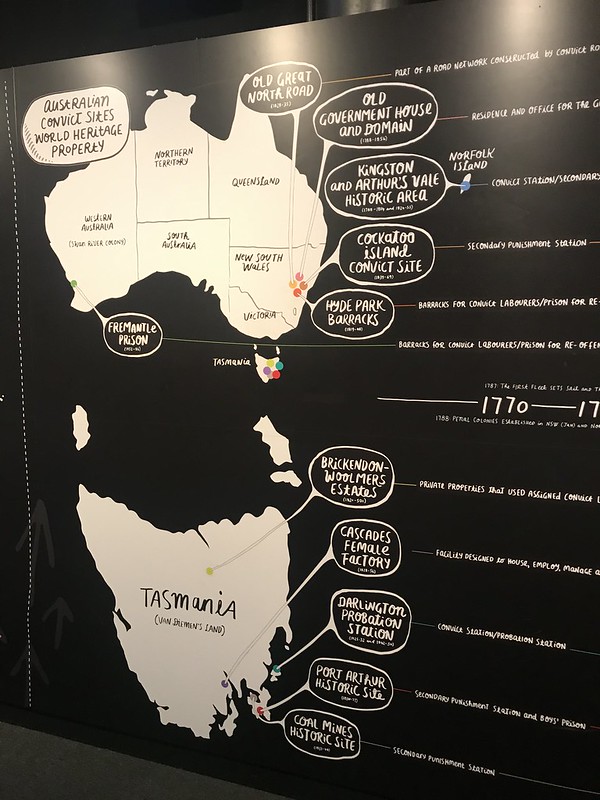
11 different sites makes up the combined UNESCO World Heritage Site – Australian Convict sites with 5 being in Tasmania alone. We have also visited Fremantle Prison in Perth and Cockatoo Island in Sydney. Port Arthur is fairly unique – there are no guard towers or walls as the main deterrent to escapees was the harsh weather and the remoteness of the penal colony. Eaglehawk neck is only 30m wide so a fence called the ‘dogline’ and a small number of dogs and guards were all that was needed to keep everyone in.





All this for a loaf of bread?
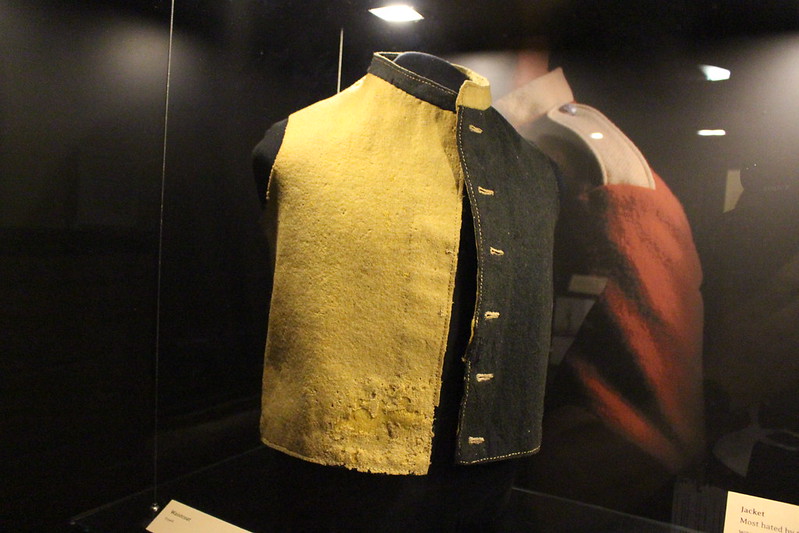
The British had a serious issue with crime in the 18th century. Widespread poverty forced many normal people to steal in order to survive. The average age of a criminal in Britain at that time was just 21. If you stole that meant prison. Soon prisons were overrun and the next option, converting old warships into prison hulks, was tapped out as well. In 1717 the government at that time decided to send convicts to the nascent colonies in America. This only lasted 60 years and after the American War of Revolution it was decided by the Prime Minister William Pitt (the Younger) to divert those convict ships to Australia.
Much like the present day, prisoners were used as free labour and as such people were just rounded up and put on convict ships for some of the most minor of offences in order to fuel the growth of the Antipodean colony. Not just the hardened criminals had to face this bleak future.


Back on Track
To get to the Track from Port Arthur requires the use of a boat. When the time arrived we went back to the office and grabbed our backpacks and walked out to the pier.



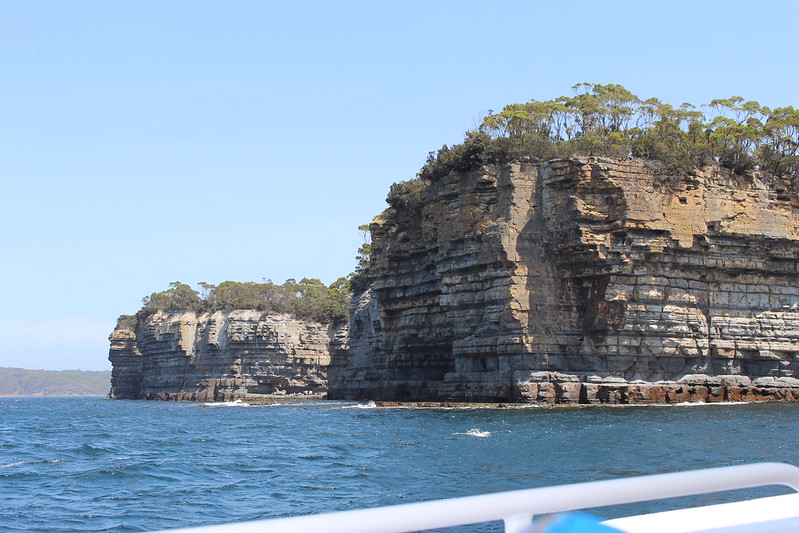
We boarded the eco-cruise vessel and were treated to an excursion in the port, getting up close an personal with the jagged doleite cliffs and getting our first glimpses of the national park itself. Our boat took us past the Isle of the Dead – where nearly 1,700 prisoners and guards were buried and around Safety Cove and Crescent Bay before we eventually landed at Denman’s Cove to begin our walk. There is no jetty, you just jump off the front of the boat – a bit like Able Tasman National Park in New Zealand.


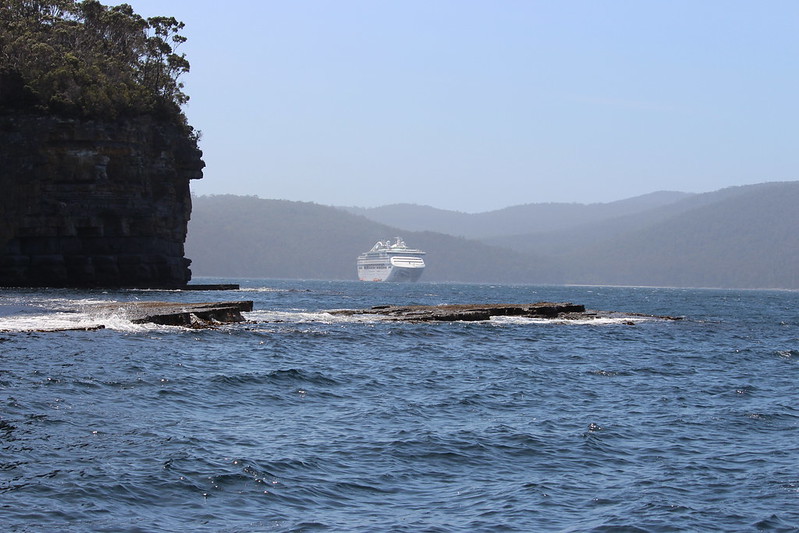
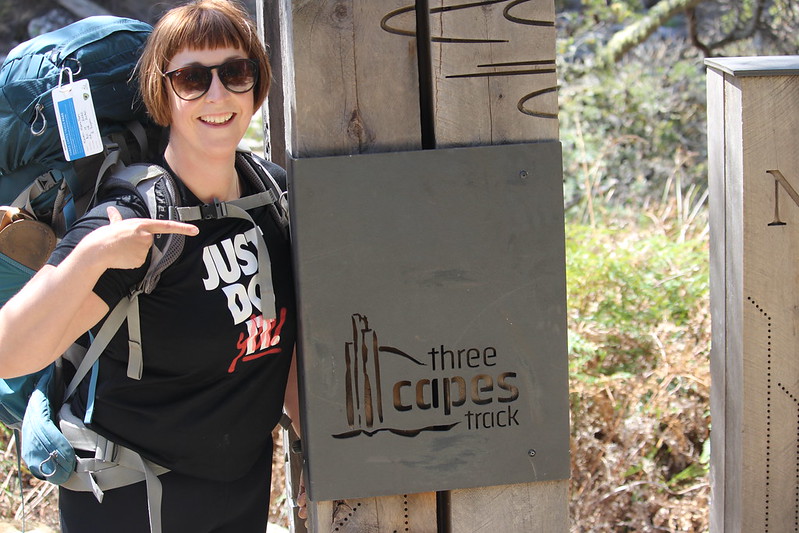
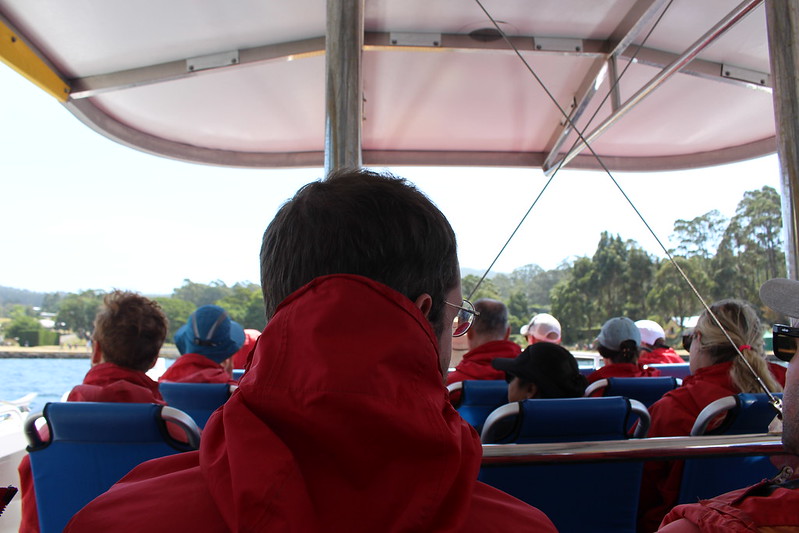
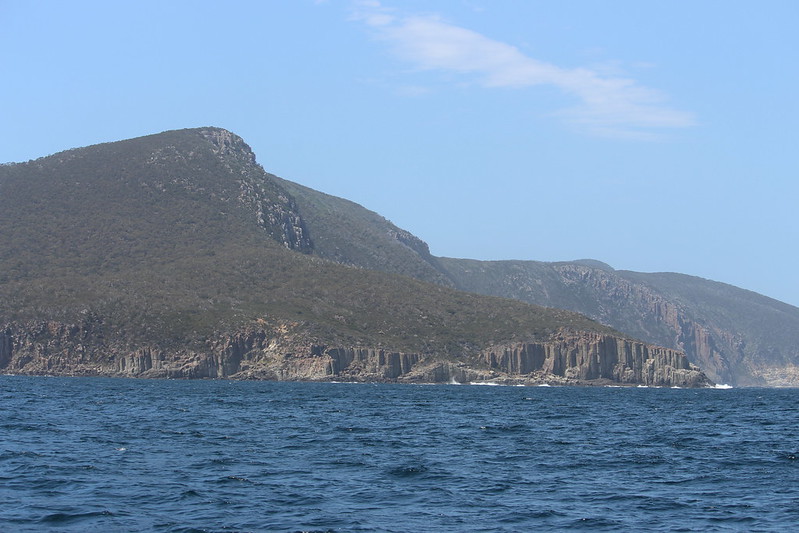
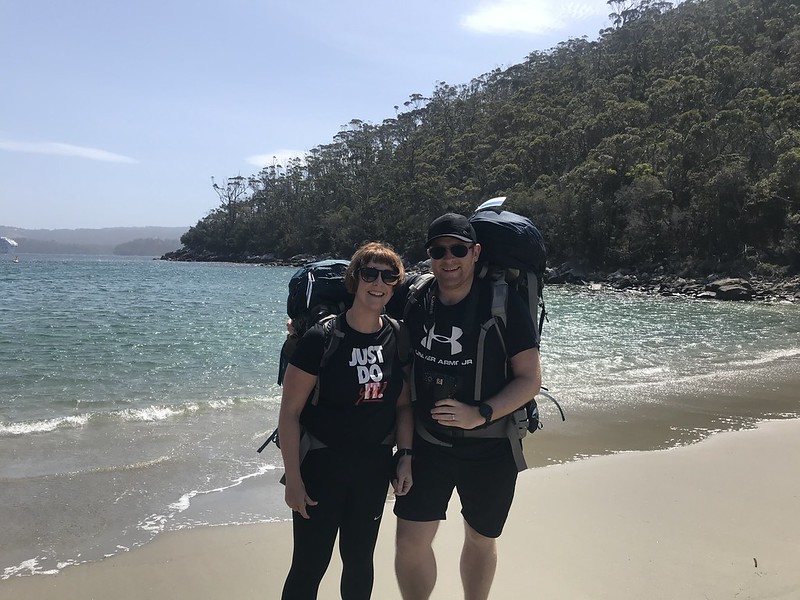
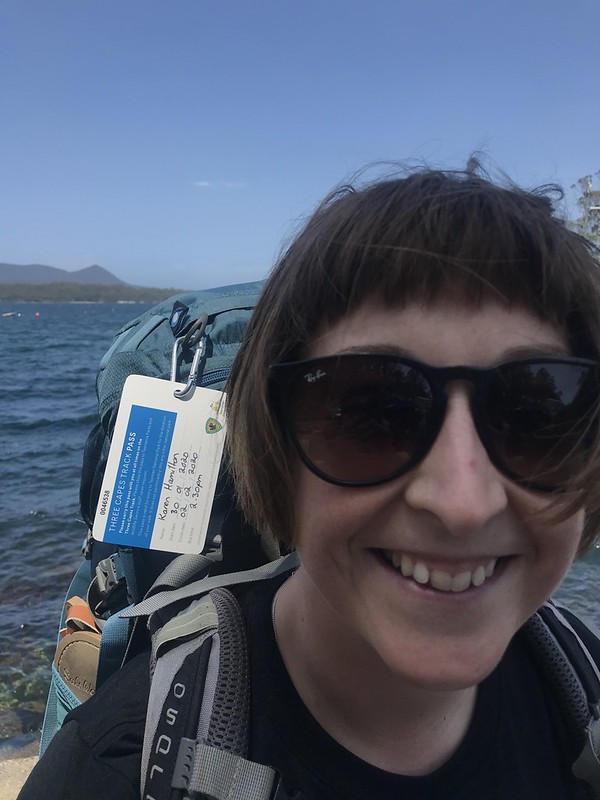
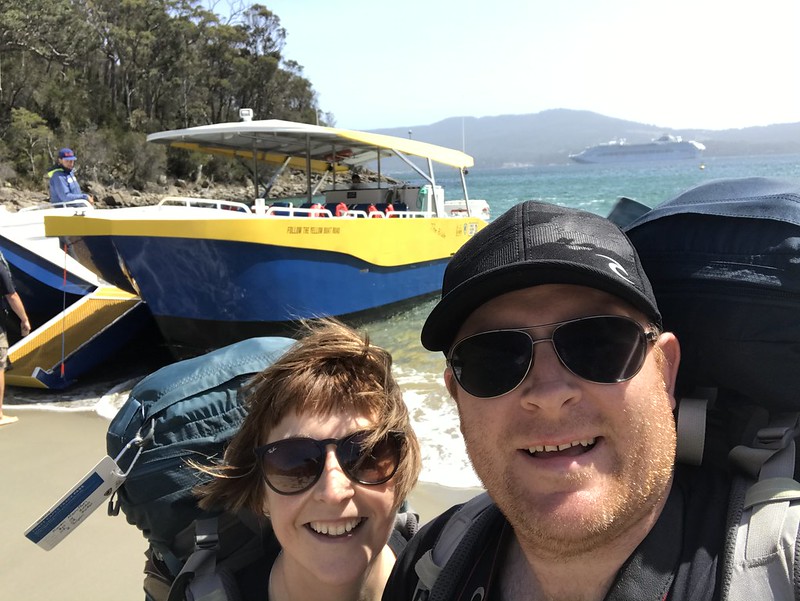
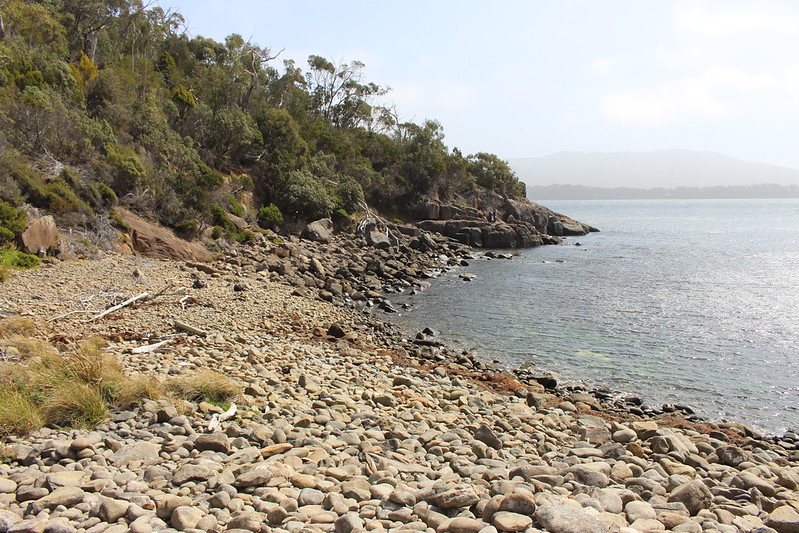
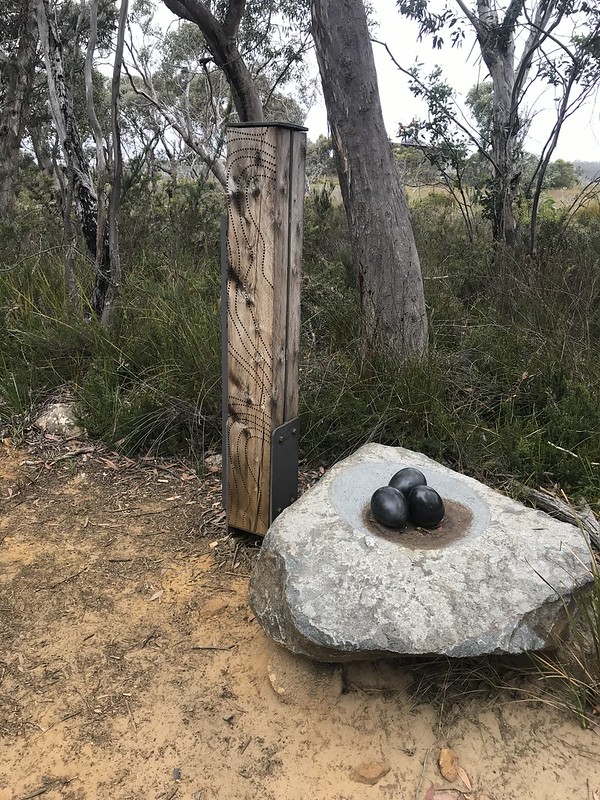
It was two hours of walking to the first of our three huts – Surveyors and only about 160m worth of climbing, mostly at the end, after we took a break at Surveyors Cove, a small cobblestone beach. We each had been given a booklet called Closer Encounters which had details of the walk and background information on the “storyseats” that are spread across the 48km trek.
Dear Eliza: is all about the 12,000 convicts that spent some of their lives at Port Arthur. Many were illiterate and would often have a ‘love token’ made out of a coin engraved with a message for their loved ones that became known as ‘leaden hearts’. Those that could write had few and far between opportunities to do so.
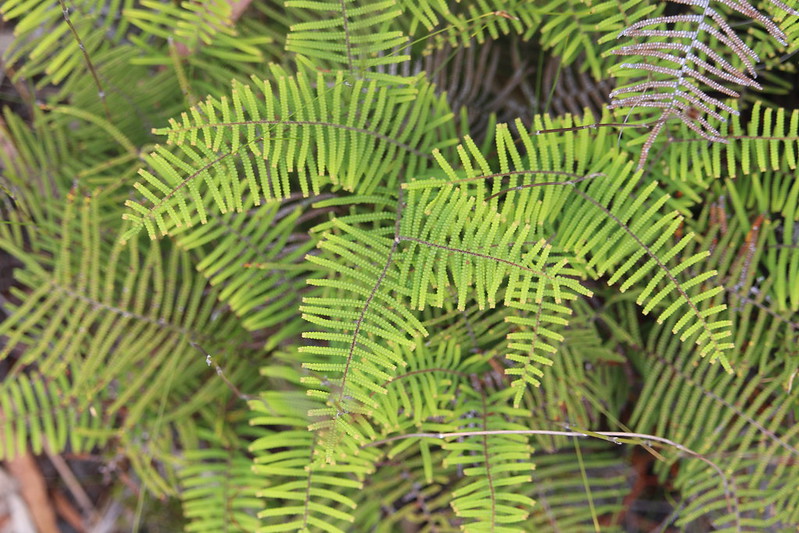
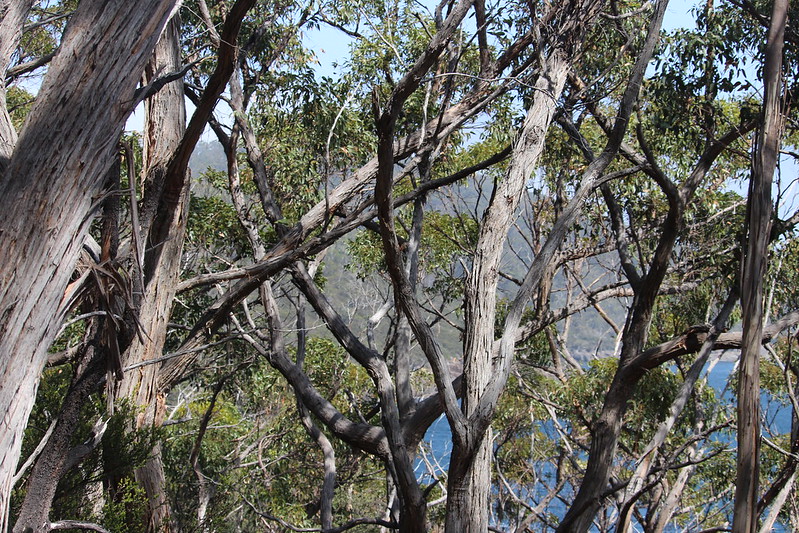
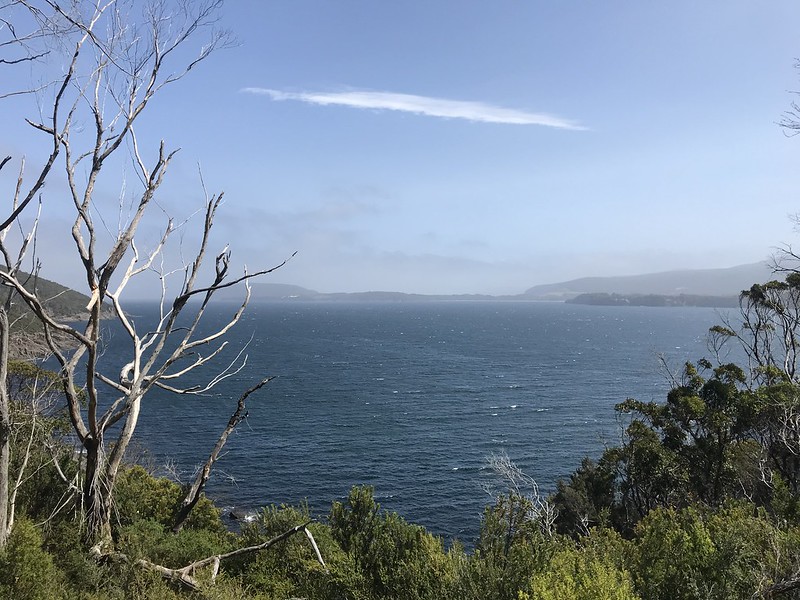
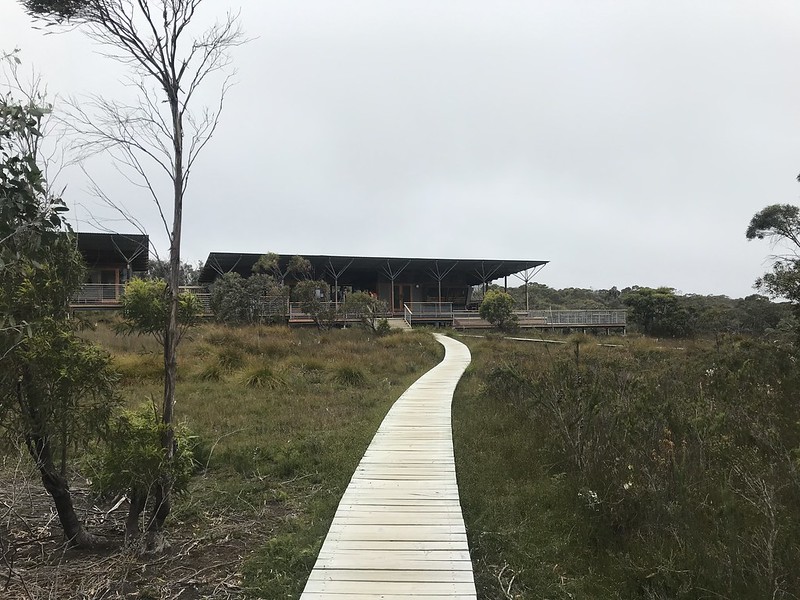
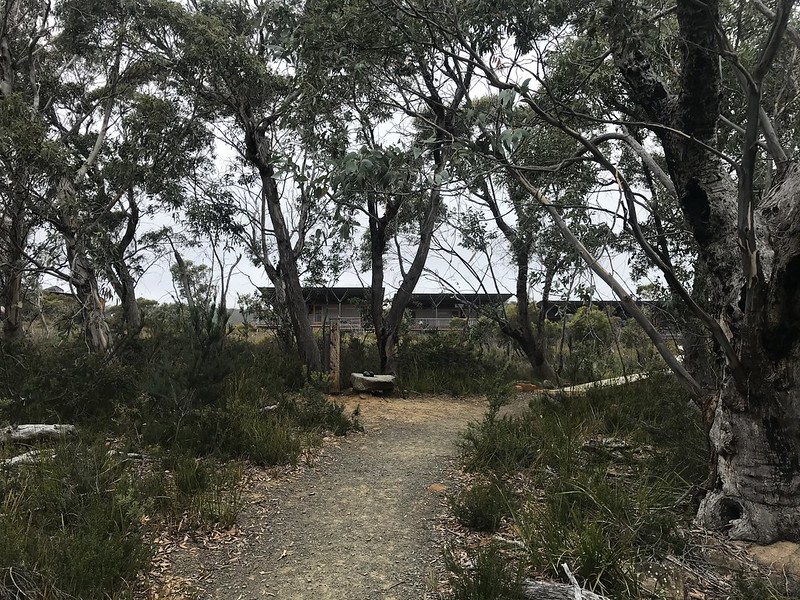
As the path levelled out after our climb we met our first animal – a wallaby and we could see beyond the horizon to Cape Raoul across the bay. The gravel path became a wooden walkway and a structure up ahead started to emerge form the low eucalyptus scrub.
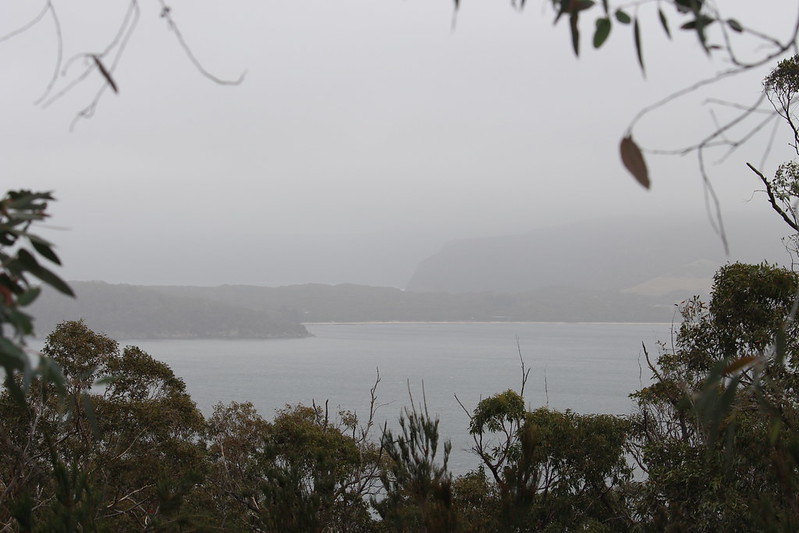





We had made it to the first hut.
A Ranger greeted us. Each hut has one to welcome you, answer questions and keep you abreast of the current situation in the park. They also assign us to our room. As there can 48 people on each group we would be sharing with another couple – Deborah and Michel from Melbourne. The huts were relatively new and you could see where the money went with custom made shower and toilet blocks and very clean kitchen and lounge facilities.
At the evening briefing we were told that the fire conditions the next day were extreme so we would need to leave early and double time it to the next hut. The group that were meant to come in behind us were being delayed for at least a day due to the weather. Lovely bit of drama to start our adventure with.
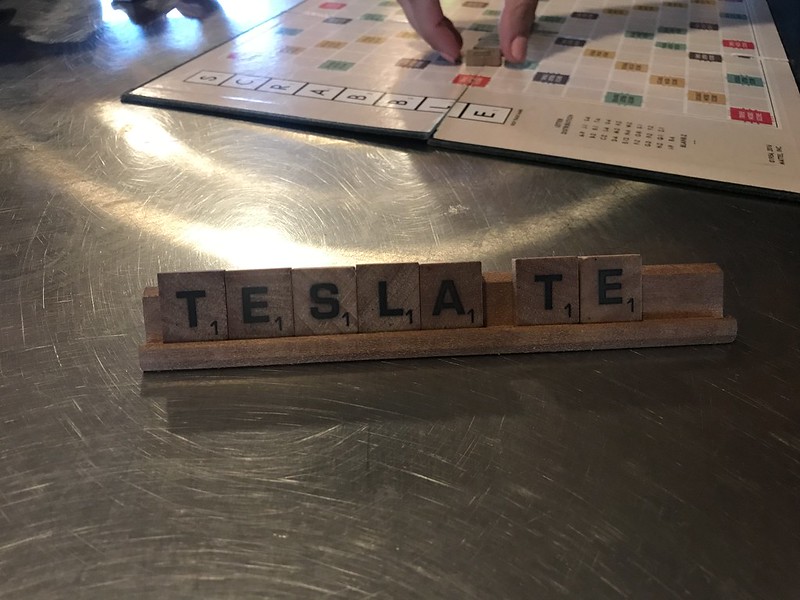
After that news we made ourselves a BBQ. Only the first hut has one so those in the know can bring some meat to cook. We brought steaks as it would be our last decent meal for the next few days. After dinner we played some scrabble before settling down for the night as Day 2 would be nearly triple the distance, double the climb and we had to get their quickly.




 JKRoaming - Travel Blog
What wonderful views!
LikeLiked by 1 person
Thanks. They get better on Day 2 and 3
LikeLike
We did the Three Capes walk in 2022. One of my all time favourites and such a magical part of Aus. Thanks for the memories. Mel
LikeLiked by 1 person
[…] sunrise across Crescent Bay to Cape Raoul. Our efforts climbing up to the Surveyor’s Hut on Day 1 immediately […]
LikeLike
[…] can read about Day 1 and Day 2 using these […]
LikeLike
[…] can read about Day 1 , Day 2 and Day 3 using these […]
LikeLike