
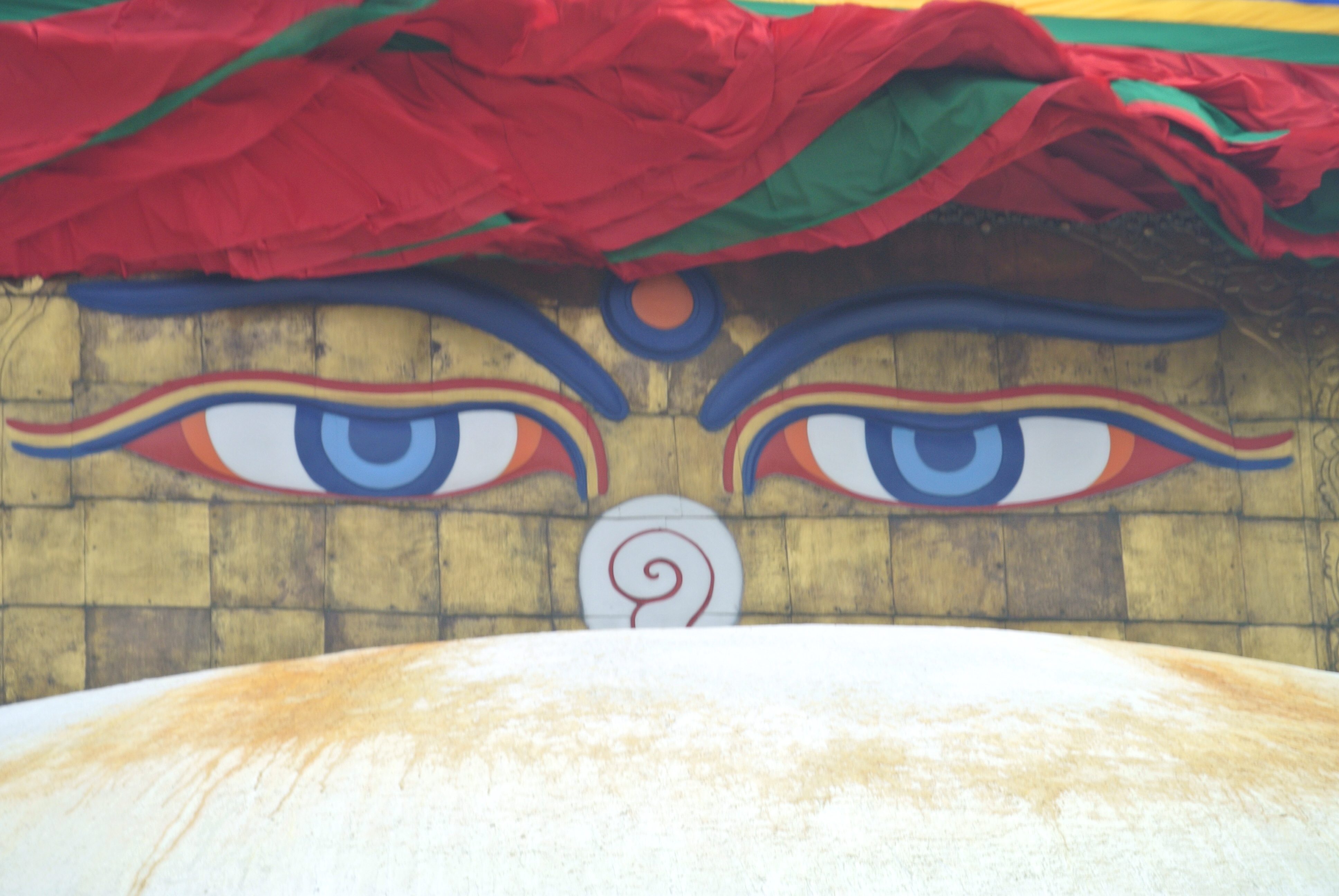
With one full day left in Nepal we had to make a choice between the Swayambhunath Stupa (also known as Monkey Temple) or the Boudhanath Stupa. They are both almost the same so there was no point in doing both. In the end the deciding factor came down to Monkeys… After seeing what they could do in the Wizard of Oz John decided to go with Boudhanath.
Well maybe that’s not entirely true. Bodhnath was also the largest Stupa in Asia and had over 50 Tibetan Monasteries surrounding it so it was the bigger draw.
We jumped into our new mode of transport.. The Minivan (please see previous post for details) and headed there. After being deposited in a noisy dirty street we began to have doubts as to our directions but on walking a few metres we came across our goal.
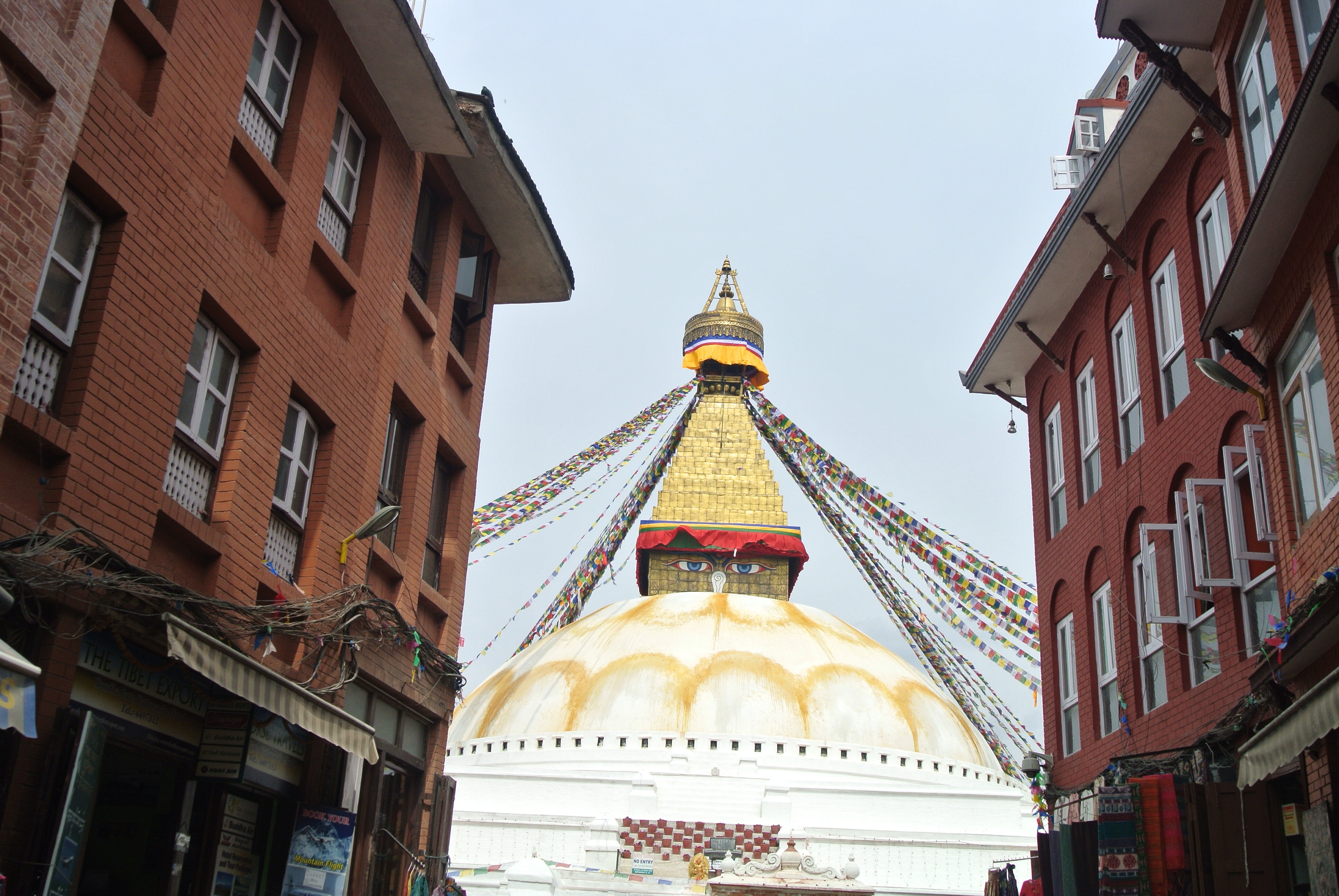
The Boudhanath stupa (aka the Boudha, Chorten Chempo and Khãsa Caityais) is one of the holiest and most recognisable sites in all of Kathmandu. It stands at a height of 36 metres and a diameter of 120 metres, making it the largest in Nepal and one of the largest in the world.
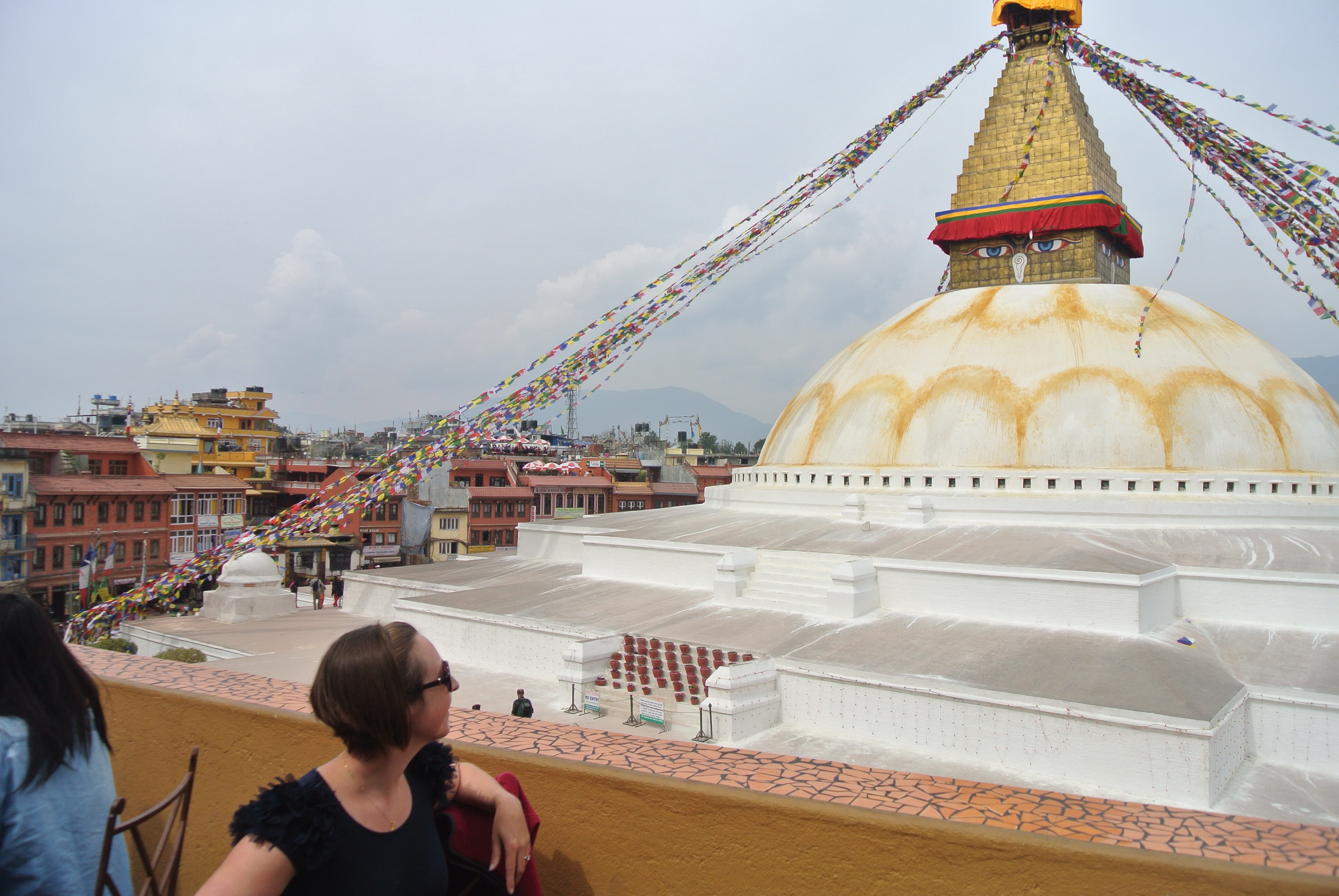
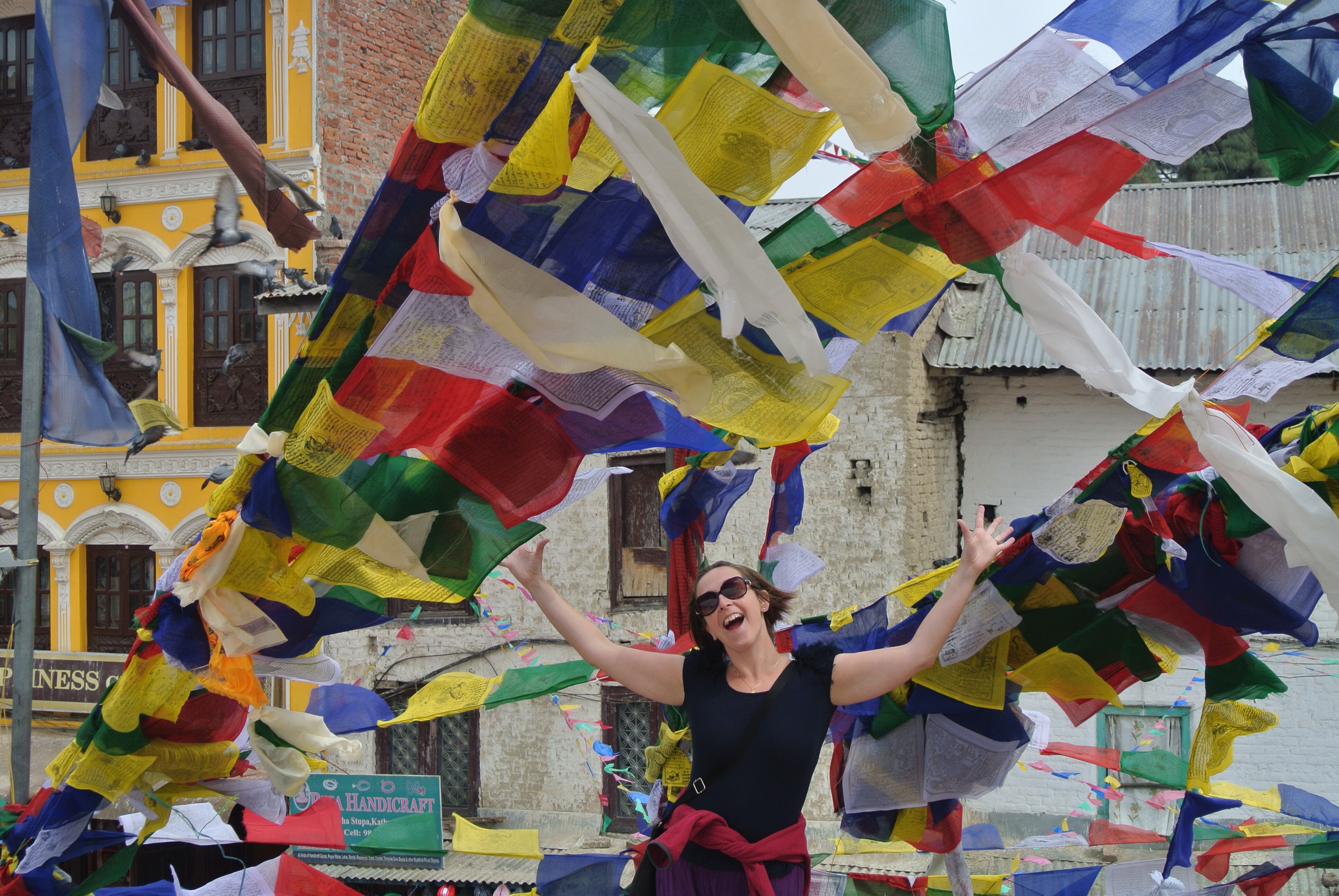
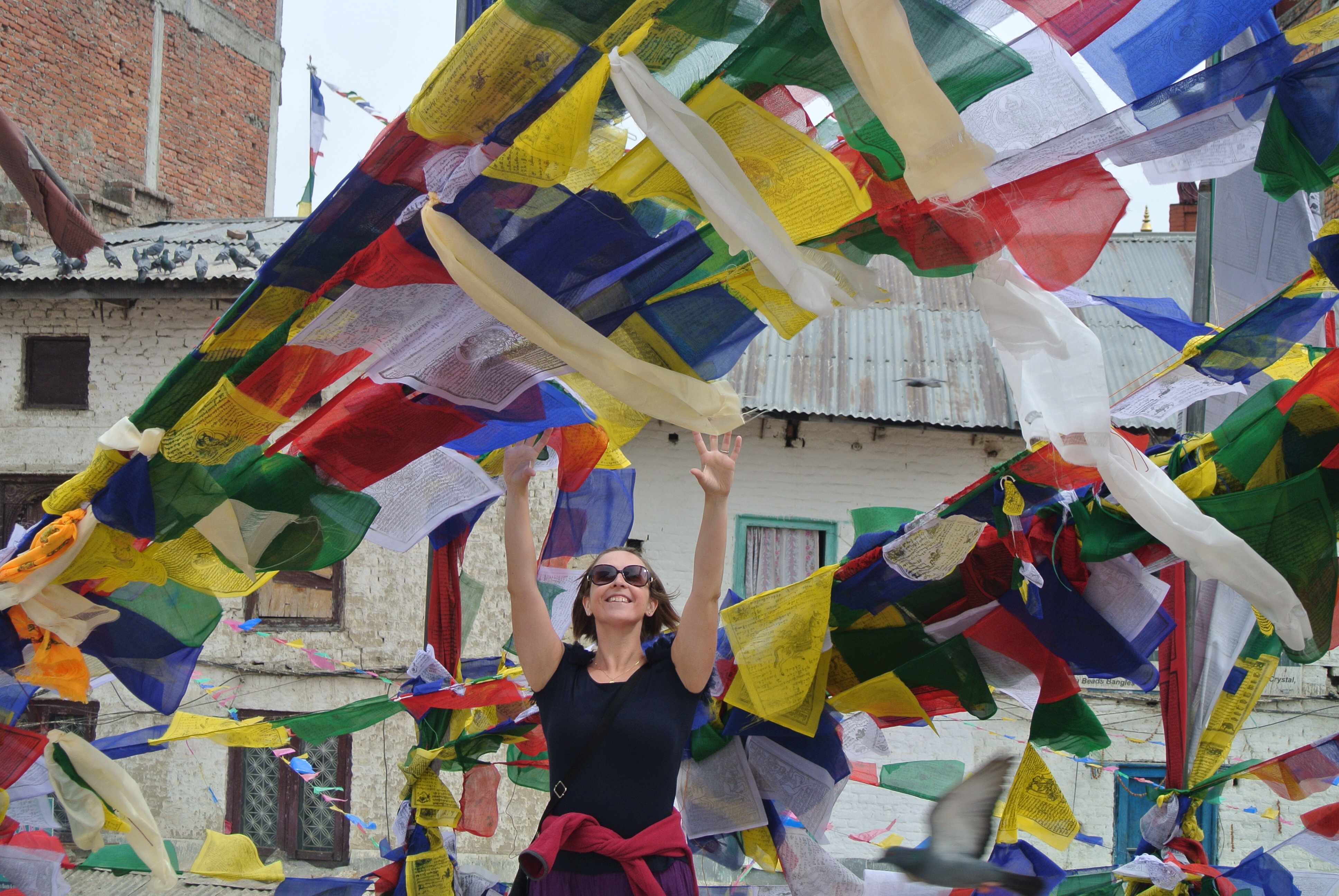
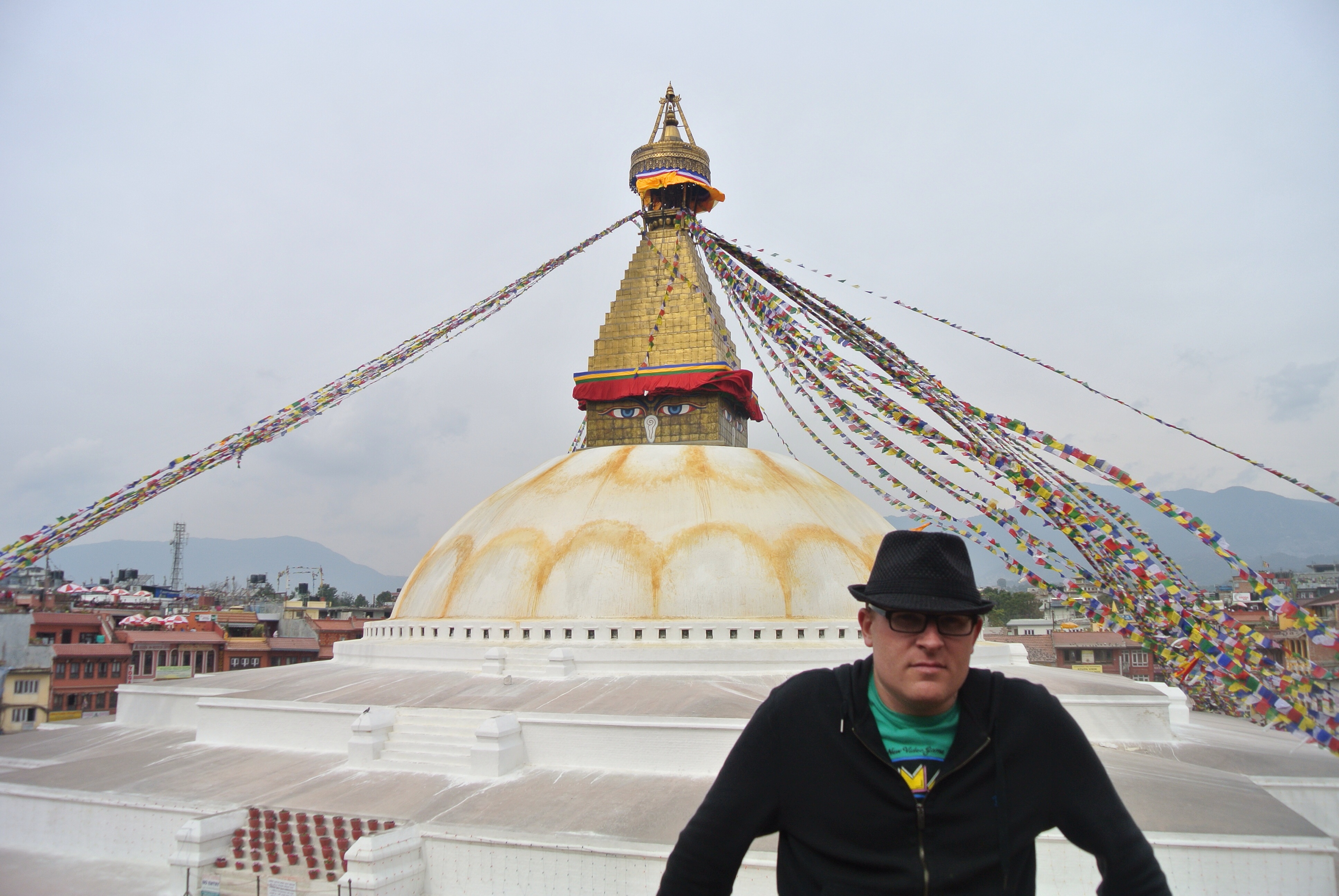
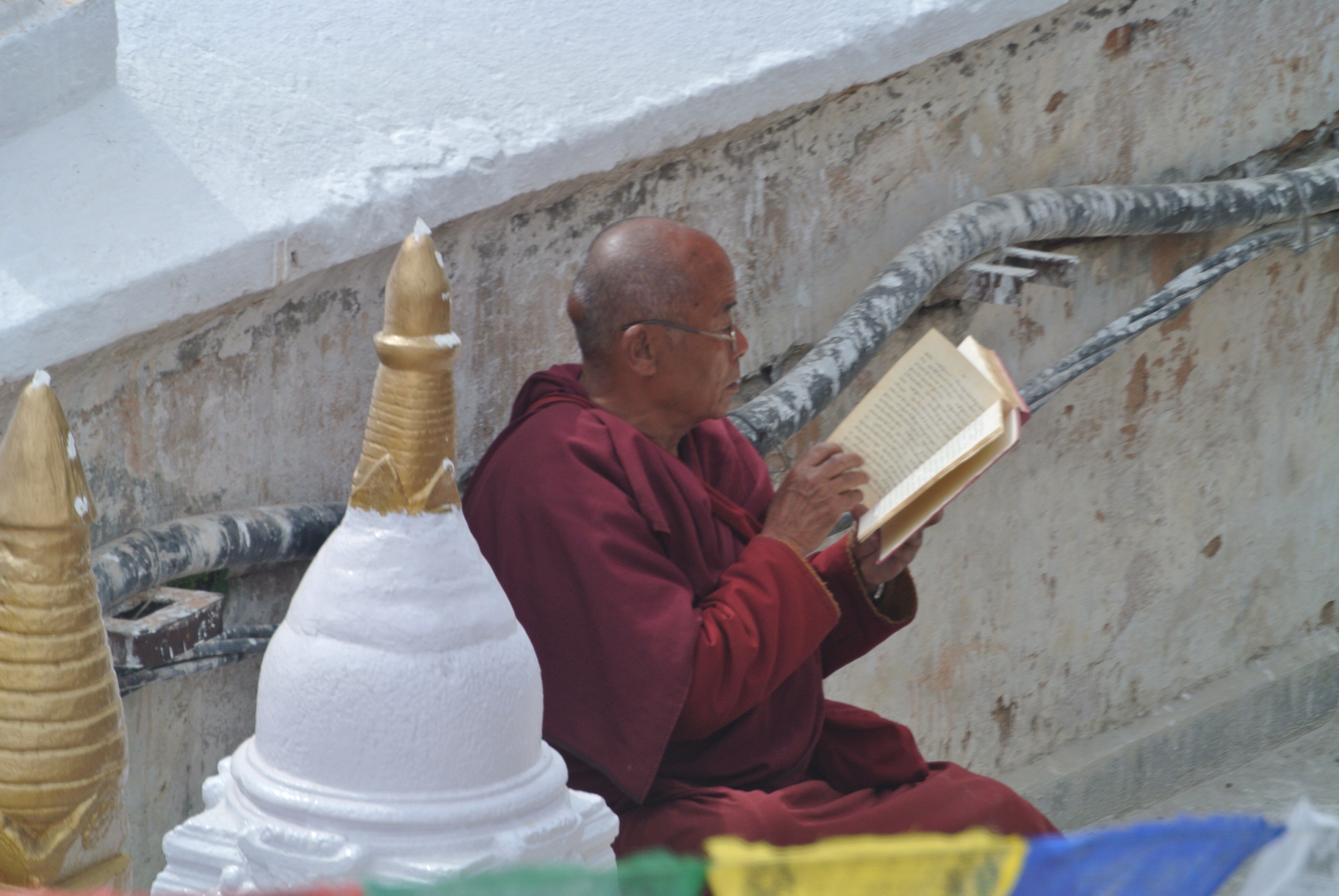
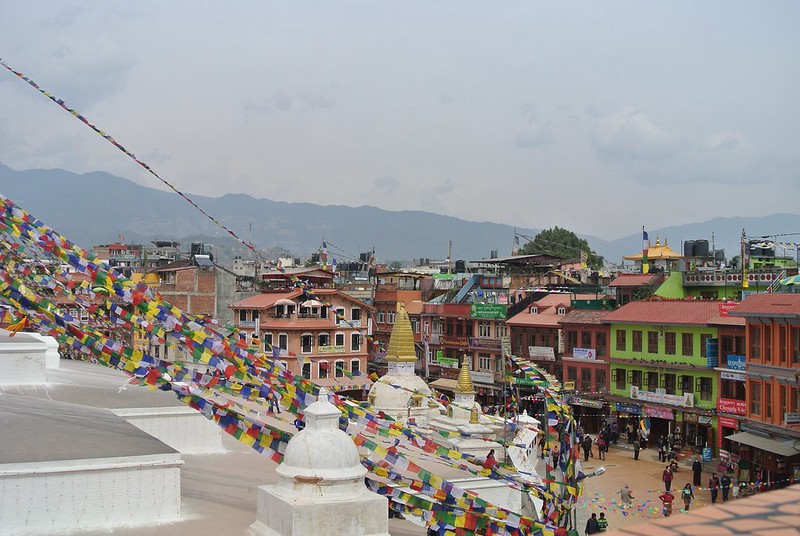
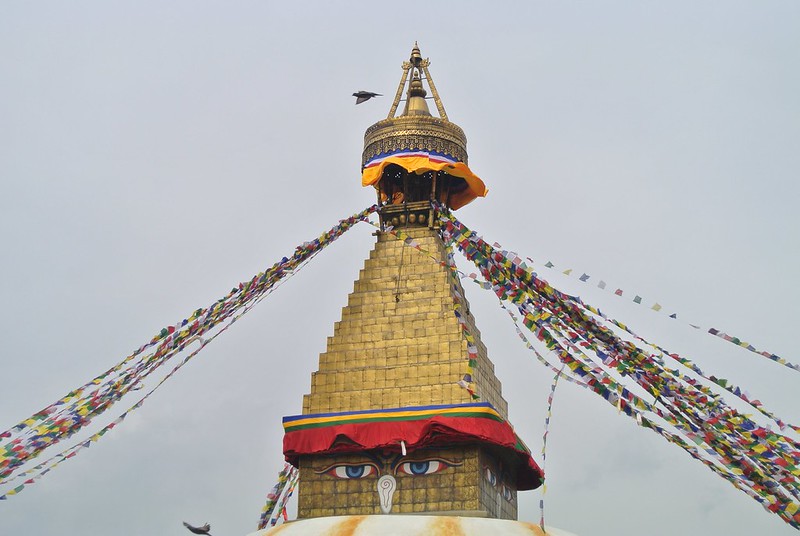
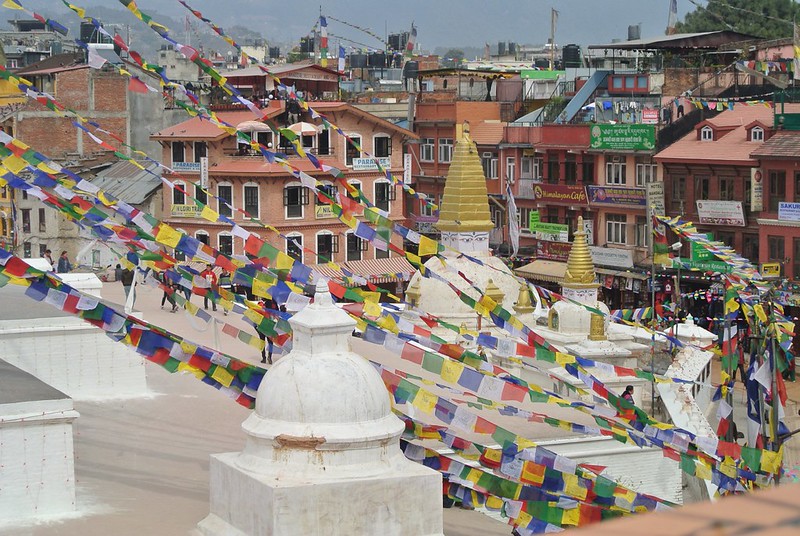
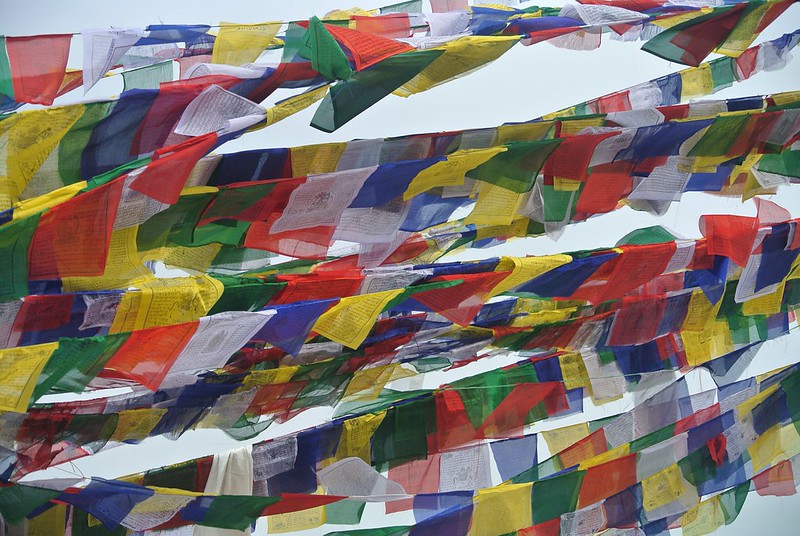
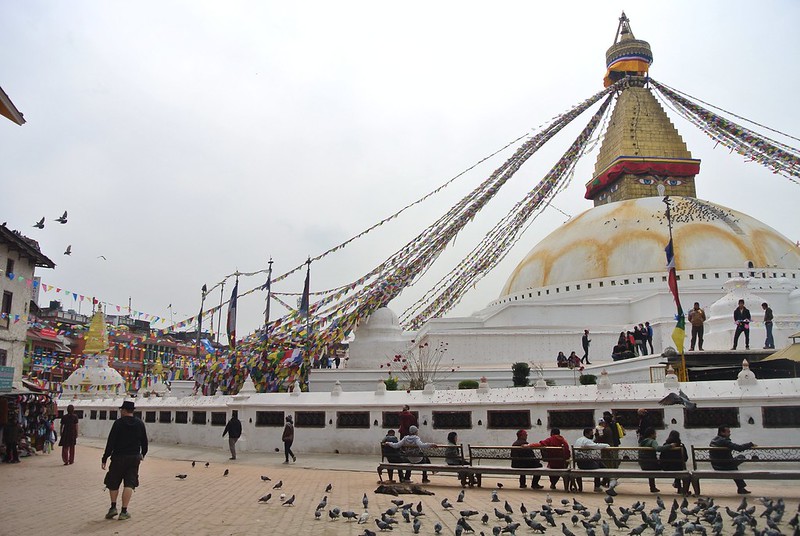
It is absolutely massive and dominating the surrounding locale the Stupa is awash with a kaleidoscope of colours from all the Tibetan Prayer Flags draped on it. Following the Tibetan uprising in 1959, thousands of Tibetans migrated to Nepal and settled in the district surrounding the stupa. Many of these were monks with a veritable army of them pottering around the alleyways. You could also buy every conceivable Tibetan Handicraft from the stalls and shops.
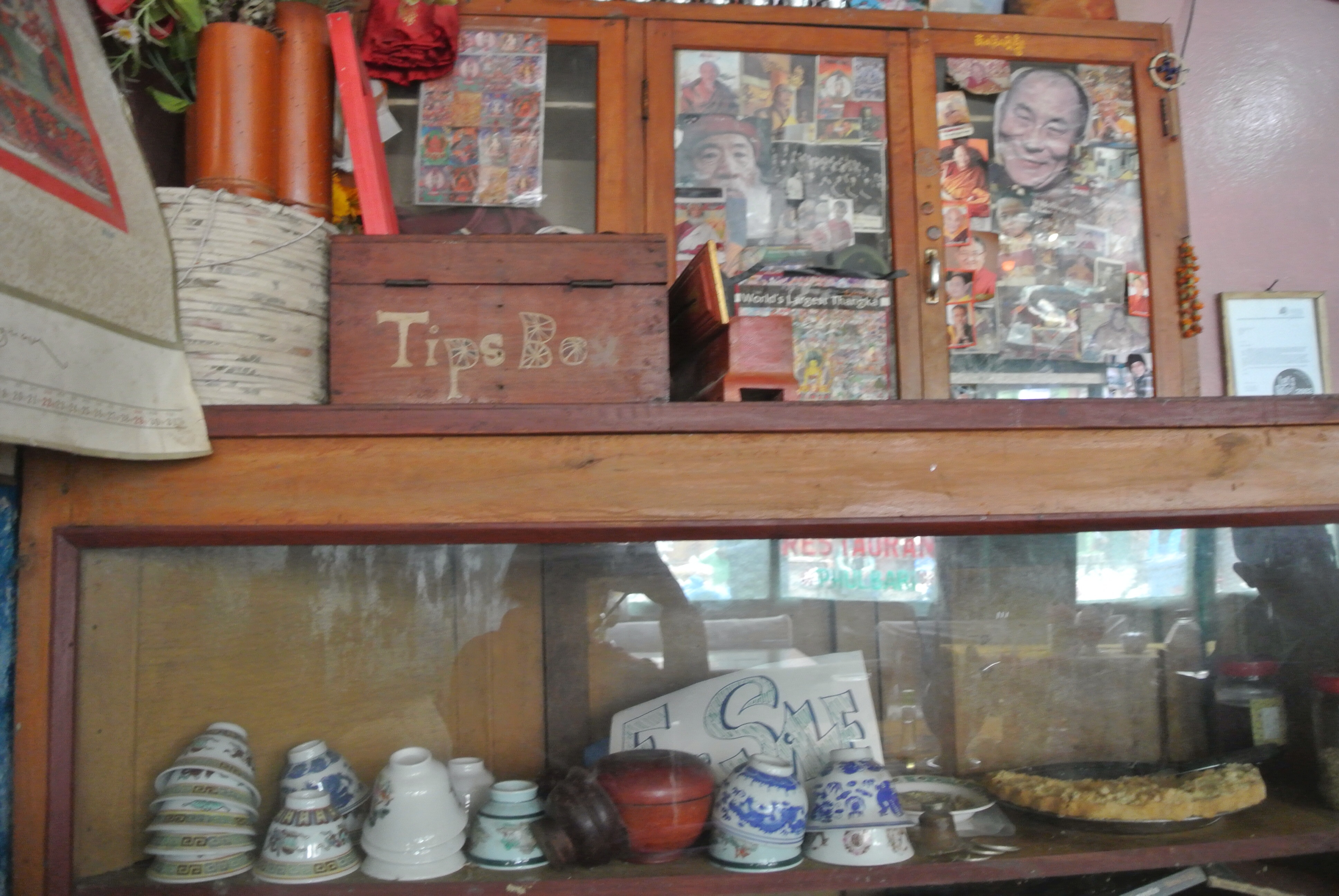
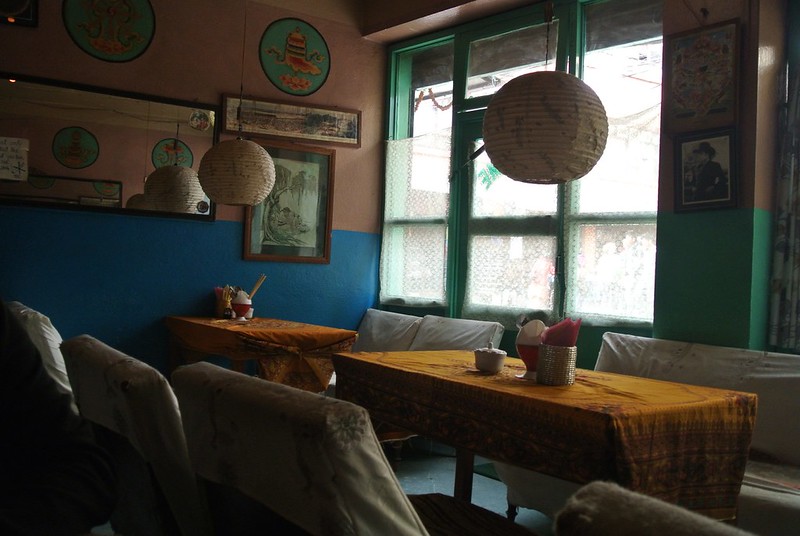
Dodging the expensive restaurants we stumbled into a time warp and got some fried rice in what can only be described as somewhere straight out of. David Bowie song.
“Crusty Apple Pie in the China Cupboard. Psychadelic cushions for the punters…tame”.
There has been a stupa on this site since Tibetan king Songsten Gampo converted to Buddhism in around 600 AD. It is said that he built it as Penance for the killing of his father to seize the throne.
Boudhanath is rich in symbolism. It has five statues of Dhyani Buddhas, representing the five elements (earth, fire, water, air and ether); nine levels, representing Mount Meru (the mythical peak at the centre of the Buddhist cosmos); and 13 rings from its base to its apex (representing the steps to enlightenment or Nirvana).
After spending the entire day exploring this part of the city we headed back to Thamel. That night we bumped into our friend from the mountains, Frances, and went for some Mediterranean food nearby.
Tomorrow we were heading to Thailand. But would we get out alive due to our earlier Visa conundrum…..
Find out next post!!


[…] Bodnauth Stupa (Nepal) […]
LikeLike