September 2023
As promised in a previous post – here is a full article on Culzean Castle.
On this trip John managed to do a self-guided tour of the main castle building itself so it felt like the right time to tell the whole story of Culzean.
The ‘Z’ is silent!
25 minutes drive south of Ayr Town is the wondrous coastal castle of Culzean. The former castle and home of the Marquis of Aisla, the chief of the Kennedy Clan now belongs to the National Trust who have arranged for the castle to be renovated and re-opened to the general public.
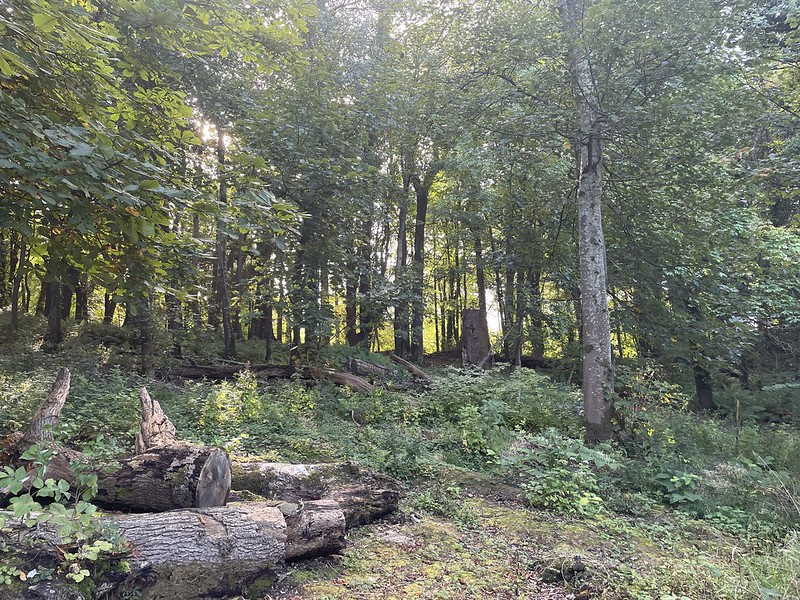
It sits on a large Country Park with a number of forest walks that make up part of the Ayrshire Coastal Path, a lake as well as forty distinct buildings. A visitor centre, cafe and shops have been setup and there is even a really cute second hand book-shop in one of the old servants houses. This was the highlight of the visit for Cillian.
The approach to the castle is the best. As you walk from the cafe down past the second hand bookshop – your view is obscured by trees, but once you turn the corner and hit the postern gate – boom there it is in all it’s glory.
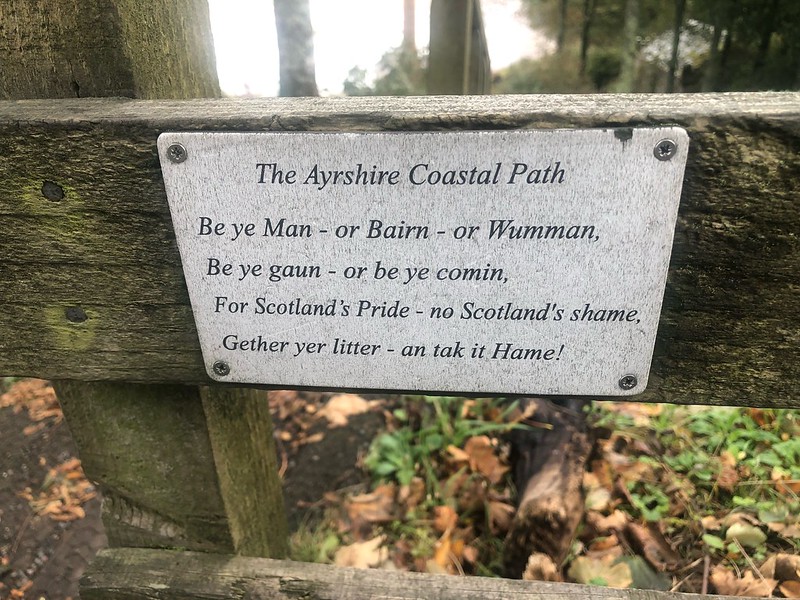
You know you are in Robert Burns country by the anti-littering sign in Modern Scots that reads:
Be ye Man – or Bairn or Wumman,
Be ye gaun – or be ye comin,
For Scotland’s Pride – no Scotland’s shame,
Gether yer litter – an tak it Hame!
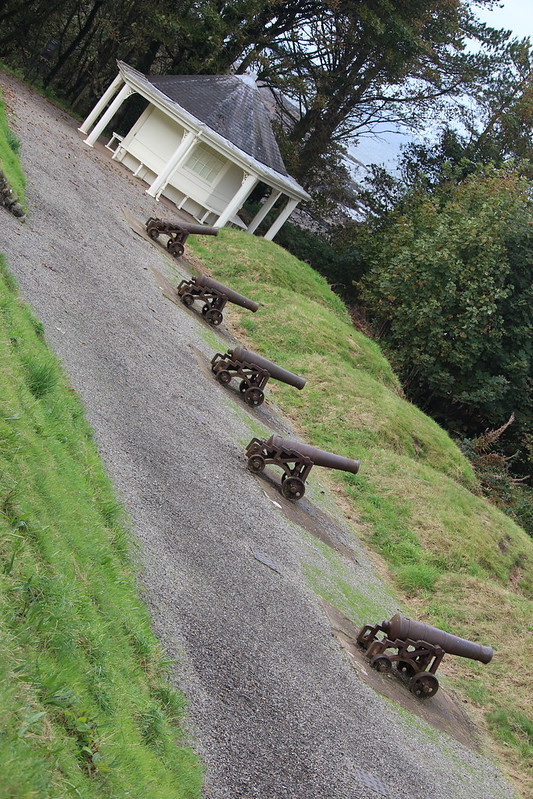
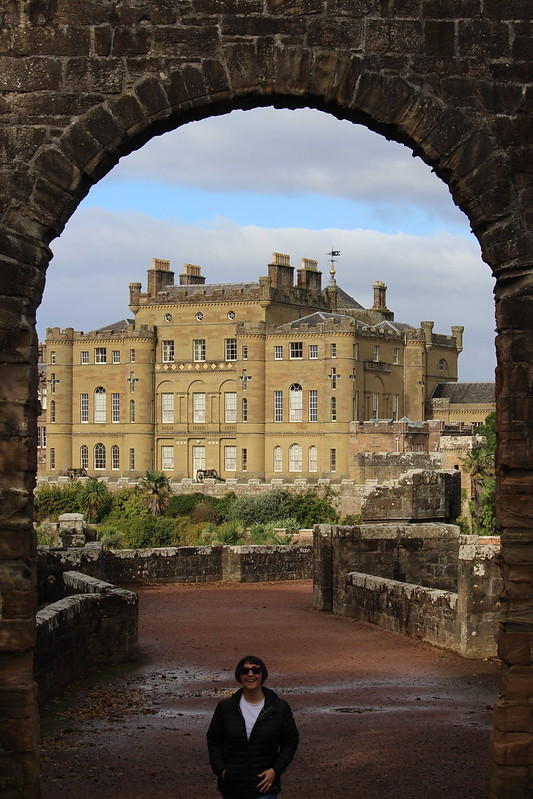
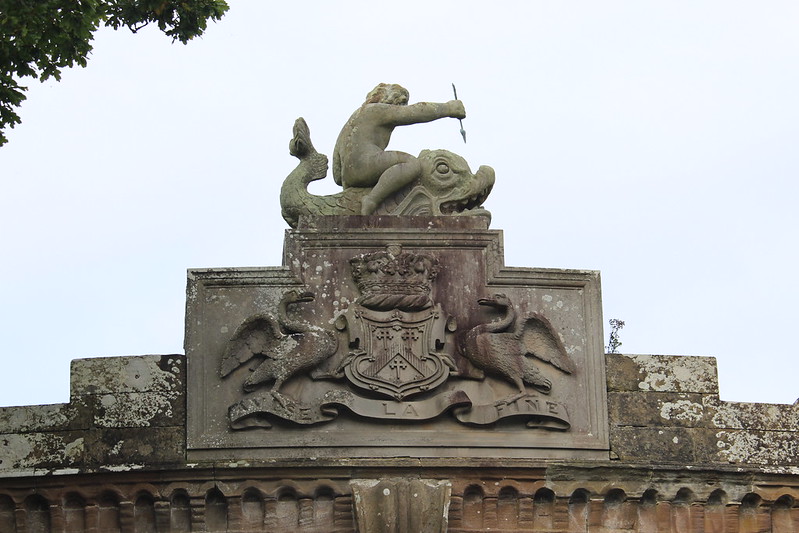
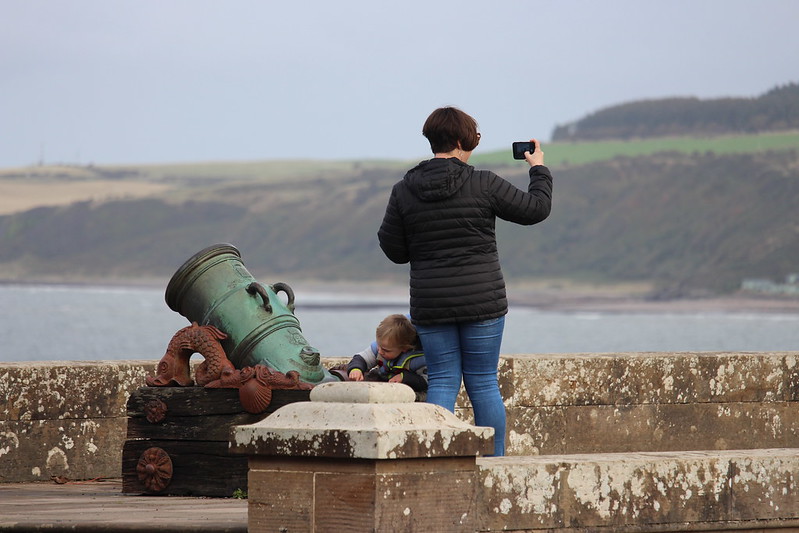
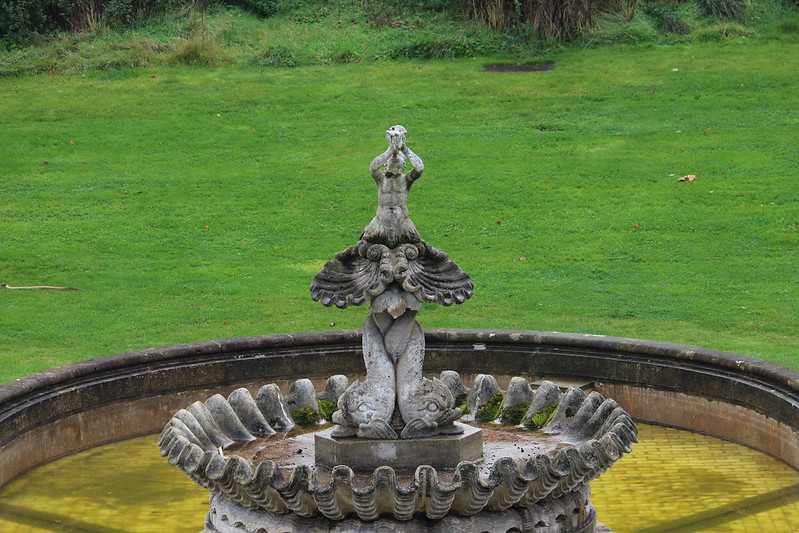
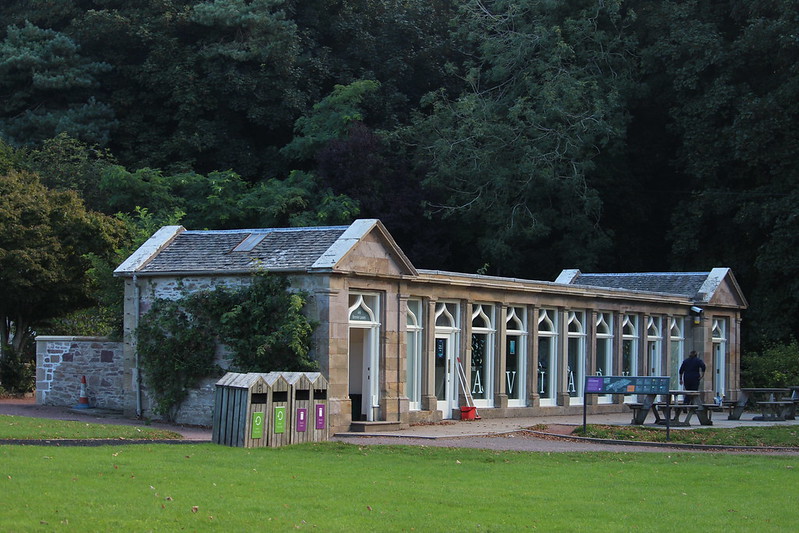
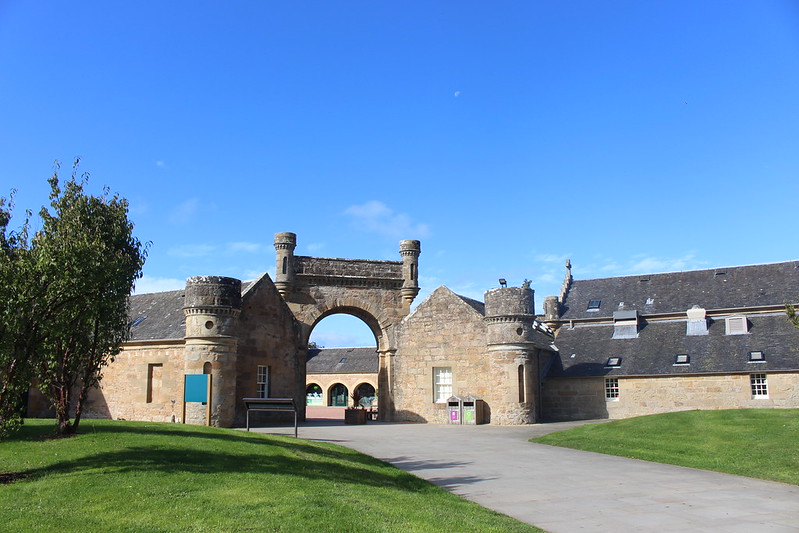
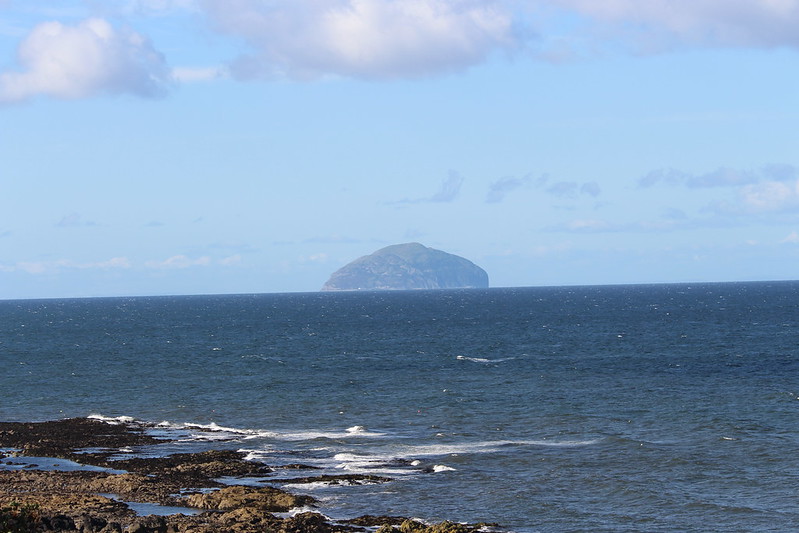
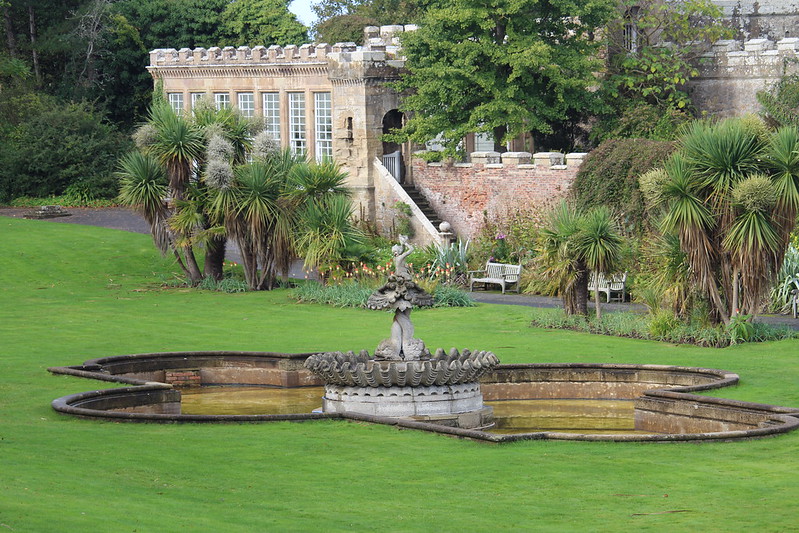
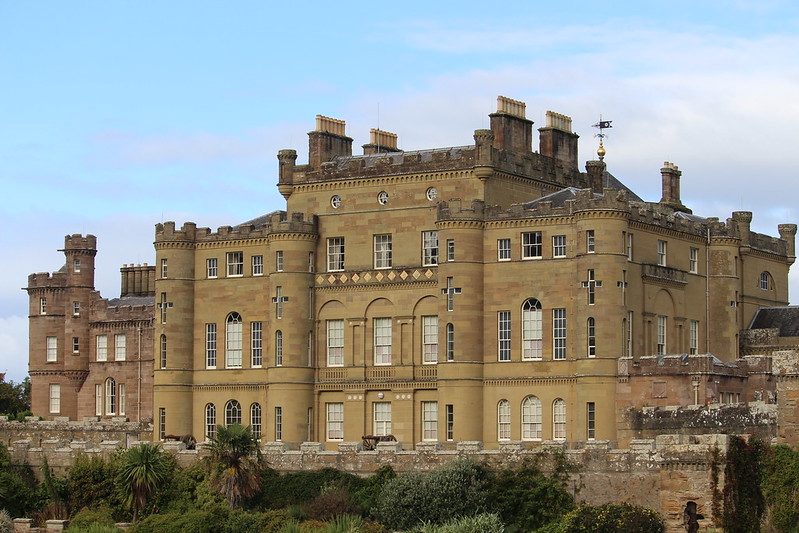
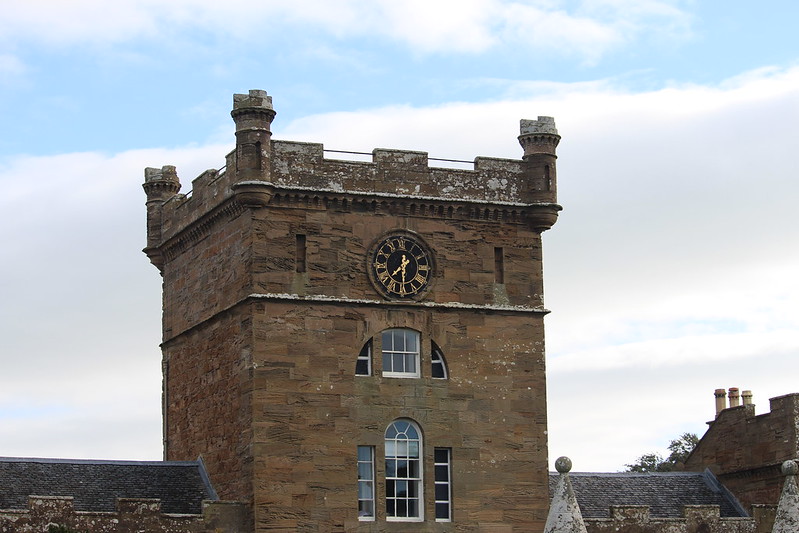
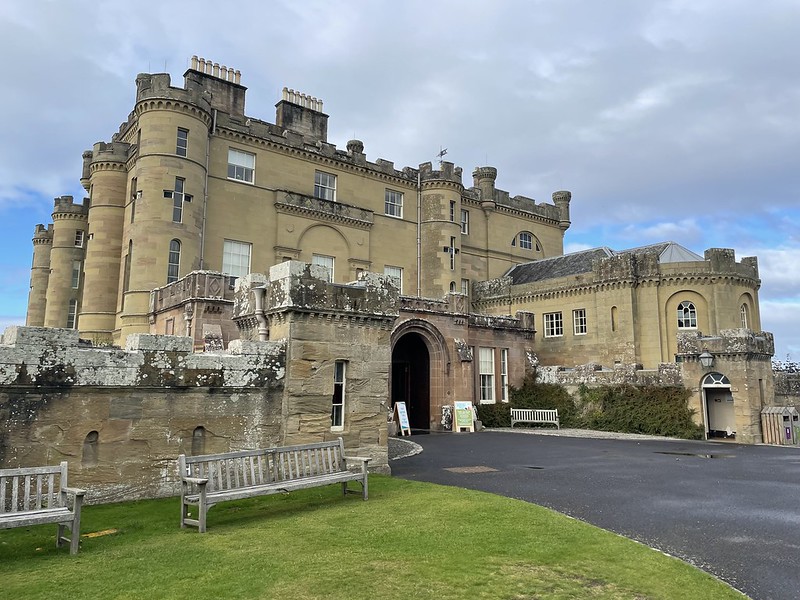
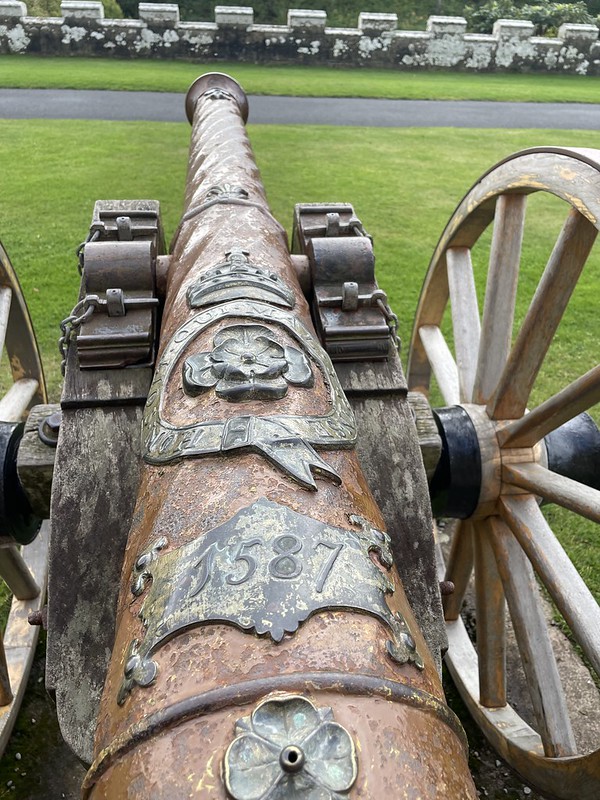
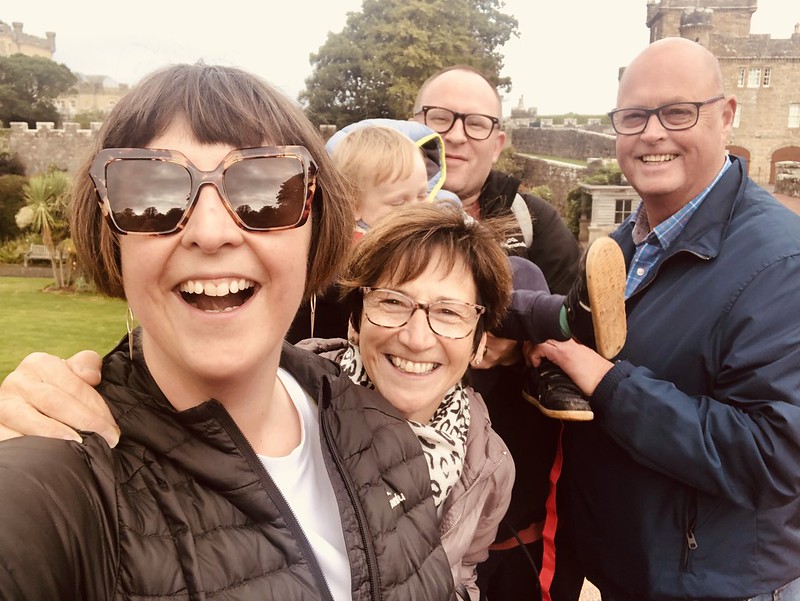
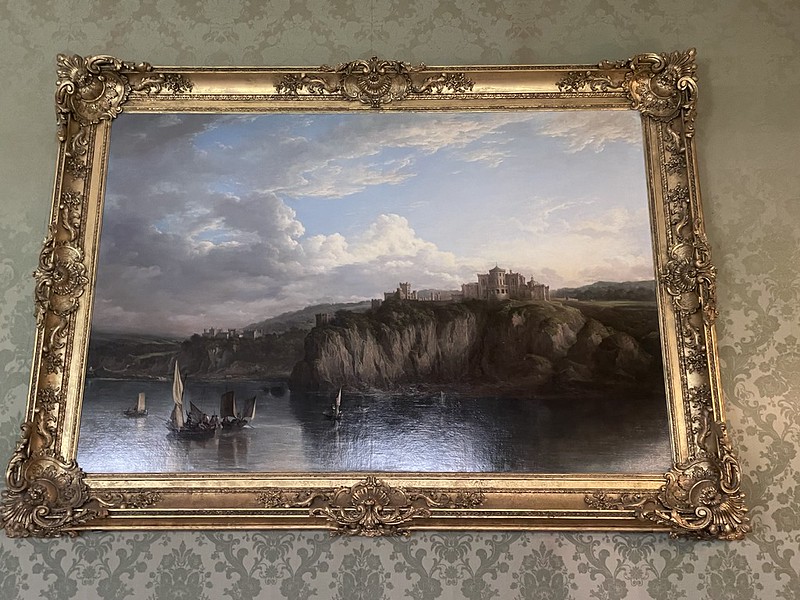
The castle was designed and built by Robert Adam in the 18th Century and it has turrets, a drum tower and circular saloon that overlooks the sea, with a commanding view of Aisla Craig. It is very impressive and with a rich history that leads all the way to the White House having been visited by two former US Presidents.
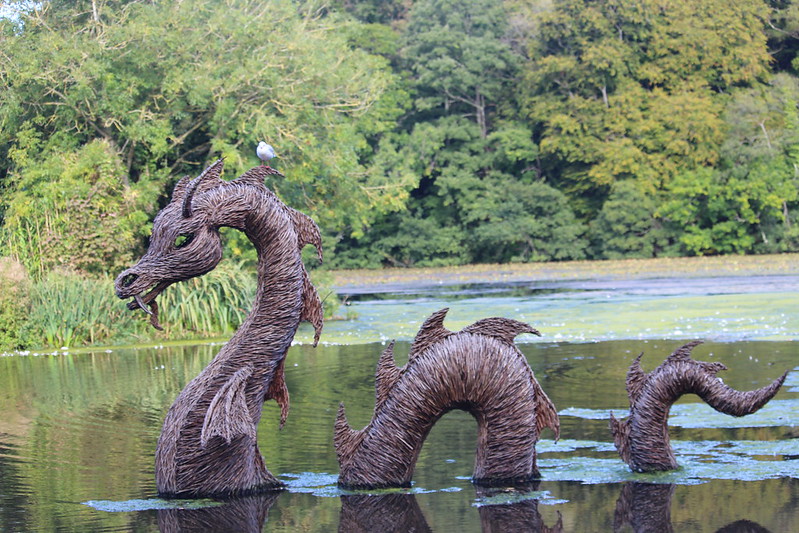
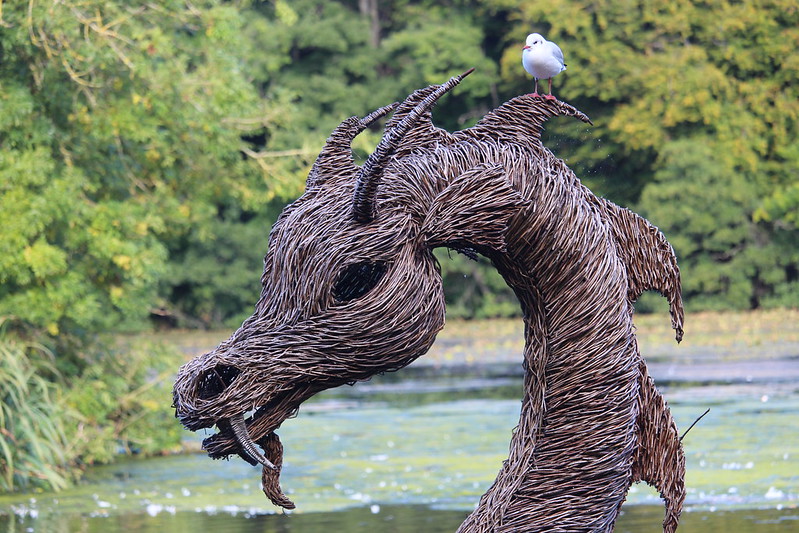
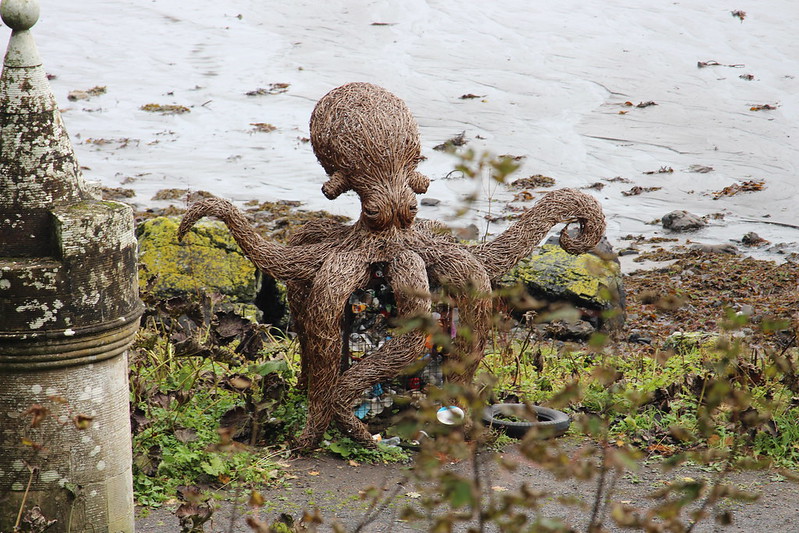
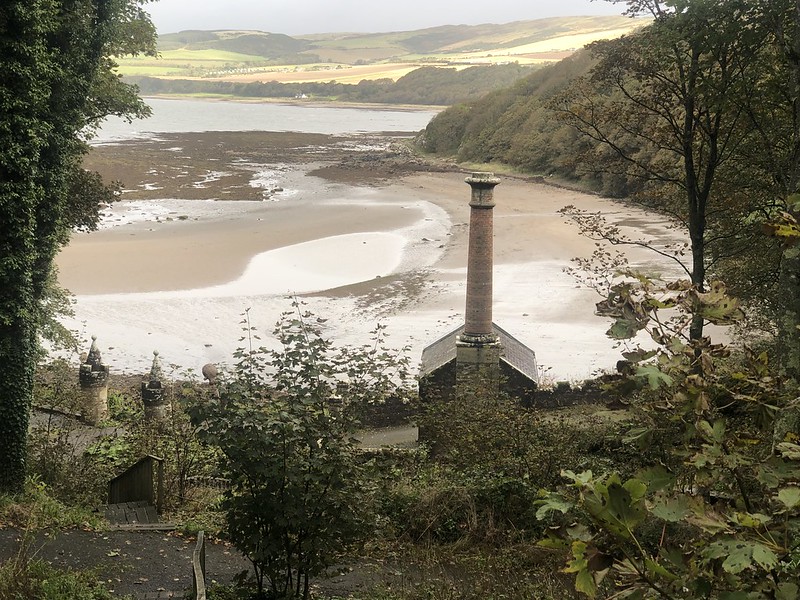
There were various willow statues dotted around the grounds, the dragon in the lake and the octopus down by the Gas House to name just two of them. There is a trail of them you can follow and they were installed as part of Scotland’s Year of Coasts & Waters celebration in 2021.
A Brief History of the Clan Kennedy
Twixt Wigtown and the town of Ayr… NO man may think for to bide there, Unless he court with Kennedy
In the late 14th Century Sir James Kennedy married Princess Mary Stewart (daughter of King Robert III of Scotland). This royal connection was to propel the Kings of Carrick into the inner circle of the Scottish Royal Court and their place in history.
Over the next 200 years they survived family infighting, the politics and struggles of the Scottish-English relationship and built a vast fortune making use of the isolated sea caves in the area to import tax-free French wine, brandy and silk.
The 10th Earl – David Kennedy had a grand vision to turn Culzean Castle from a fort into a stately mansion and when he died unmarried and with the estate bankrupted – saviours in the form of American money saved the family home. You see the 11th Earl – Captain Archibald Kennedy had married into vast New York merchant fortunes.
In 1945 the 5th Marquess of Ailsa (17th Earl) gifted the castle and 500-acre estate to the National Trust for Scotland and hence our ability to experience the wonder of this part of the world today.
Grand Designs
If you thought outside the castle was good – you should go inside and check that out too.
Scotland’s premier Neoclassical architect – Robert Adam is responsible for converting the castle from a 16th century tower house into the most famous of the romantic cliff-top mansions in all of Great Britain. In fact it was to be his last commission, his final ‘grand design’.
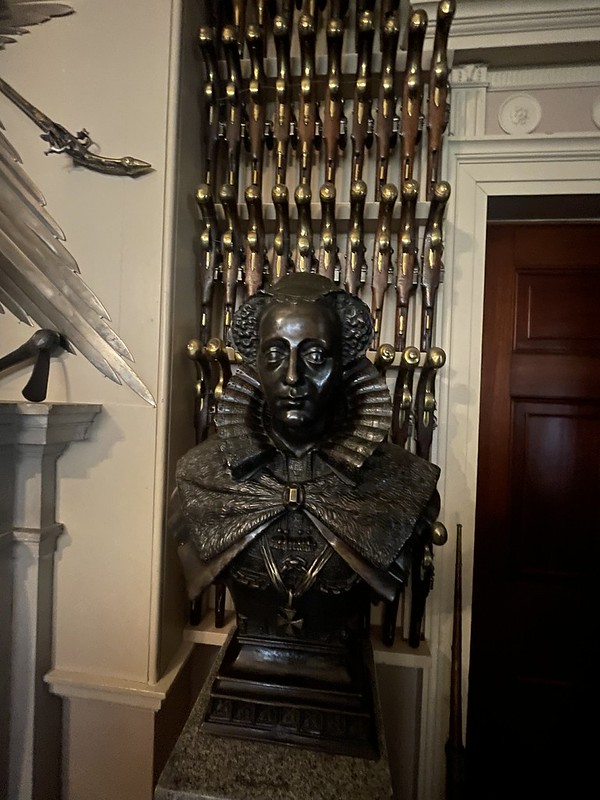
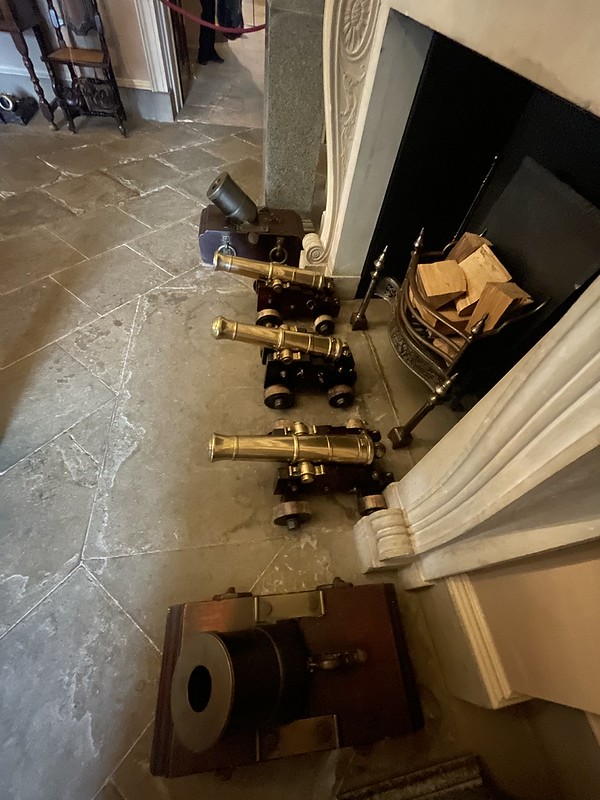
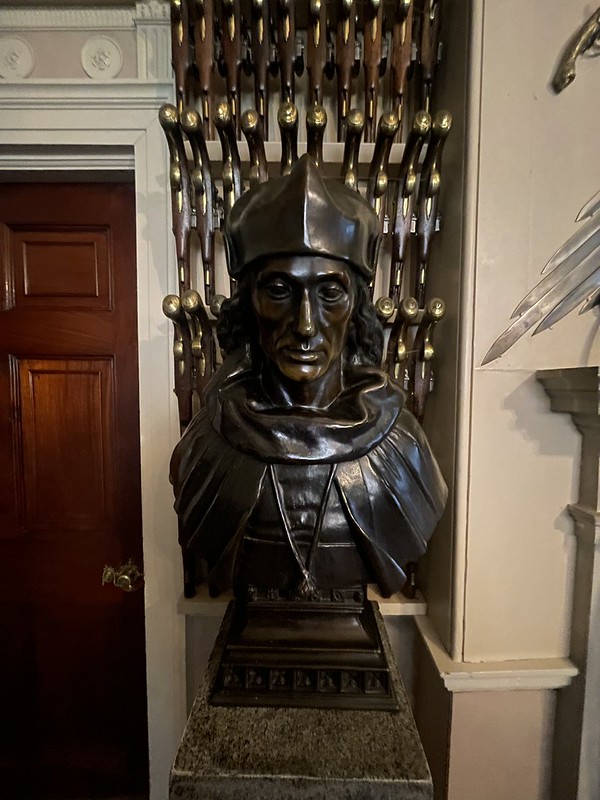
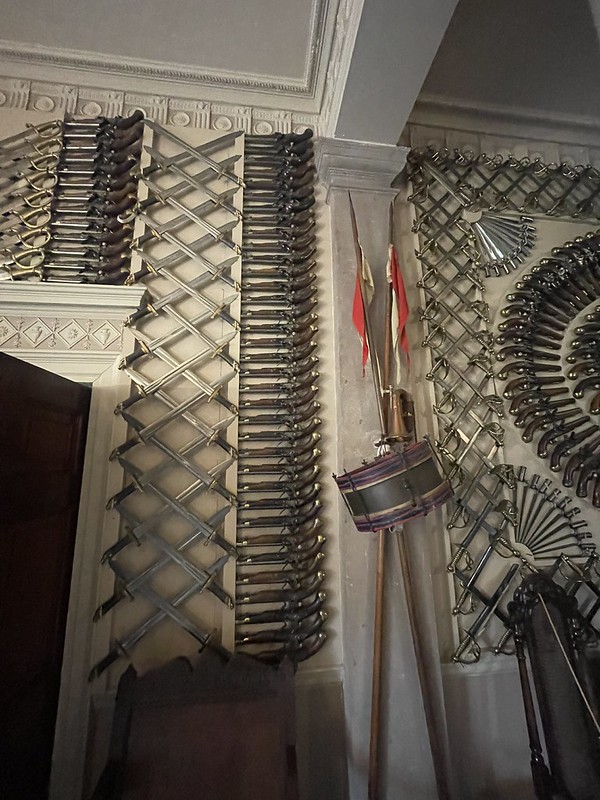
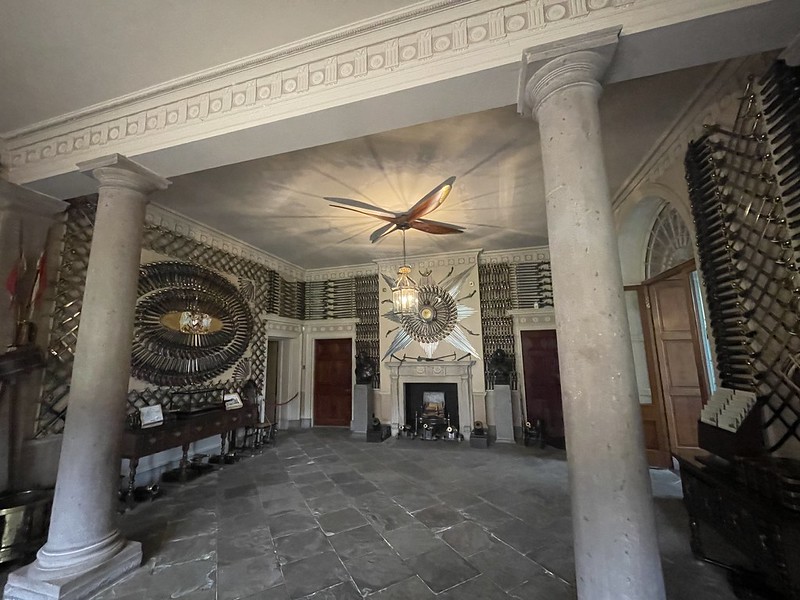
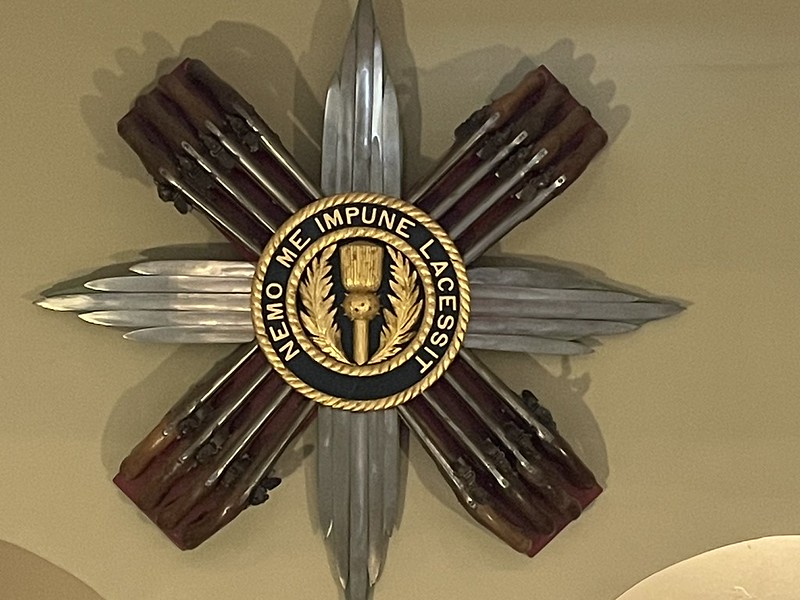
You start in the grandiose Entrance Hall that was designed in the late 18th century for Archibald Kennedy, the 11th Earl of Cassillis. This is the known as the ‘armoury’ and it is meant to overwhelm arriving guests with an immediate sense of military standing, wealth and the grandeur of neoclassical days.
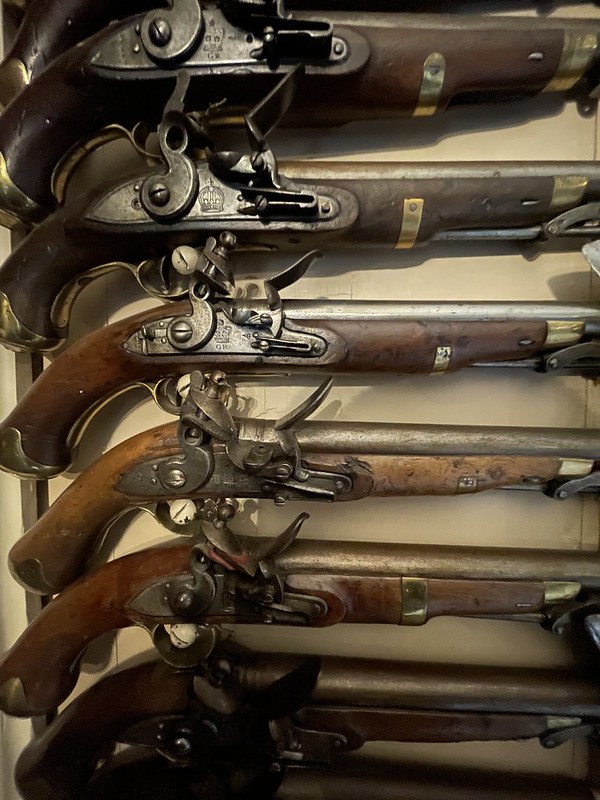
It has a number of intricate wall displays and contains over 700 weapons including 240 Flintlock pistols that were all created by London gunsmith John Devine between 1795 and 1800. The uniformity of the display was only able to be pulled off as the vast majority of these weapons come from the same source – namely the Tower of London.
In 1812 the Earl purchased this large surplus collection of ordnance and had it shipped up in 12 large wooden packing crates accompanied by a specialist armourer to fix them up onto the walls. Some of the swords were sourced more locally from Scottish regiments such as the West Lowland Fencibles
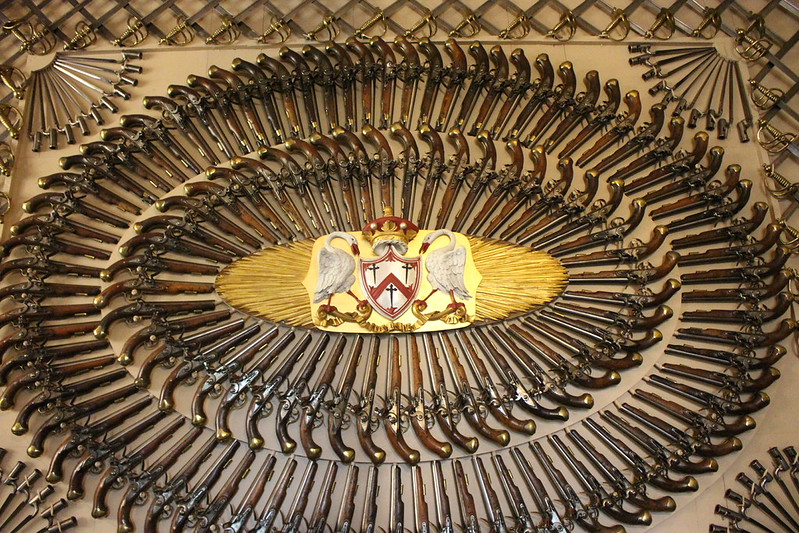
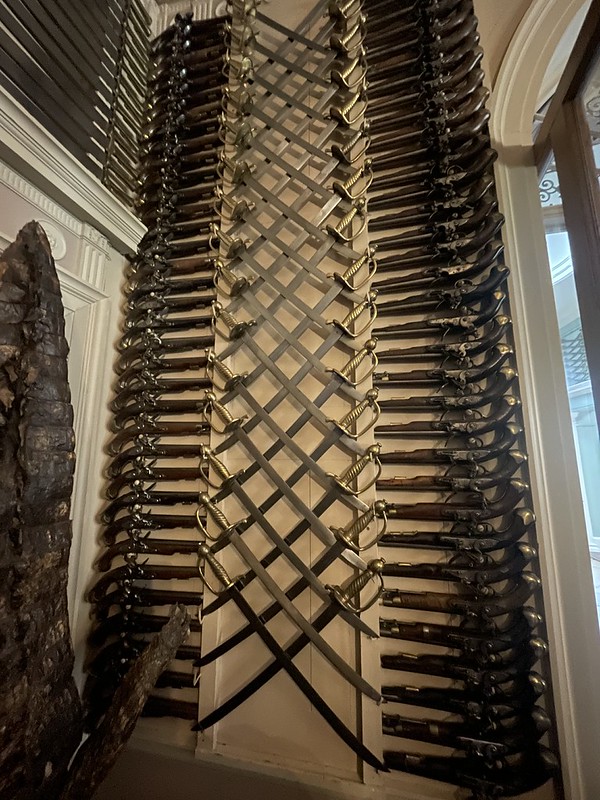
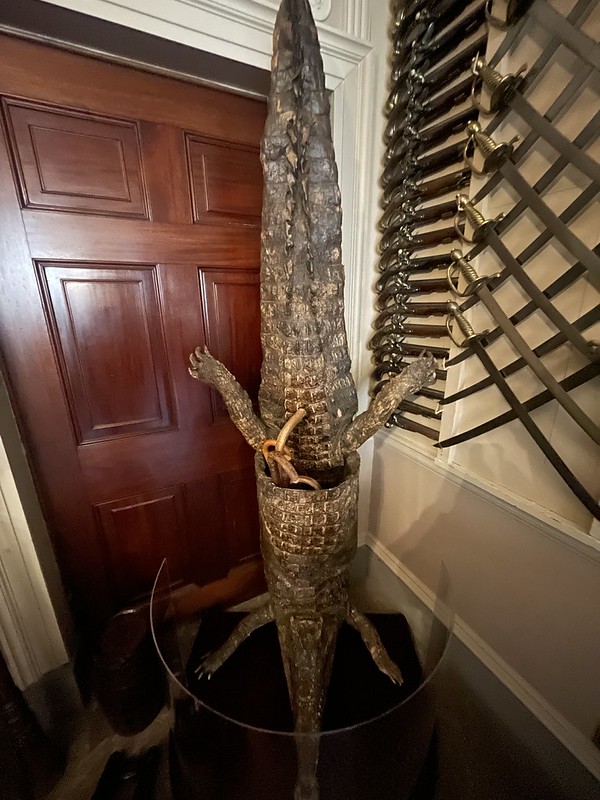
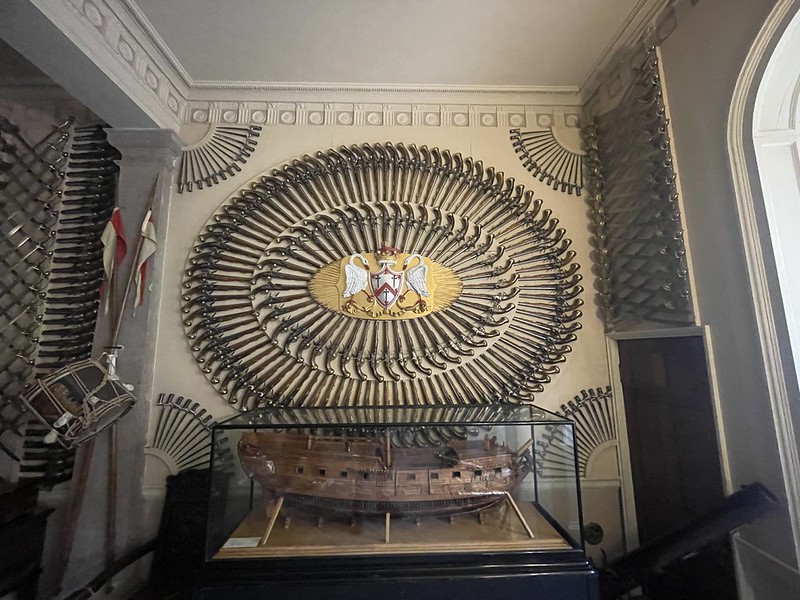
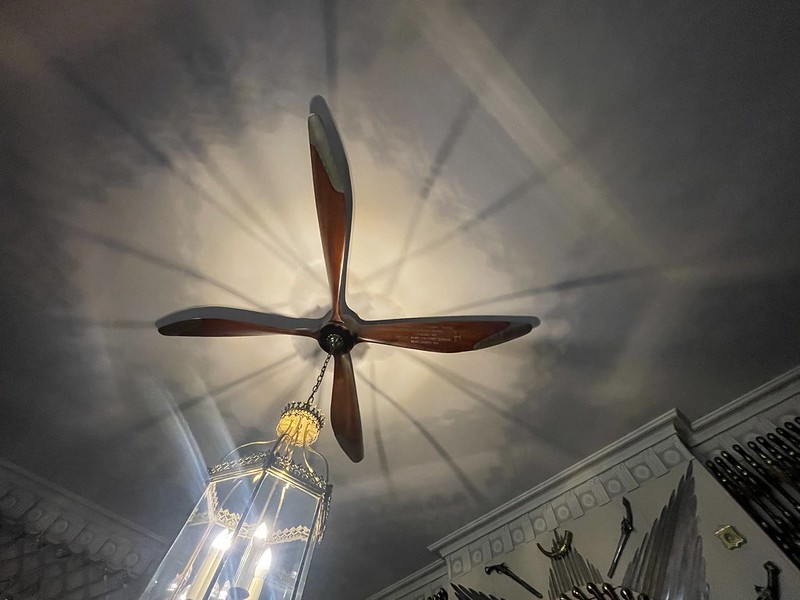
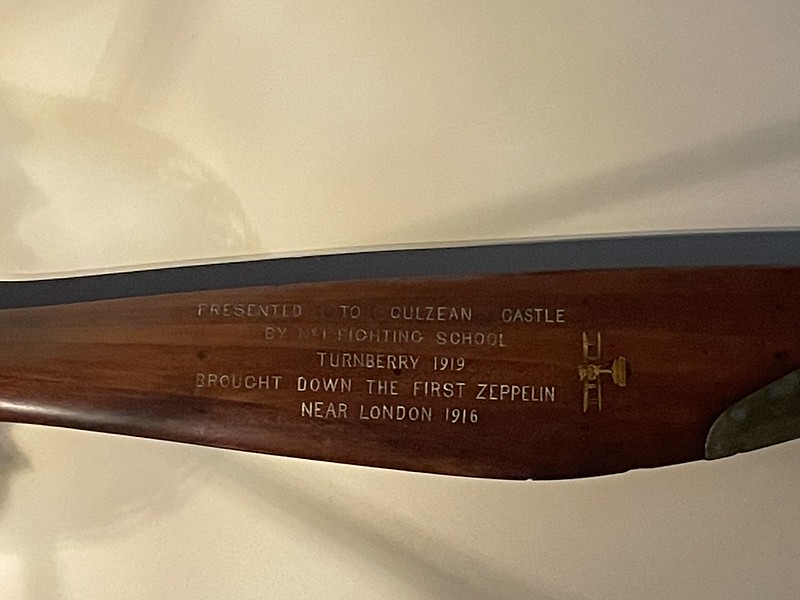
On the ceiling is an another interesting item – in a room full of interesting items! It looks like ceiling fan but is in fact the propeller of a British Royal Flying Corp BE2c biplane that was flown by Lieutenant William Leefe Robinson. What is remarkable about this is that on the night of 2nd September 1916 this plane was used to attack and bring down a German airship (Zeppelin). It was the first German airship ever shot down on British soil and Robinson was awarded the Victoria Cross (VC) for this feat.
It is in Culzean as it was gifted by the No.1 Fighting School out of nearby Turnberry Aerodrome in 1919 to Archibald Kennedy, 3rd Marquess of Ailsa as a token of gratitude for a land grant that allowed the aerodrome to be built. Today the aerodrome is no longer in existence – having been re-integrated to the Turnberry Links Golf Club from which it sprung from during the war years.
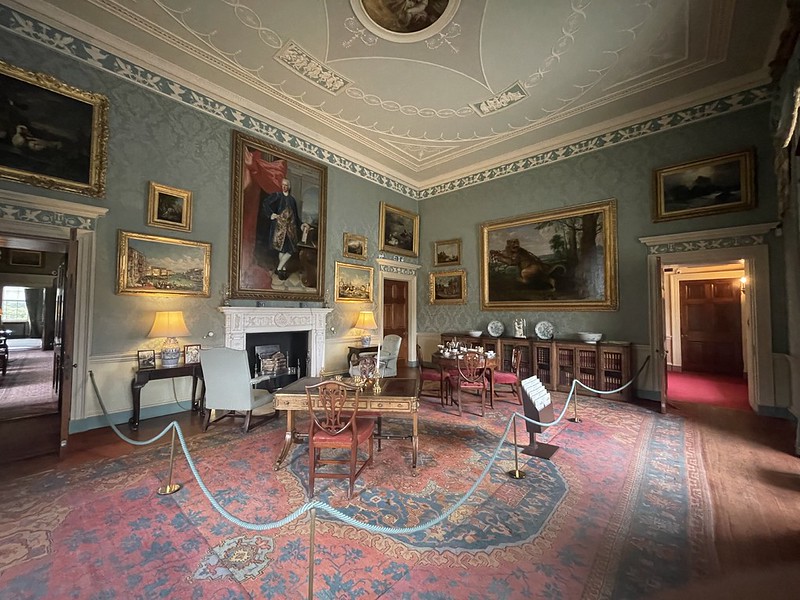
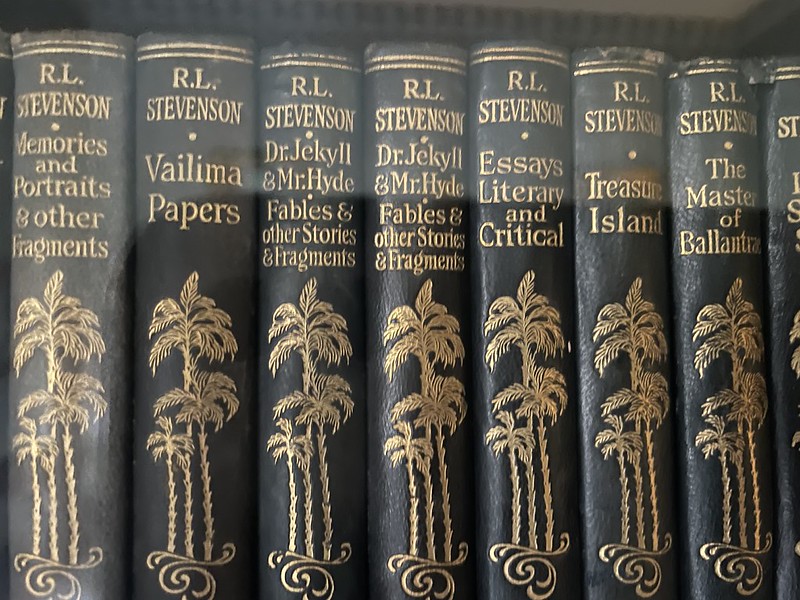
Beyond the hall is a myriad of different rooms full on antiquity. The Library and Drawing room contains a collection of 18th century books, most notably a collection of the works of Robert Louis Stevenson. In 1876 RSL had his famous ‘winter walk’ through Ayrshire – a pilgrimage to the Burns country and an opportunity to draw inspiration from the rugged coastline. Ayr was notorious as a hub for smuggling in the 18th Century and with its landscape of rocky cliffs, caves and coves he was drawn to write a tale of treaure and treason on the high seas – namely Treasure Island a few years after his visit.
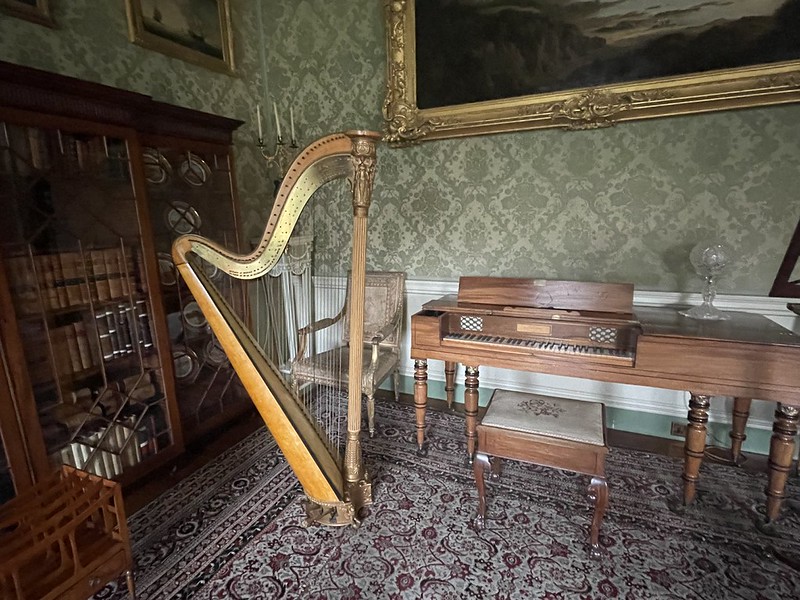
Upstairs in the Music Room is a fantastic gilded pedal harp, sitting alongside an 18th century piano in original mahogany furniture. The harp is decorated in neoclassical floral carvings and a fluted column that matches the motifs of the rest of the house.
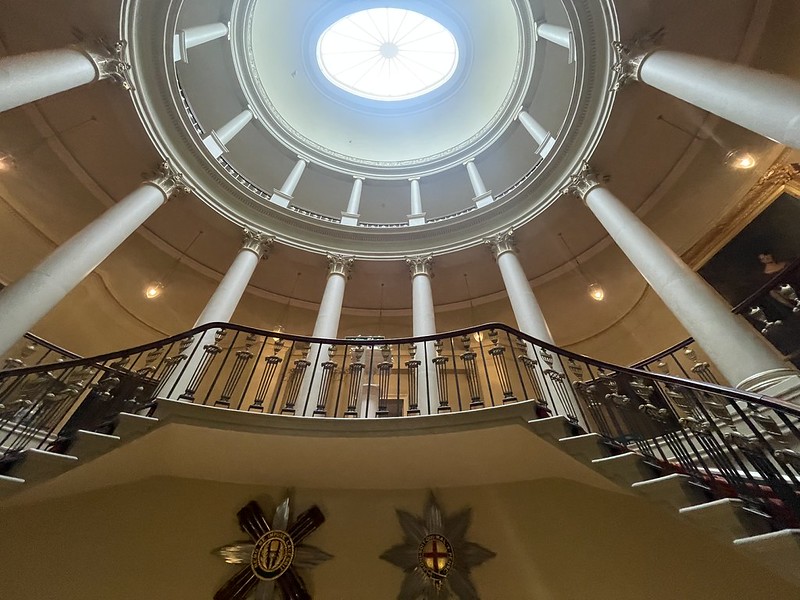
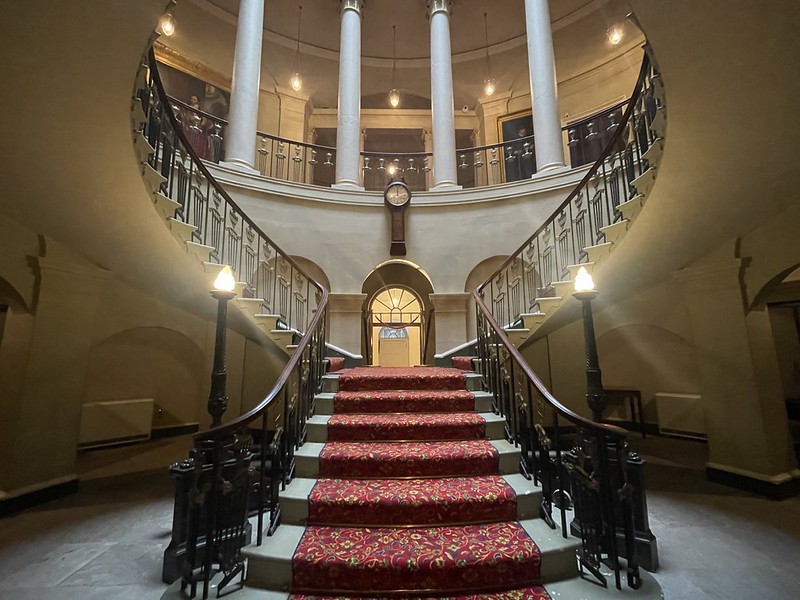
The centrepieces of the castle are the oval staircase and the round tower ballroom. The Staircase features a soaring skylight and a pair of floating curved stairs surrounded by a number of classic columns, Ionic on the lower levels and Corinthian on the upper ones.
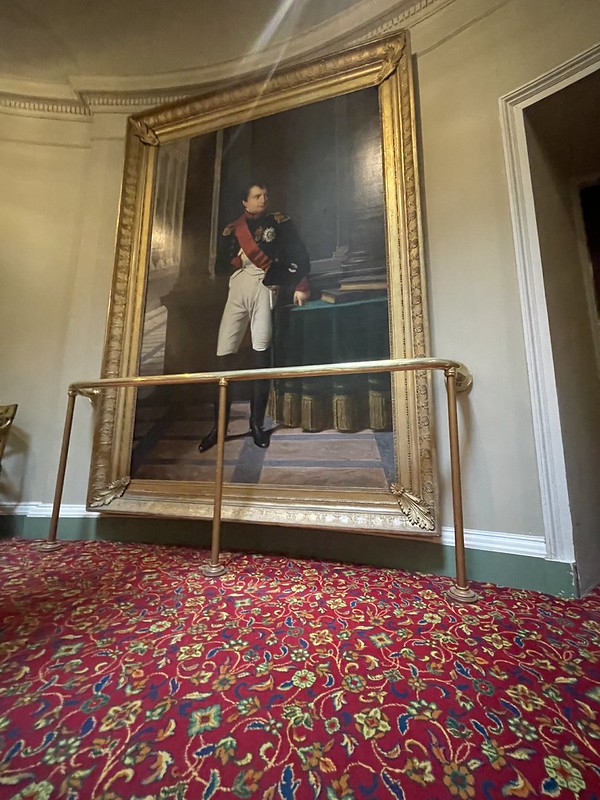
At the top of the stairs you are confronted with a full-length portrait of Emperor Napoleon Bonaparte. This is not an alternate reality where the British Isles were conquered by the French but is a nod to the passionate zeal in which members of the British aristocracy would collect souvenirs, artwork and memorabilia associated with their grand military rival. The painting was done by Robert Lefevre, a leading artist of the French imperial court and was purchased by Archibald Kennedy (12th Earl) during a trip to the battlefields of Europe. He also picked up one of Field Marshal Blucher’s tunics that he wore at the Battle of Leipzig during the Napoleonic Wars.
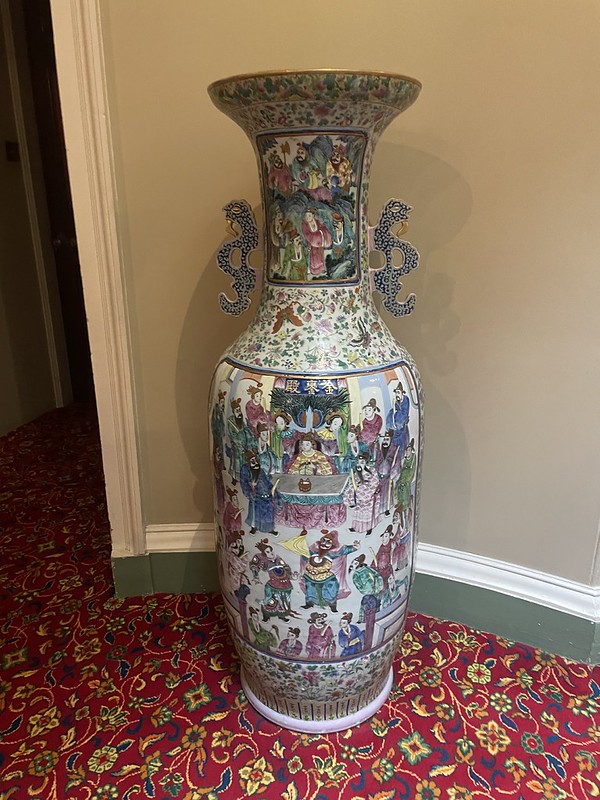
On the opposite side is a large Chinese vase from the port of Canton (Guangzhou). It features vibrant Famile Rose enamels and depicts court scenes, birds and floral patterns. Another example of the Kennedy Clan’s global reach and taste for exotic luxuries.
….Downstairs
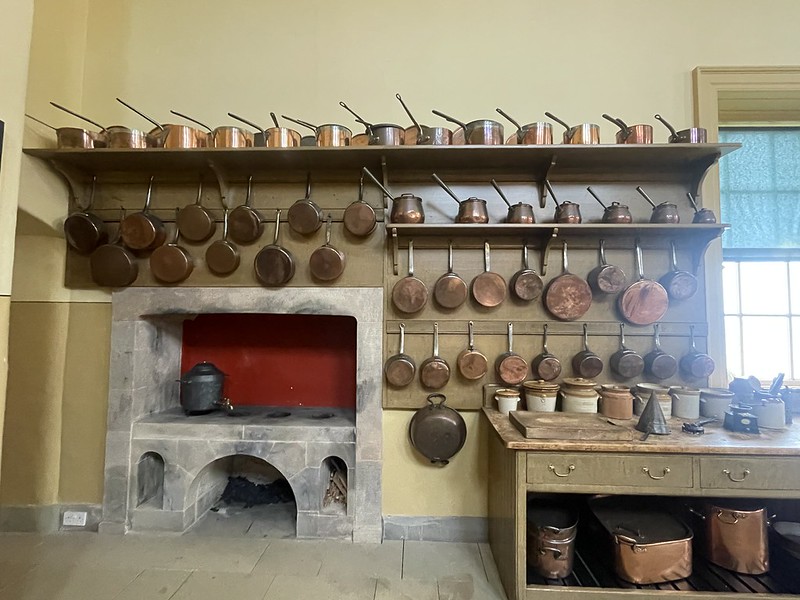
Beyond the fancy decorating and grandness of the house is the engine room of this whole endeavour – an aristocratic household, much like an army, marches on it’s stomach and so this house needed a big kitchen.
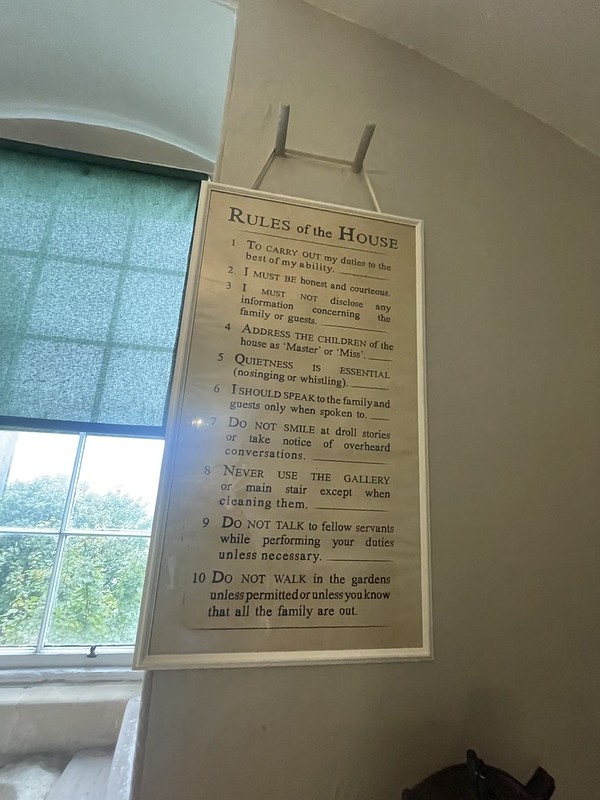
The Old Kitchen and Scullery contained massive cast-iron coal ranges, a large selection of copper pots and pans and a bell indicator board for summoning servants (much like the one you see in Downton Abbey!). There was also. a board showing the ‘Rules of the House’ for all serving staff covering conduct and where to venture and where to not.
The Americans
The American connection to Culzean did not start and end with Archibald Kennedy’s money. When they gifted the castle and grounds to the Scottish National Trust in 1945 they had one specific condition to the handover :
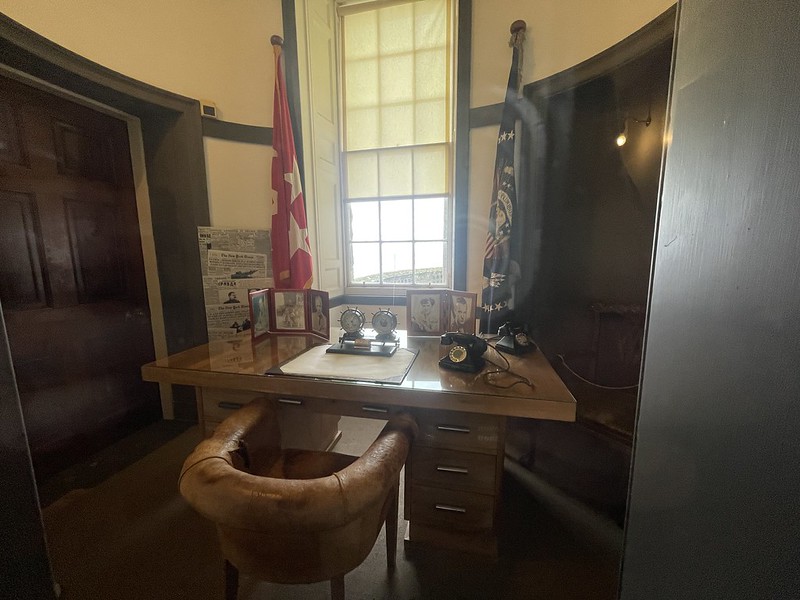
As a token of national gratitude for his leadership as Supreme Commander of Allied Forces in Europe during World War II – the entire top floor apartment of the castle was to be gifted to General Dwight D Eisenhower. He would visit his “scottish home” on four main occasions following this, each time denoted by a change in station.
- The first visit was in 1946 while still a General. He was awarded the Freedom of the Burgh of Ayr on this visit.
- The second while serving as the Supreme Allied Commander of NATO in Europe in 1951.
- The third as the sitting US President during his second term in 1959 during an official state visit. Culzean became the “White House of the North” for this short period of time.
- The fourth and last as a private citizen in 1962 with his family and grandchildren.
Today part of the apartment functions as the Eisenhower Exhibition while the rest is a luxury apartment for rent. Maybe on the next trip back!
Eisenhower was not the first US President to visit the castle. John F. Kennedy visited the castle in the 1930s as a young man, his father Joseph P Kennedy Sr who was serving as the US Ambassador to the Court of St James.
The main reason for his visit was to meet and help American survivors of the SS Athenia disaster. The passenger liner was sunk by a German U-Boat, U-30 commanded by Oberleutnant Fritz-Julis Lemp,off the cost of Ireland in September 1939. The future US president used the castle and its network as a base to assist those survivors and acted as the US government representative for the relief effort.
There is a persistent rumour that he is a cousin of the Kennedy Clan but alas no, JFK comes from the Irish wing of the Kennedys in County Wexford. They only share the same surname.
The Citizen Kane of British Horror
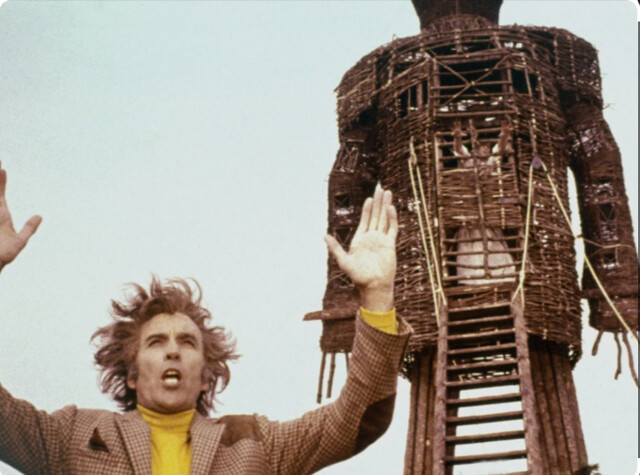
Culzean Castle’s story does not end in 1945. In 1973 it was used as a location for one of the best British horror movies of all time – The Wicker Man starring Christopher Lee, Edward Woodward and Britt Ekland,
The castle becomes the home of the Lord Summerisle on the fictional island of the same name.
There are a couple of scenes filmed here:
Sergeant Howie (Woodward) approaches the castle via horse drawn carraige, under the ruined gate and across the viaduct before going under the main gate and approaching the castle.
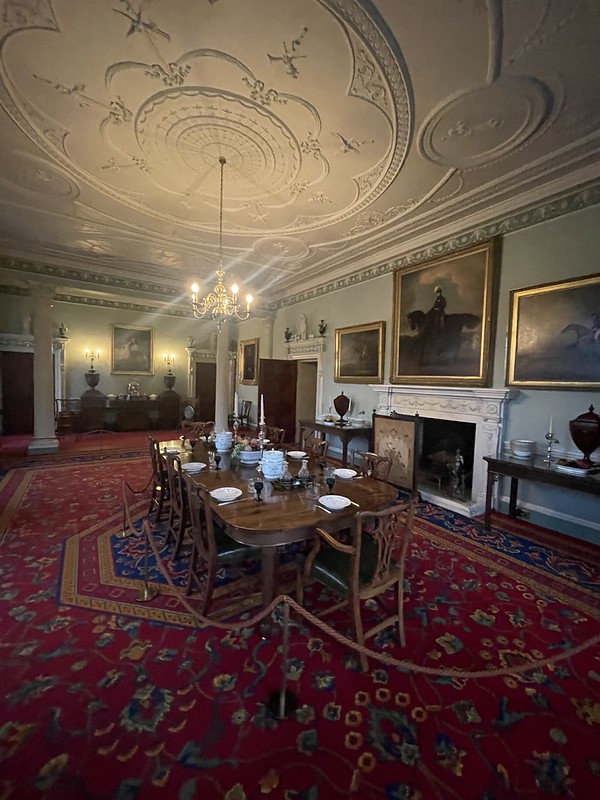
The State Dining Room was ten used for a scene between Lee and Woodward’s characters and it is still decorated then as it is today. The two actors then walk outside the castle and descend down into a laboratory by descending some stairs and go though a white-painted gate – which is still there today.
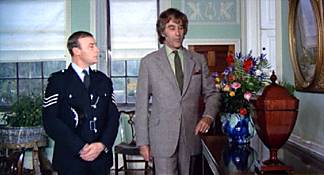
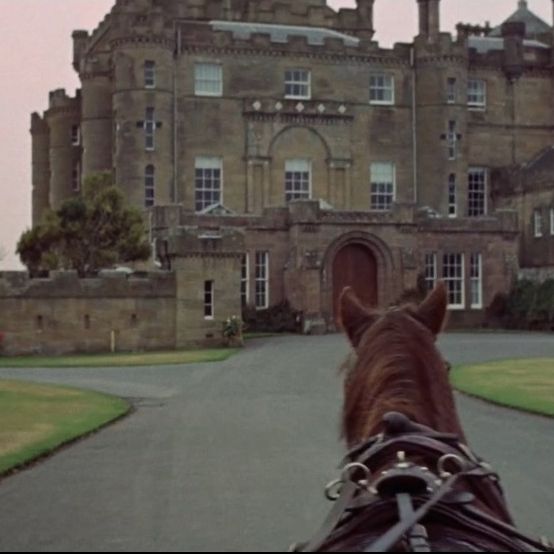
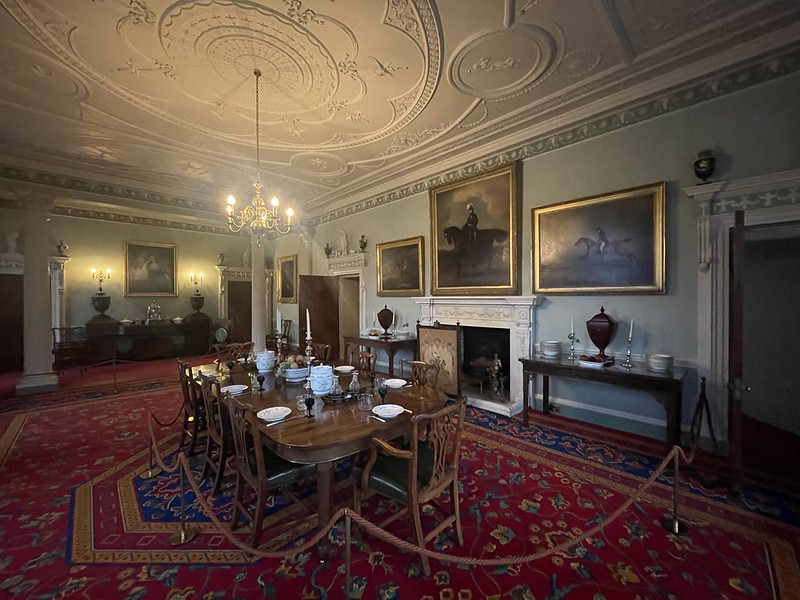
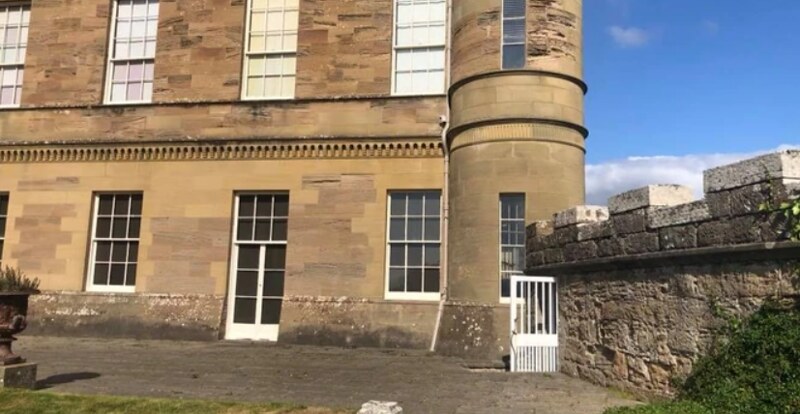
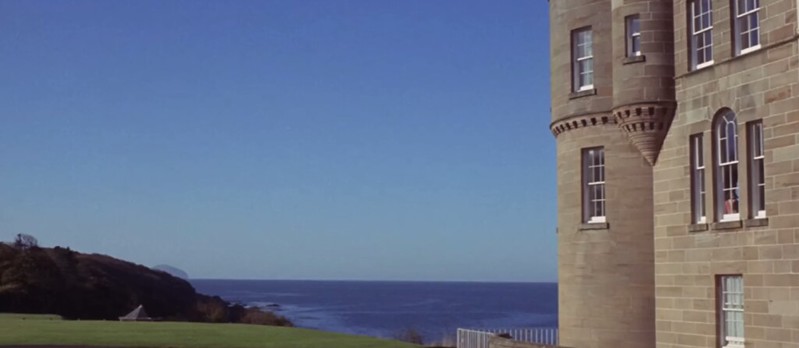
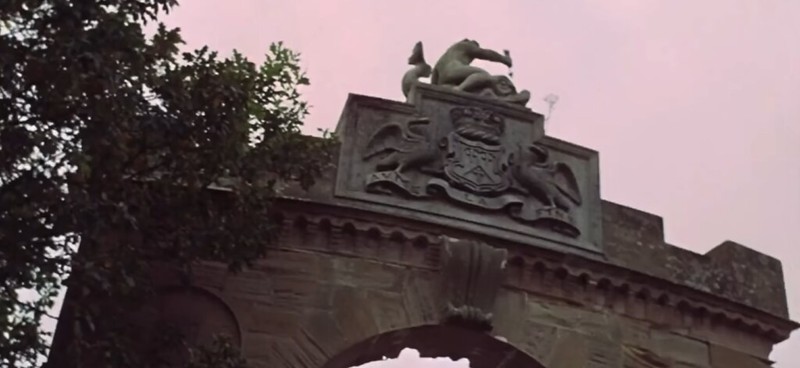
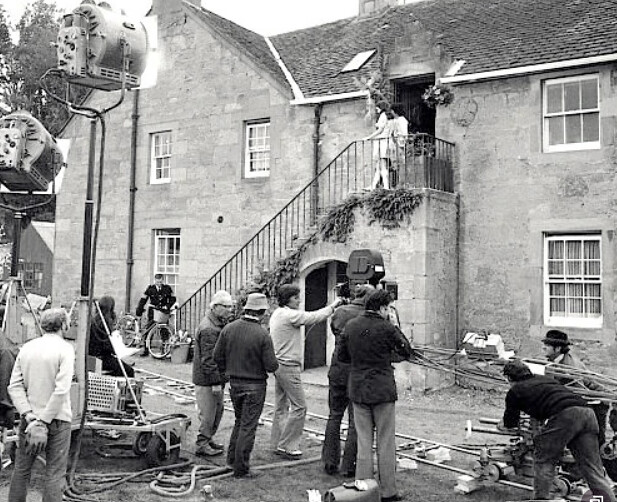
A deleted scene was filmed at one of the other buildings on the grounds – where Sergeant Howie visits the home of Holly Grimmond (played by Scottish actress Fiona Kennedy). Today this is where the second-hand bookshop is located.


Your photos are really beautiful – and what a rich and varied history Culzean has!
LikeLike