September 2022
After a city break in Edinburgh and having a party at Ayr Bowling Club for Cillian’s 2nd birthday – it was time for a wee road trip.
This time we would be heading north, out of the lowlands and into the Scottish Highlands.
It was a good 3-4 hour drive from Ayr to Glencoe so we broke it up with some stops – first off was in the West End of Glasgow – at the Hillhead Sports Club to have breakfast with some of the Filippi Gang – Rez, Gerry and Angela. The food and coffee was great at Cafe Source Too and with it next to the rugby pitch, there was some room for Cillian to run around in.
After that it was in the car and out the Great Western Road and towards Loch Lomond. Our journey would take us all the way up the western shore of the lake before we hit Tarbet and had to take a big right turn just in front of it’s hotel. The name of the village comes from the Scots Gaelic word ( An Tairbeart) for isthmus as the village stands between the shores of Loch Lomond and Loch Long.
We continued up the A82, passing through the apt named Bridge of Orchy village until we reached the high ground north of Loch Tulla. Here there was a viewpoint with fantastic views and a chance for a warm cup of coffee and tea.
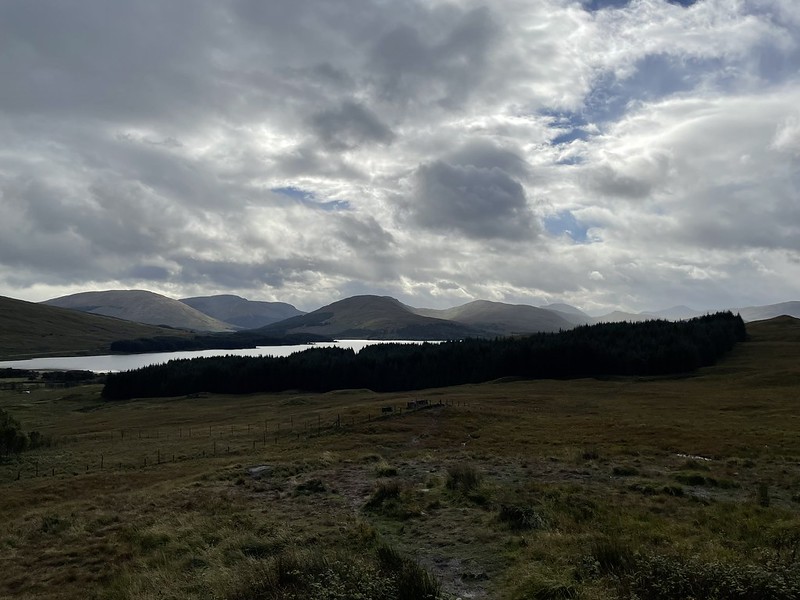
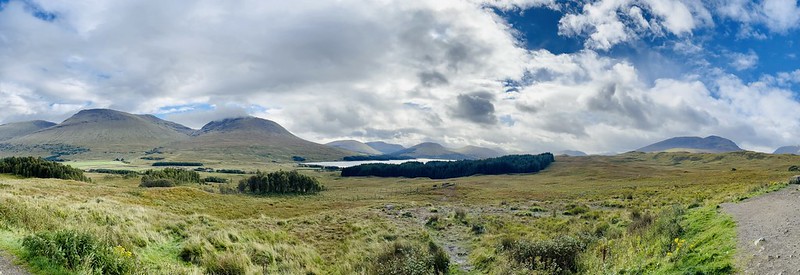

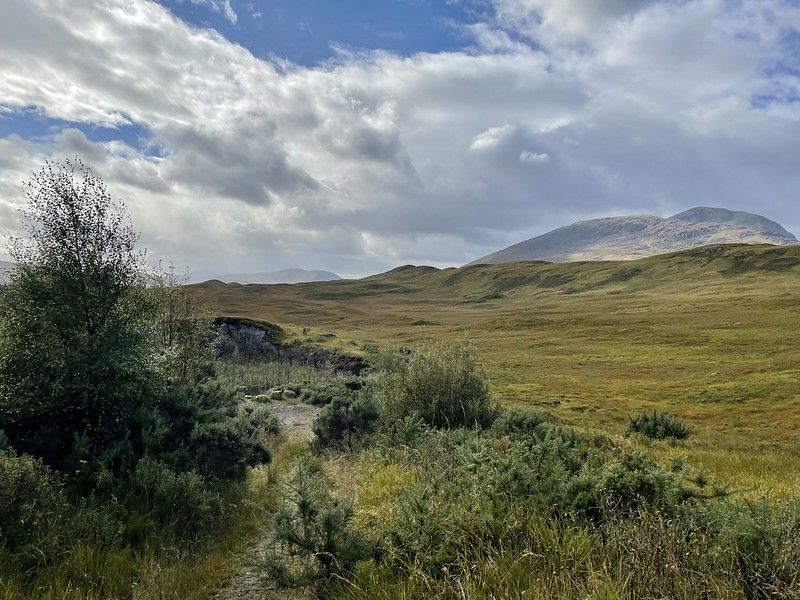
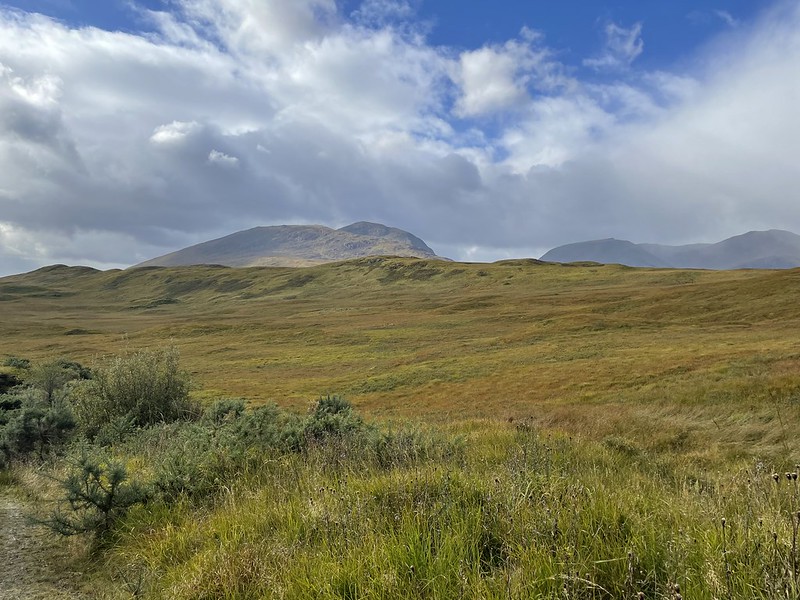

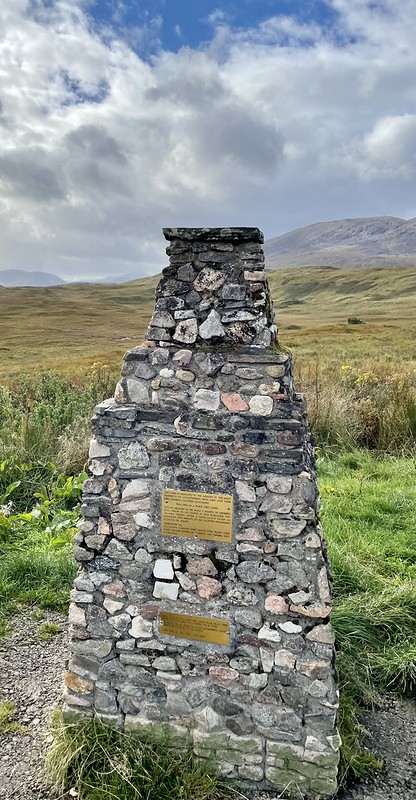
Next to the parking bays is a stone cairn known as the Mountaineers Memorial. It is dedicated to the hundreds of mountaineers who have lost their lives climbing Scotland’s mountains. It is also specifically dedicated to Sir Henry T Munro who published the “Munro Tables” a meticulous study of all mountains over 3,000 ft. That is why you will see mountain summits and peaks over that height referred to as Munros and Munro Tops.

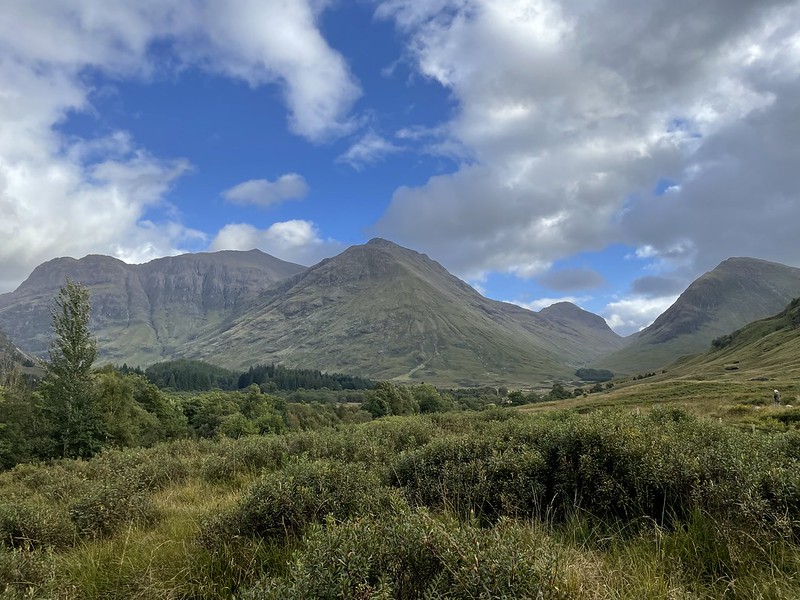
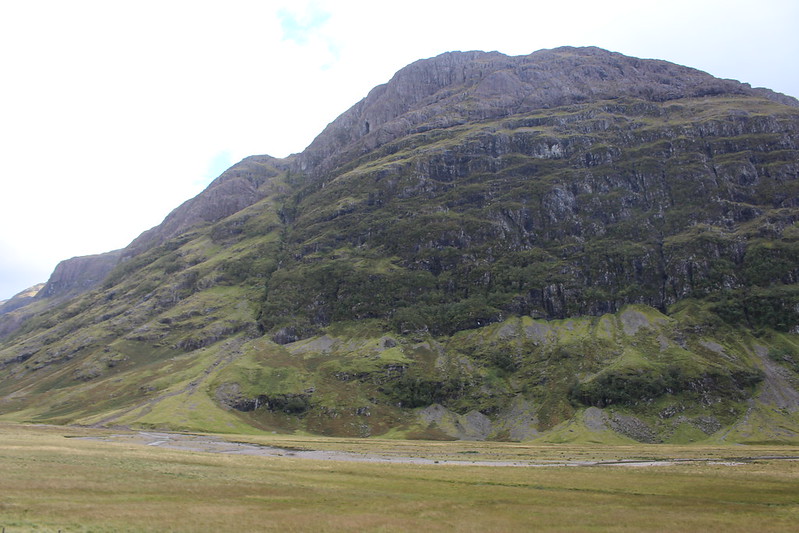
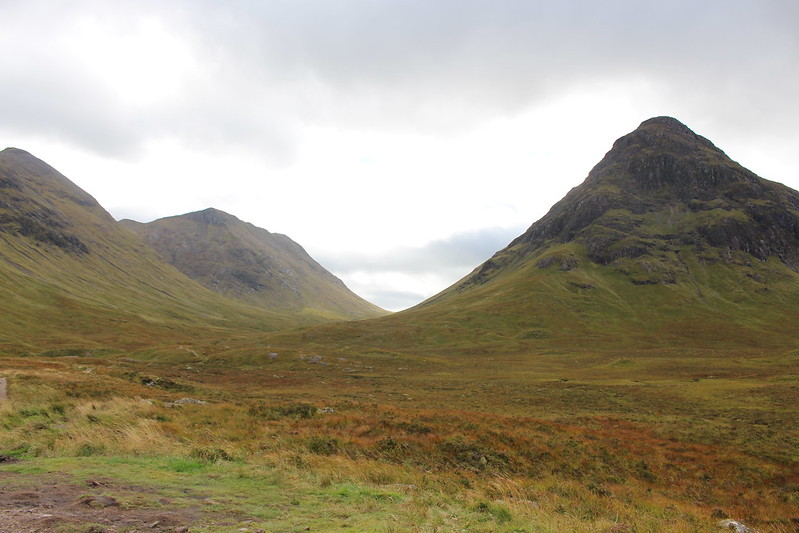
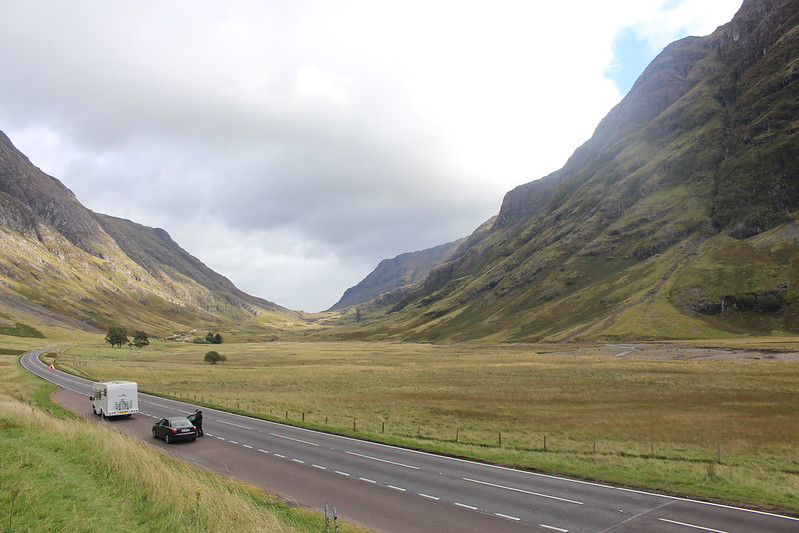
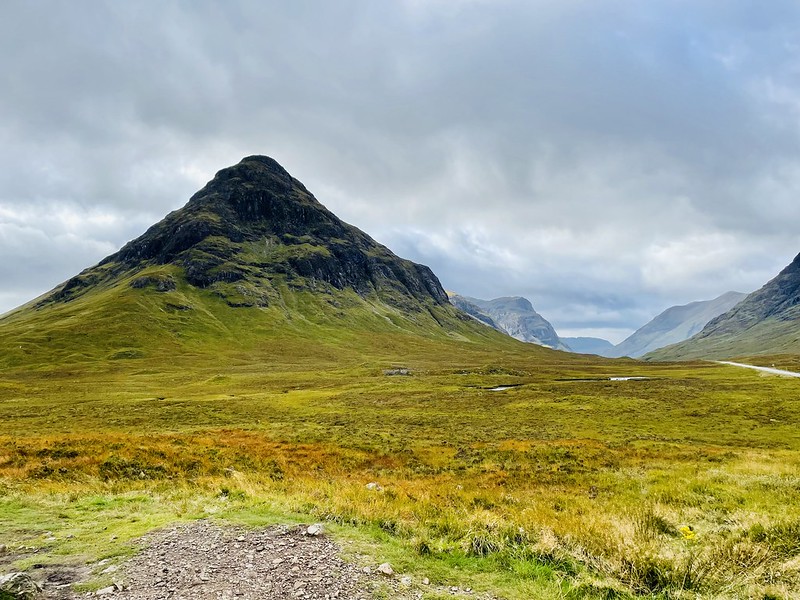
We continued up the A82, past the Glencoe Mountain Resort, past the West Highland Way walking track and another for the Devil’s Staircase and beyond towards Glencoe. We stopped again in a small car park that gave us a fantastic view of the Three Sisters – Gearr Aonach (‘short ridge’), Aonach Dubh (‘black ridge’) and finally Beinn Fhada (‘long mountain’) – a fine collection of steep ridges connect to the larger Bidean nam Bian massiff.


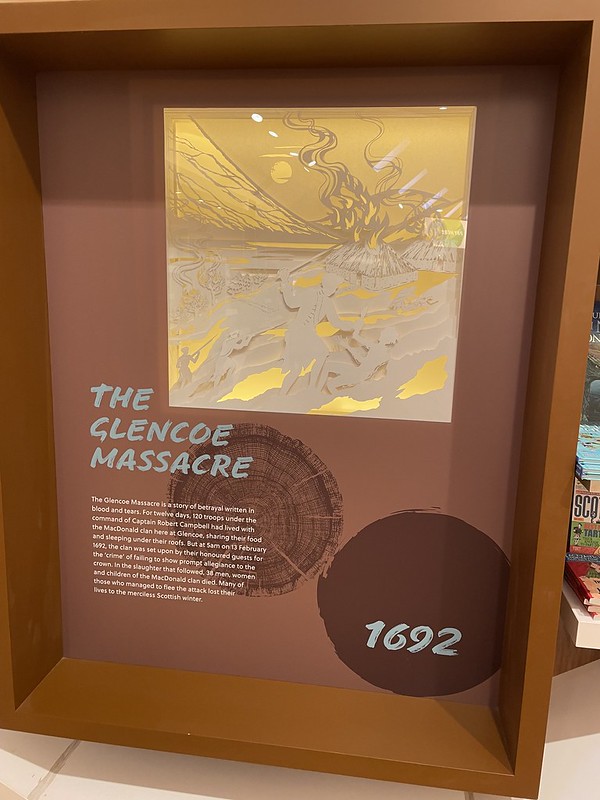
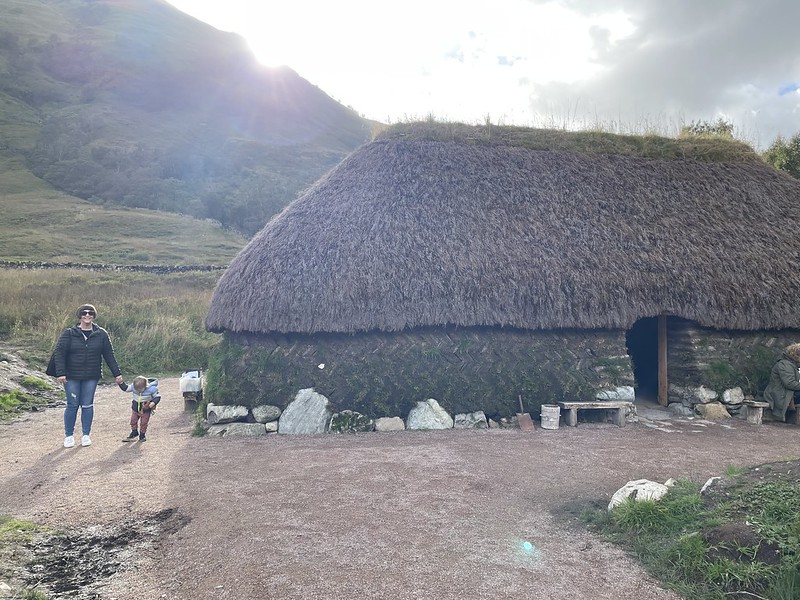
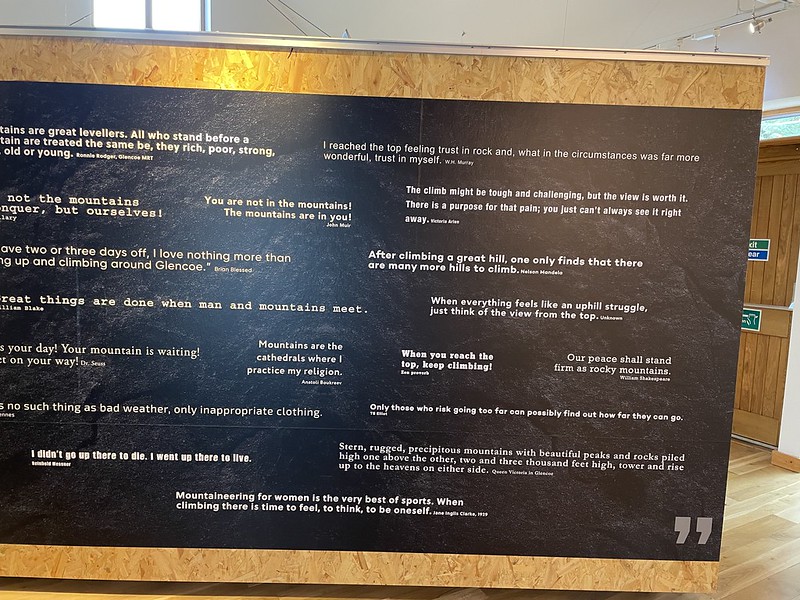
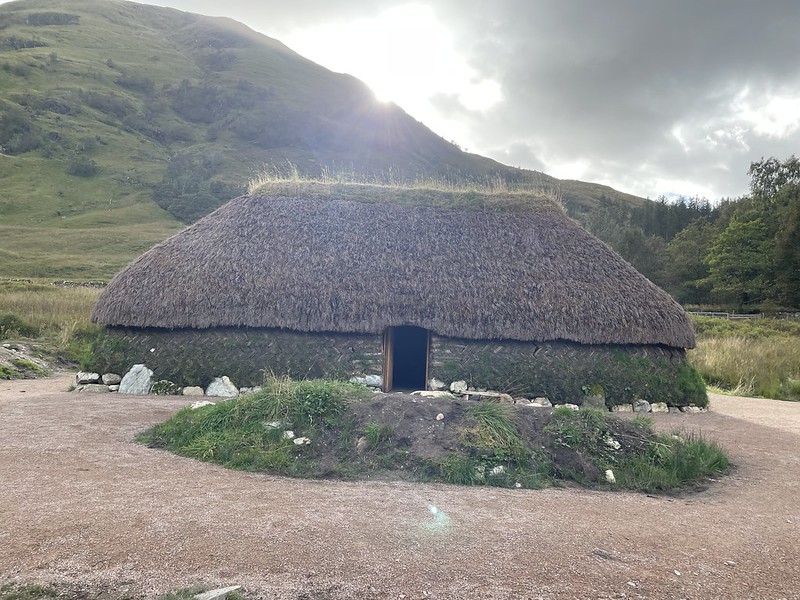
Our first stop in Glencoe itself was to the National Trust Visitor Centre – set in the backdrop of the dramatic mountains this visitor centre is focussed on telling the story of the Clan MacDonald highlanders who inhabited the region. How they lived and how many of them, including women and children, died at the hands of government soldiers in the Glencoe Massacre in 1692. The centre piece is the Turf and Creel house – a complete reconstruction of what houses looked like back in the late 1700s using materials only sourced locally that took over a year to make.

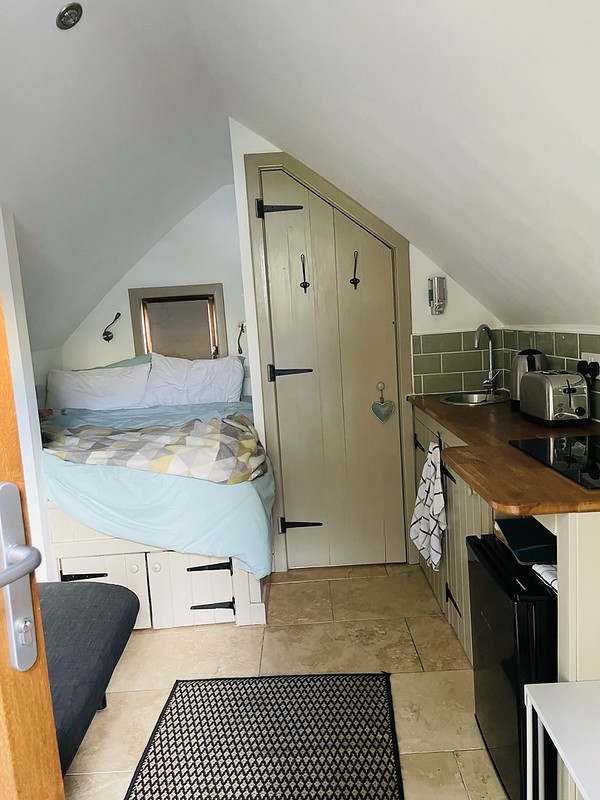
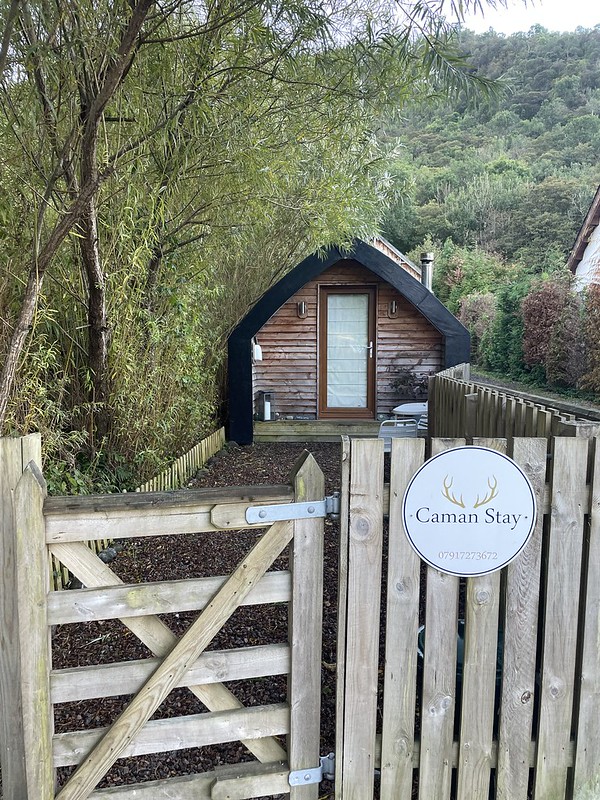
We had a quick dinner at the nearby Glencoe Inn as someone was starting to kick off before we finally made it to our accomodation – a micro homestay on the shores of Lake Leven. It was tiny but very cute and was literally located on part of the owner’s driveway. Once Cillian was asleep in his cot we had to stay outside until bed as there was no where to sit. We had to make do with some beers, sunset and a calm night. So not too shabby
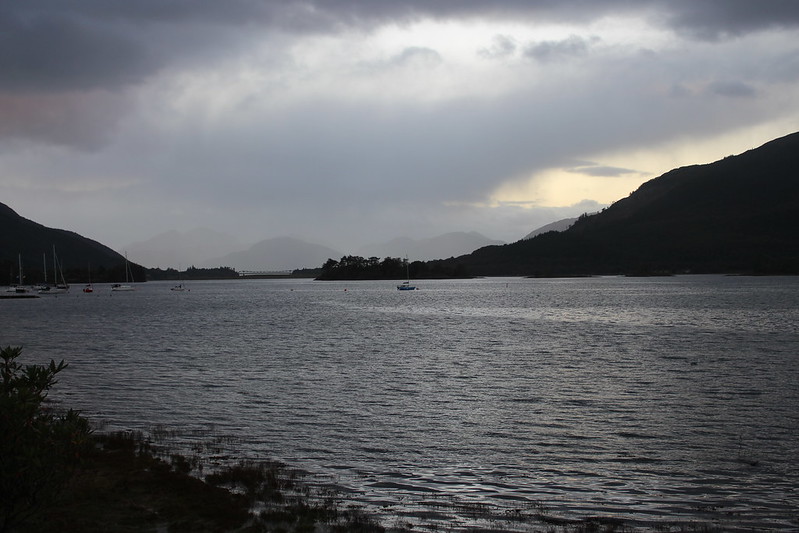



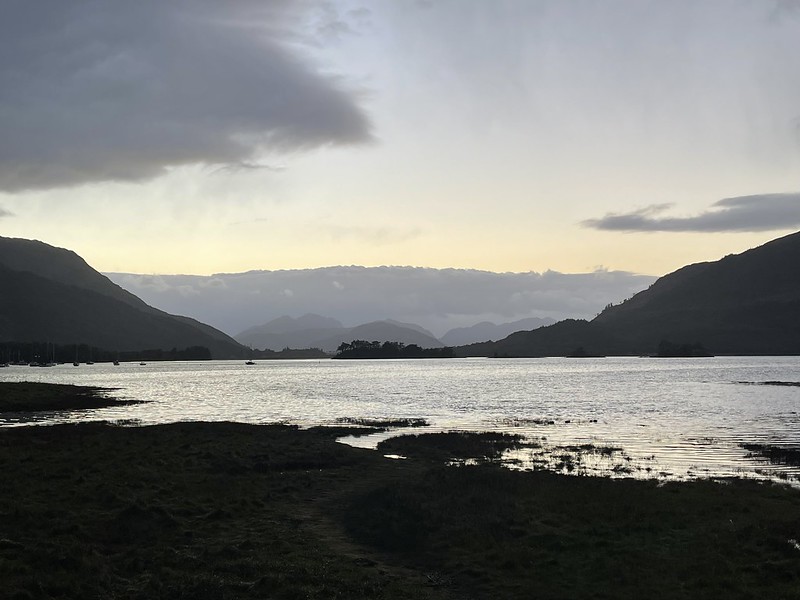
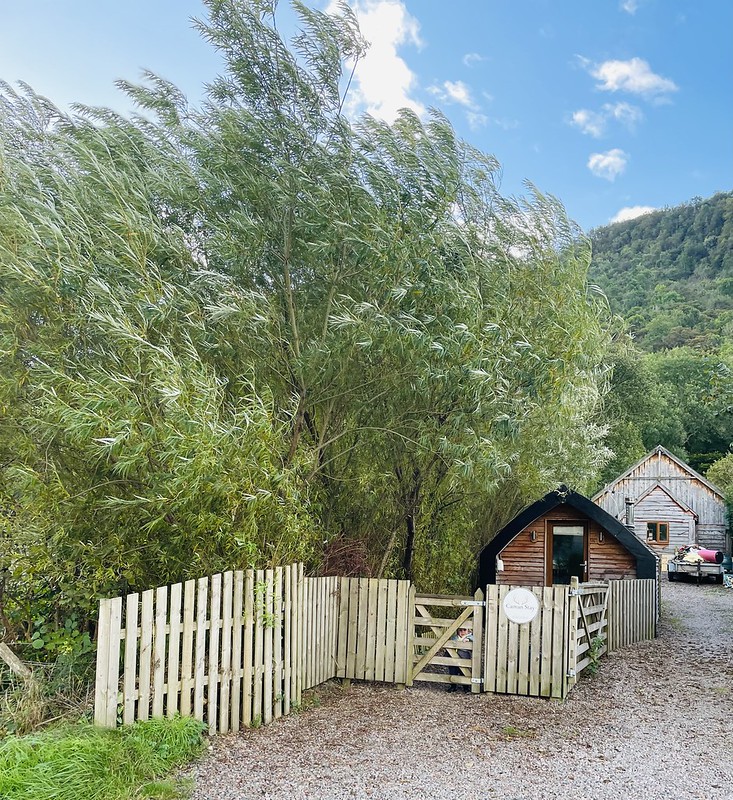
From our chairs we could just make out a couple of islands in the loch – the smaller one is called Eilean a’ Chomhraidh (Isle of Discussion). This island was used to settle disputes. Both parties would row over with whiskey and cheese and other food and they would have to remain on this ‘neutral ground’ until they could come to a mutual agreement. The larger one is called Eilean Munde and is the site of a chapel built by St Fintan Munnu. It also has a small graveyard.
A Bridge Too Far?
The next morning we crossed the Ballachulish Bridge built in 1975 by the Cleveland Bridge & Engineering Company (They also built the Victoria Falls Bridge in Africa, the Forth Road which connects Queensferry and Edinburgh and the Tsing Ma Bridge in Hong Kong. and drove up the eastern shore of Loch Linnhe. According to Scottish folklore this lake is the home of the each-uisge (“Water Horse”), a vicious creature who would steal children. We drove as quickly as we could past it.
Just after Fort William we took a huge left hand turn and drove alongside Loch Eil.

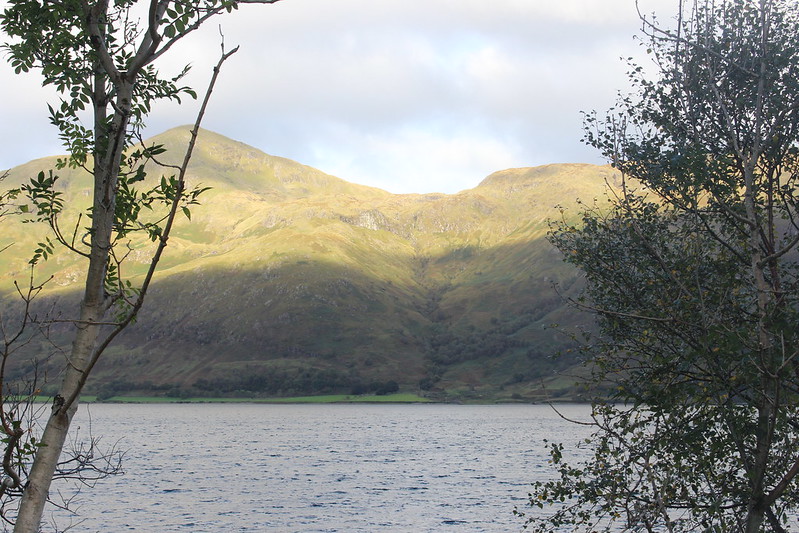
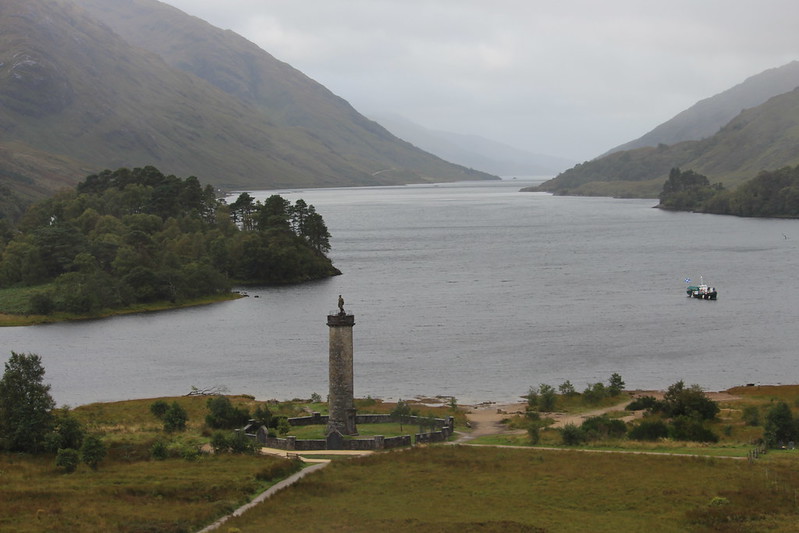
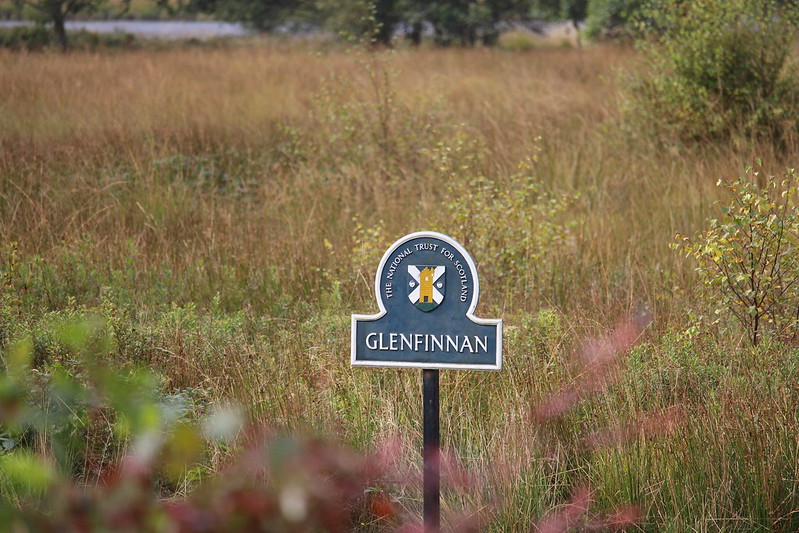
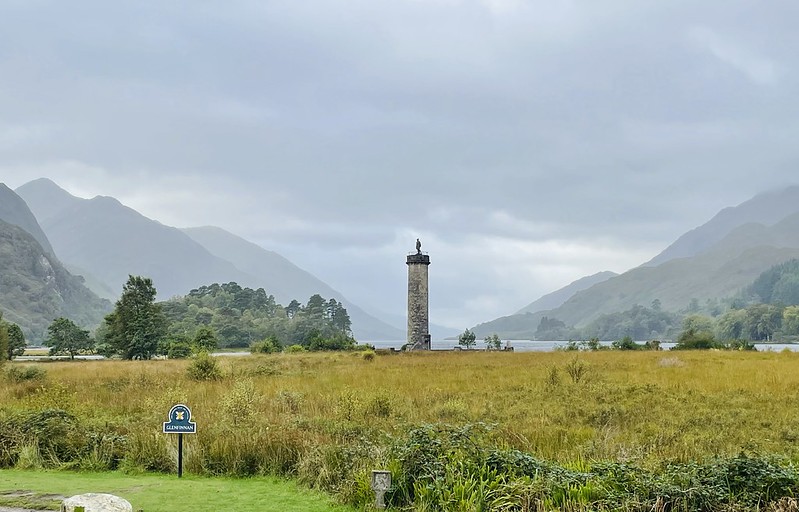
After about an hour in total we had arrived on the north shore of Loch Shiel and our destination – Glenfinnan. Between the road and the lake there is a wide empty field and grasslands. Standing tall and proud in the middle of it is a 60 feet tower and statue, the Glenfinnan Monument. It is dedicated to Prince Charles Edward Stuart (‘Bonnie Prince Charles’) who began the Jacobite Rising at this spot back in 1745. The young pretender raised his standard and declared that he would take the British Throne. Eight months later that dream was in tatters, after his forces were defeated at the Battle of Culloden.
30 years later the tower was built to commemorate this pivotal moment in Scottish history. The figure atop it is known as the ‘Unknown Highlander’ and is meant to represent all the Jacobite clansmen who flocked to Prince Charlie’s banner.

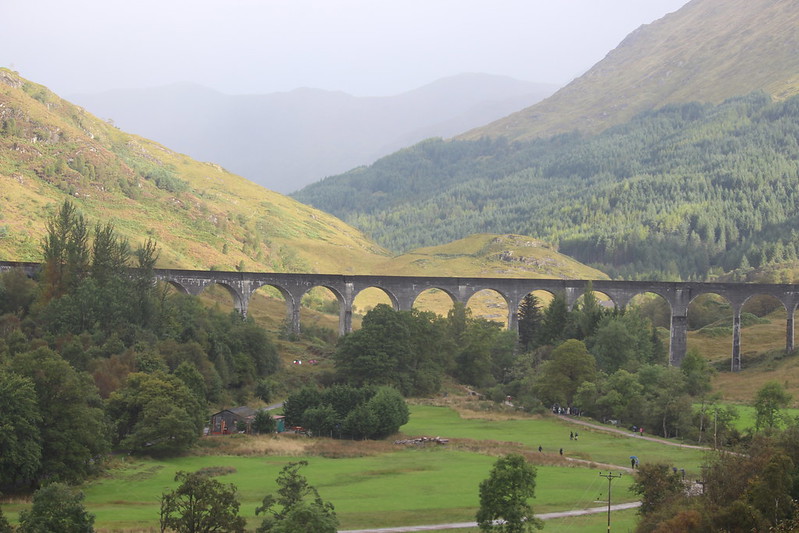

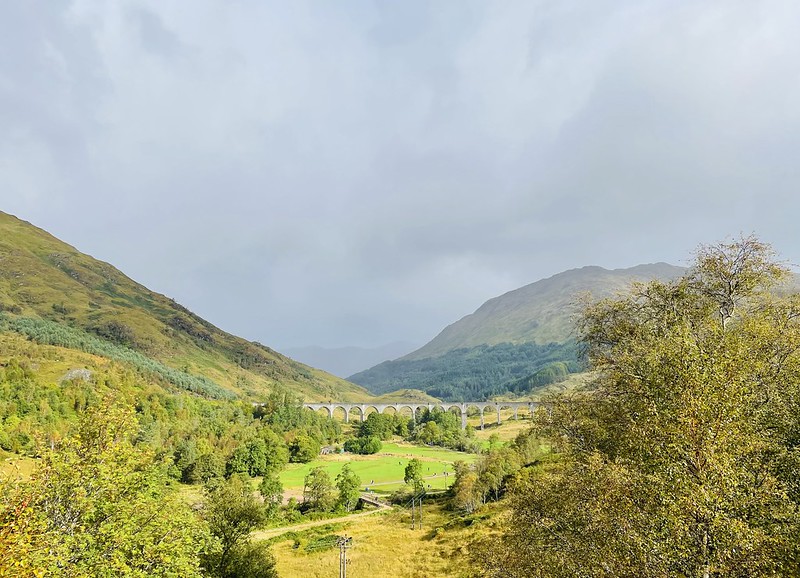
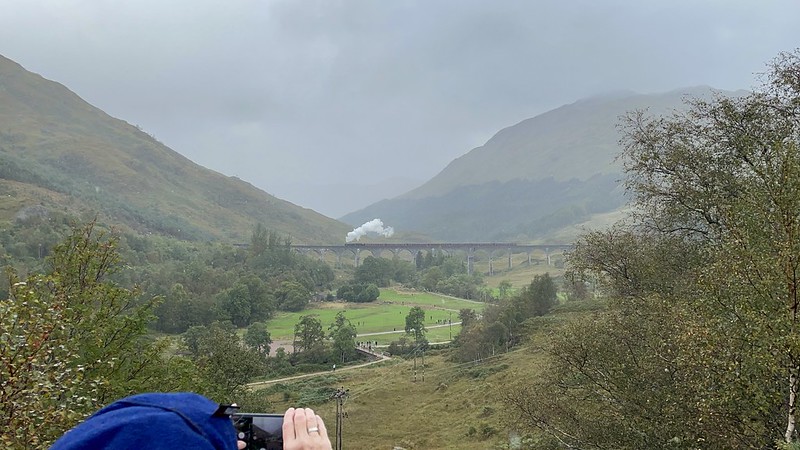
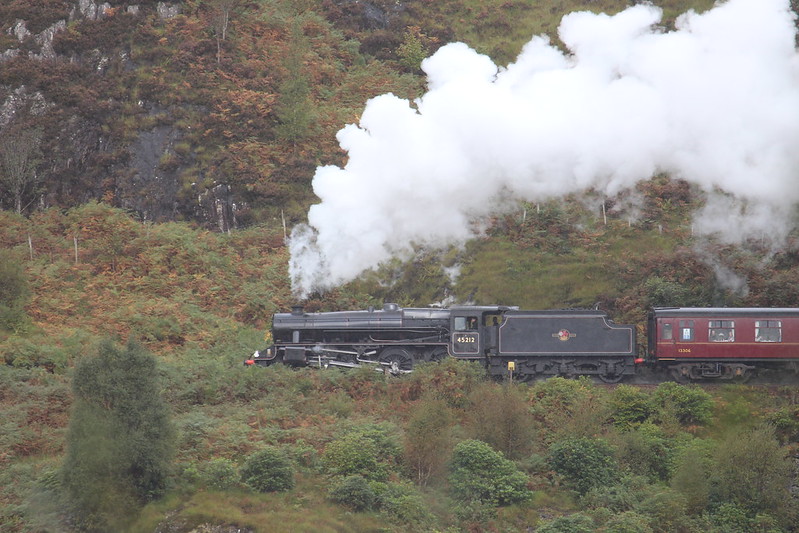
Turning around from the monument and to the north of the road – is a valley. Traversing that valley is a long concrete rail viaduct. This line connects Fort William and Mallaig on the West coast and is still in use today. But we were not here just to see this viaduct – we were here to see something that only happens twice a day, the passing of the Jacobite Steam Train – the Harry Potter train.
This is the actual Hogwarts Express train filmed in the Harry Potter movies and we are introduced to it in all it’s glory in Harry Potter and the Chamber of Secrets (2002) as Ron and Harry attempt to catch up to the train via their flying car at the beginning of that movie.
The best viewpoint of the train’s passing is from the elevated viewpoint located directly above the cafe and visitor centre. It’s a short 5 minute climb to the top and of course this was the only 5 mins of the day that there was heavy rain. So we strapped Cillian to John (using the baby carrier) and braved the elements. All in the name of getting that iconic photo. As soon as we reached the top – the rain disappeared #Scotland



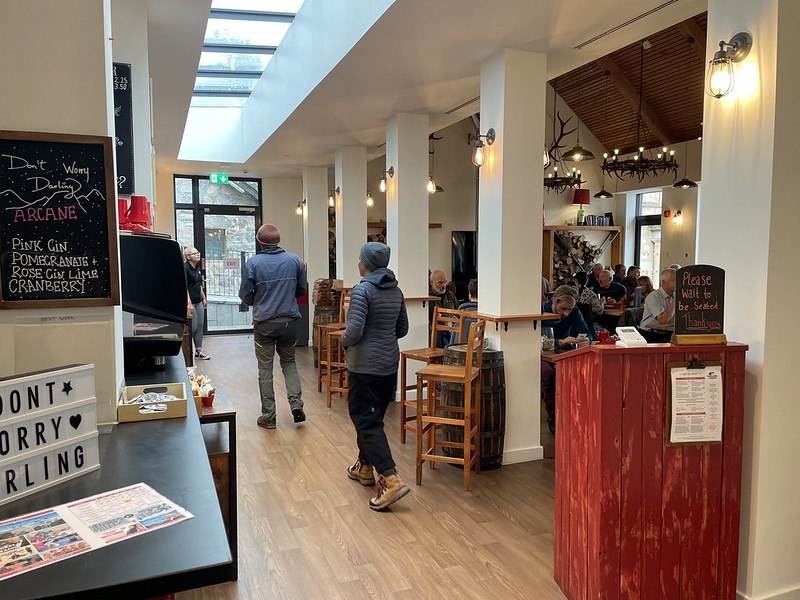
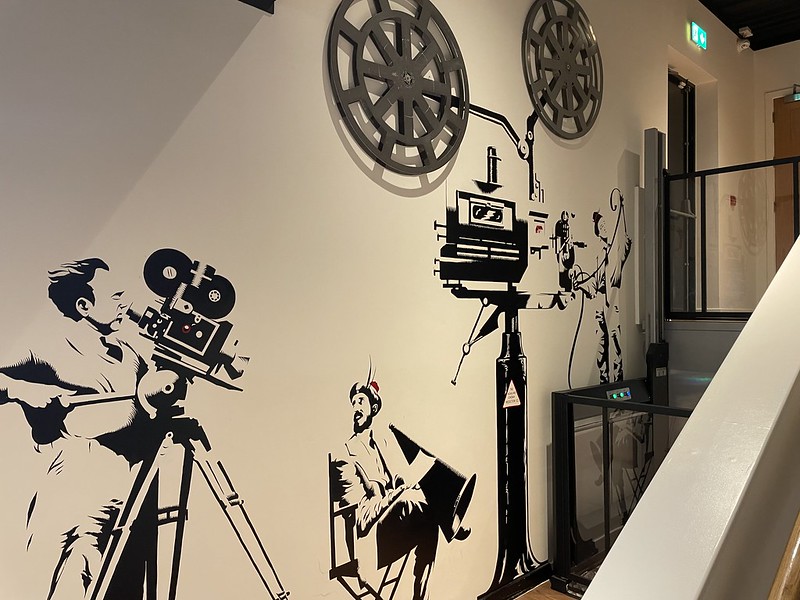
After our adventurous morning we drove back to Fort William for a walk around the town and some lunch. We found the Highland Cinema had a really great restaurant that did pizzas, and pasta for Cillian. This fantastic wee independent cinema is designed to resemble a bothy (small hut / cottage) and is located on Cameron Square in the heart of the town. Outside the front of it is a life-sized bronze cast of a Model T Ford car dedicated to the region’s association with the automotive industry – in particular the Model T – ‘Tin Lizzie’. There is a fascinating story of how Henry Alexander Jr was challenged to drive one of these automobiles from Glasgow to the summit of Ben Nevis.


We got a second chance to take some photos of the Three Sisters as we drove south, back through Glencoe. We would not have as long a journey back as we would be stopping in Balloch, on the southern shores of Loch Lomond, for a couple of nights.


On the Bonnie Bonnie banks of….Loch Lomond
The second part of our trip saw us leave the Highlands and descend on the town of Balloch. A small town on the southern shores of Loch Lomond. Here we would meet up with Gran and Papa who would come up and join us.
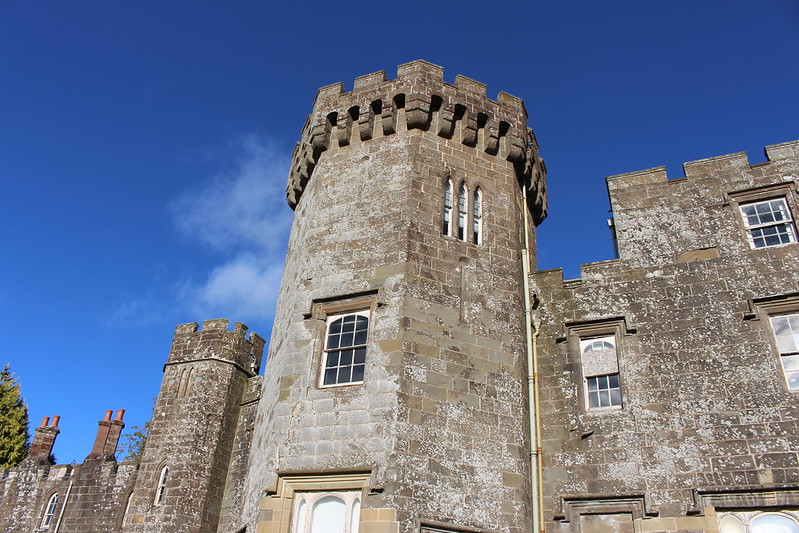
We first enjoyed walking around Balloch County Park and Castle ,located on the south eastern part of the lake. It is part of the larger Loch Lomond and The Trossachs National Park, which encompasses 721 square miles, 21 Munros and is not only the fourth largest national park in the British Isles but was the first Scottish National Park.
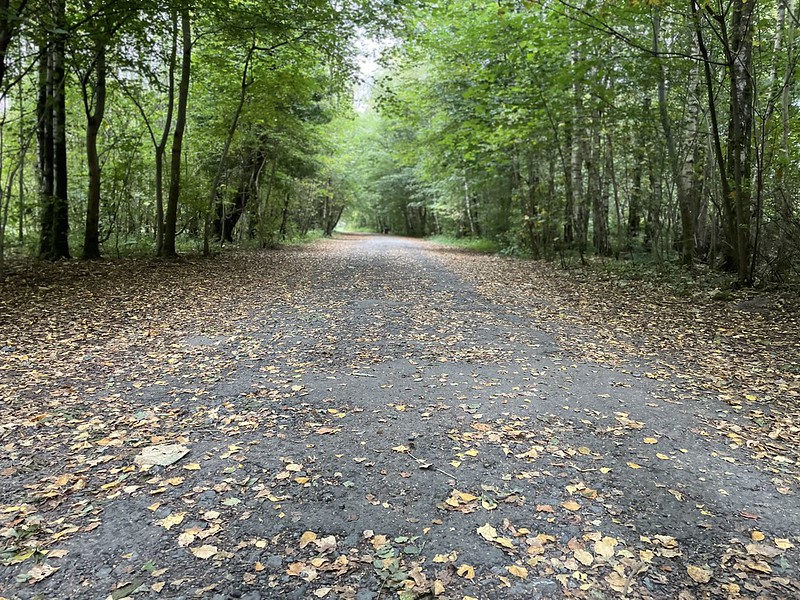
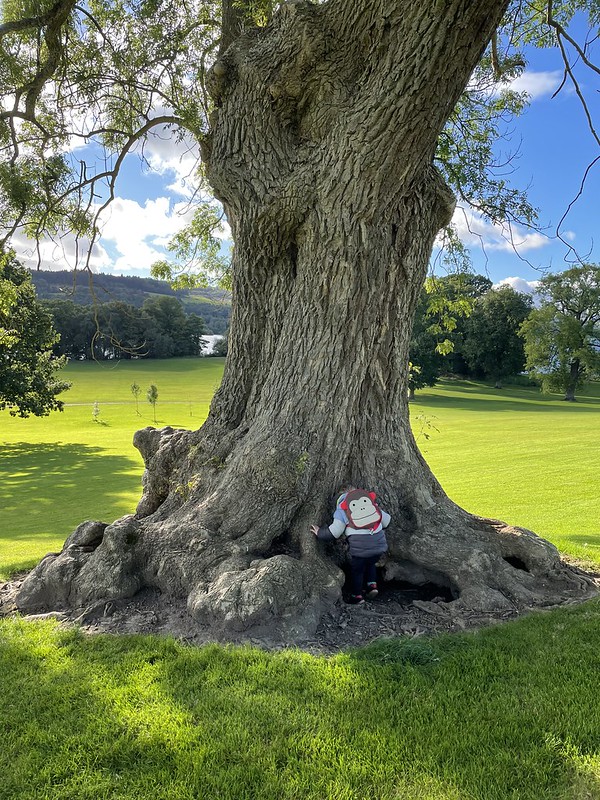
The park was great with a bunch of nature trails, plenty of trees and a great view of Loch Lomond from the hill where Balloch Castle stands. Today the Castle is derelict but there was plenty of room for Cillian to run around and it was very quiet compared to when it is used to host the annual Loch Lomond Highland Games each Summer.
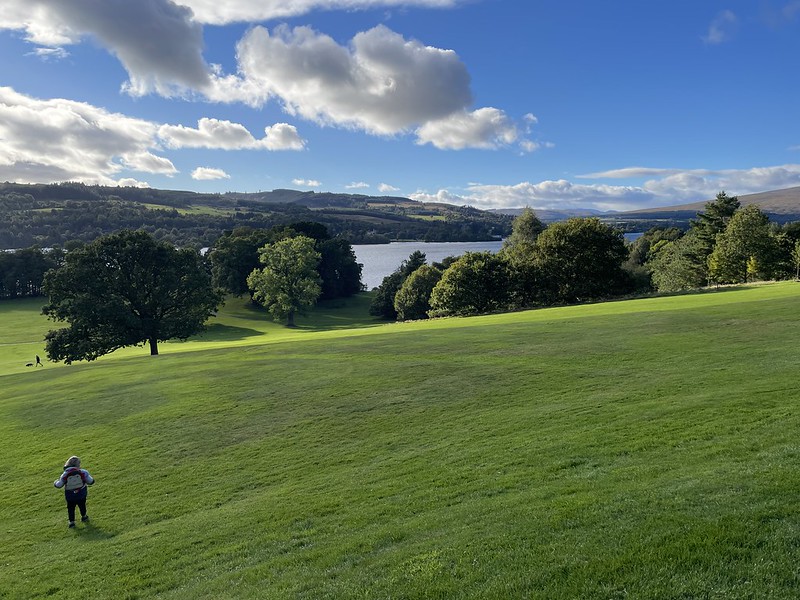


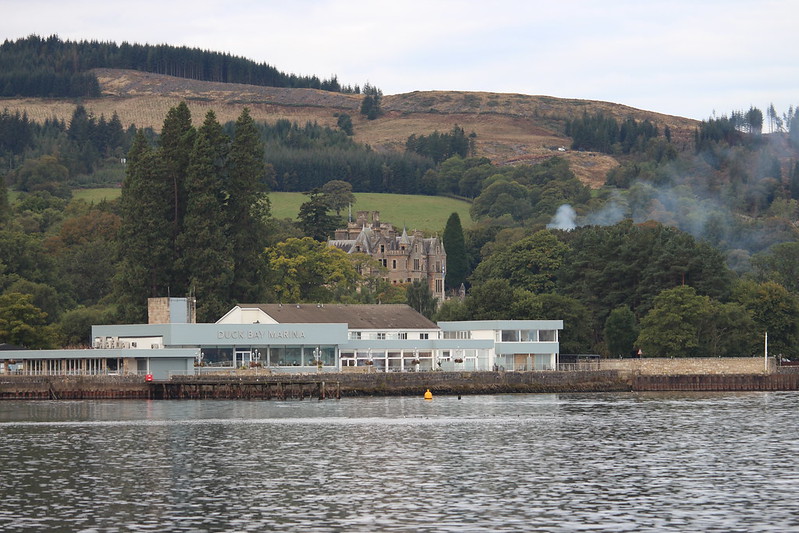
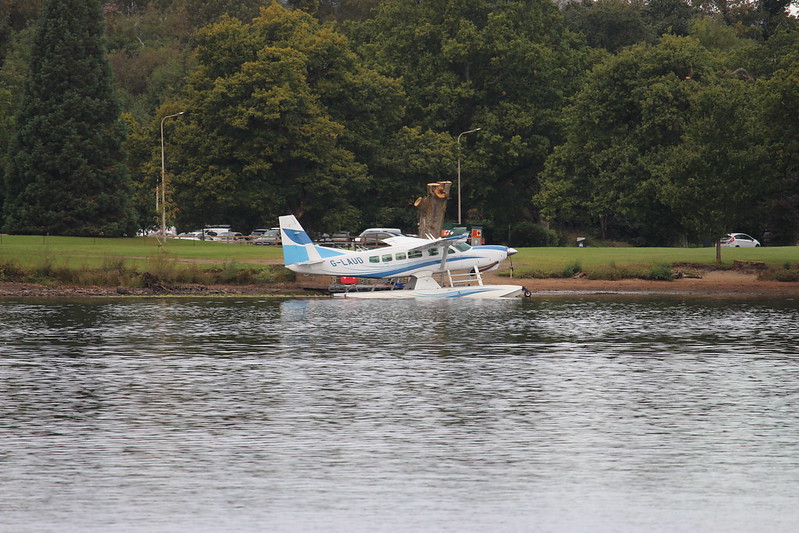
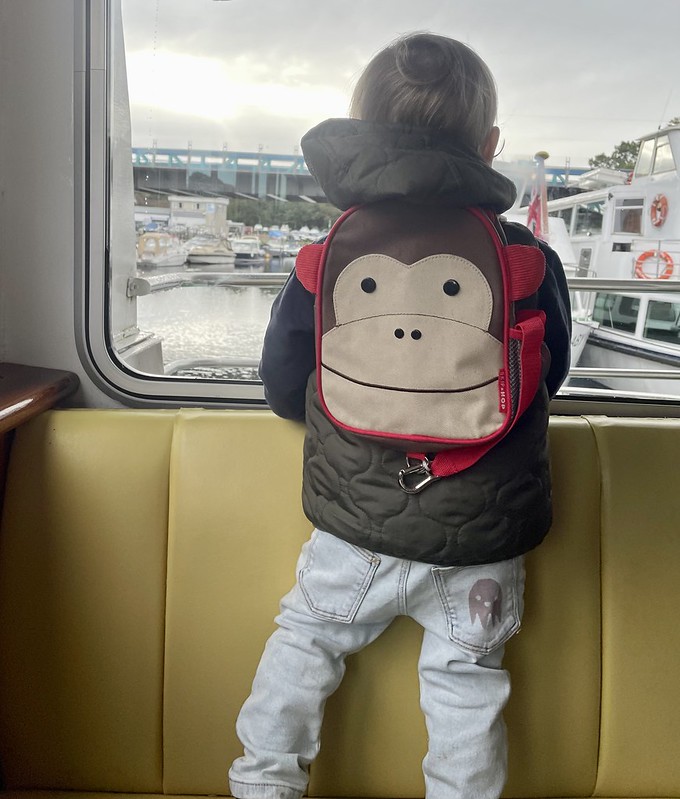
It is one thing to see the Lake from the shore, it’s another thing entirely to explore it on a boat. After lunch in the town we walked around to a tiny hut next to the bridge on Balloch Road and got some tickets for an afternoon cruise from Sweeneys Cruise Company.
As we were very soon to discover – Loch Lomond is massive. There are 33 islands alone within it’s boundaries, the largest of which – Inchmurrin Island, was where Robert the Bruce sheltered at Castle Lennox before he became King of Scotland in the 14th century.
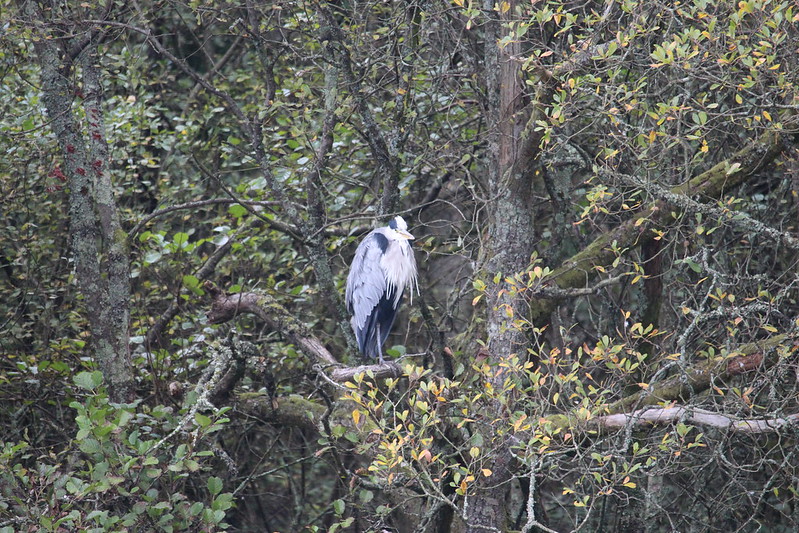



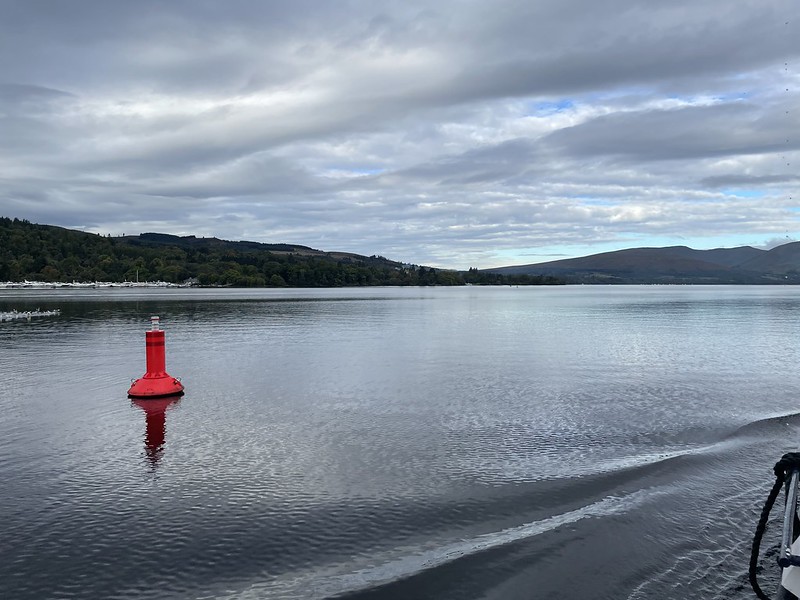
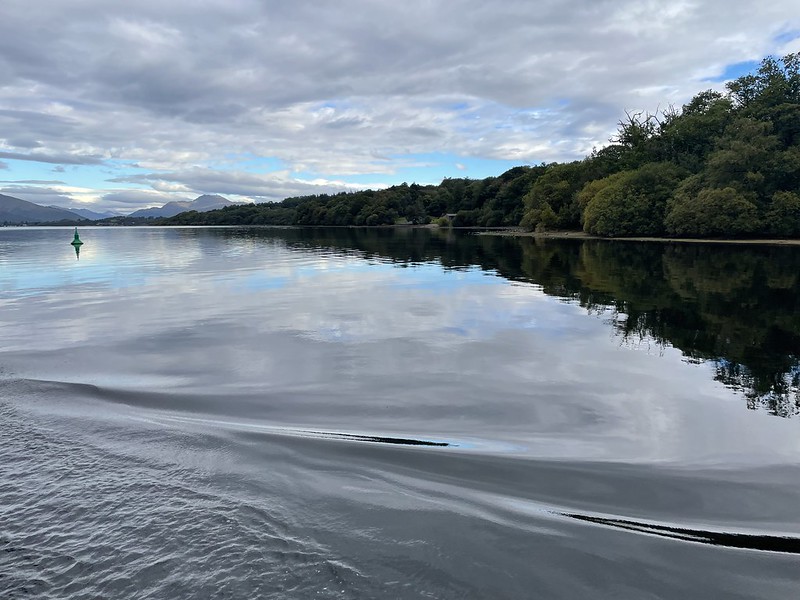

We spent the rest of the day wandering around Loch Lomond Shores – a collection of shops, cafes and tourist traps like SEA LIFE Loch Lomond. The next morning we drove up the western shore to another lake village – Luss.
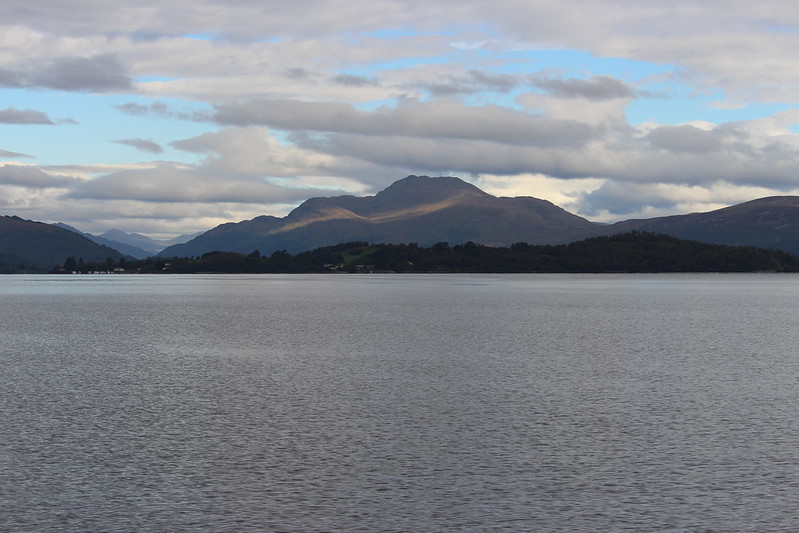
Originally called Clachan dhu or ‘dark village’ Luss is nestled between the lake and the Luss Hills to the west. Looking out north from the shore you can see Ben Lomond – the most southerly of the Munros. John was not the first Irishman to visit the village, with christianity being spread here in the early 6th century by Saint Kessog, who was the son of the King of Cashel. Today it is a conservation village with many of its streets closed off to vehicles. The A82 road bypasses the village also. It boasts 24 Category B or C listed buildings and has many picturesque cottages, especially those on Pier Road.

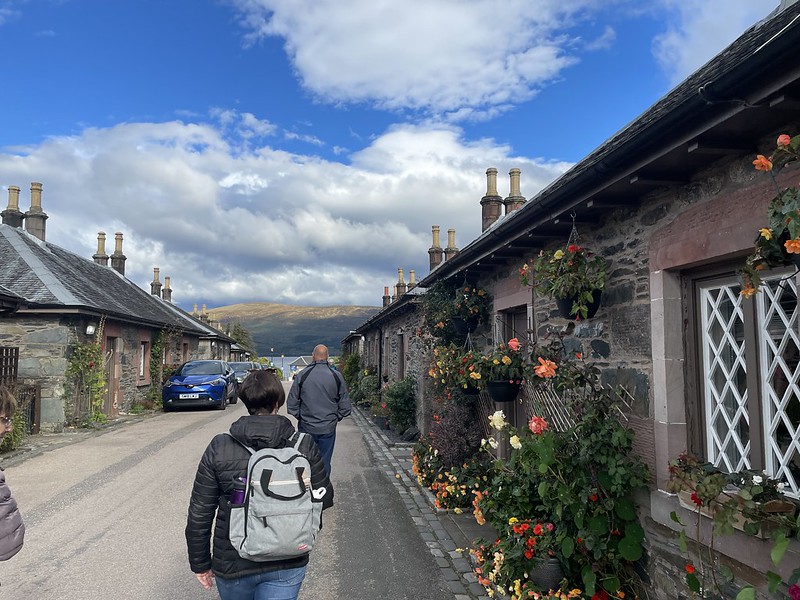
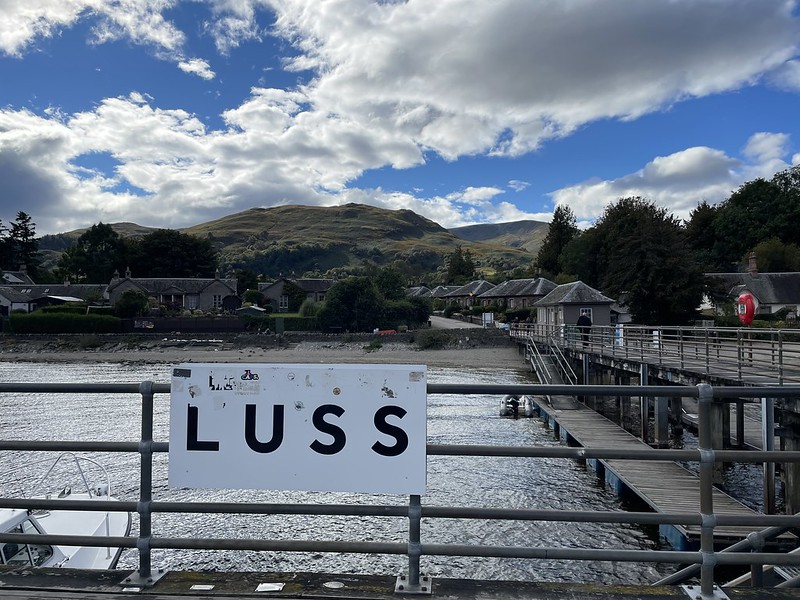


Between 1980 and 2003 Luss was the main outdoor filming location for the Scottish television drama Take the High Road – which is why some of the buildings here have adopted the fictional village name of ‘Glendarroch’.
 JKRoaming - Travel Blog
Nice pics. I love Scotland; such a beautiful region. (Suzanne)
LikeLiked by 1 person