After our wedding in Tuscany, we jumped back on the train north, with a quick change in Florence, back to Lombardy. At the same time Karen’s parents – Iain and Bernadette were piling into their car and heading to the airport in Scotland to grab their flight – they would be joining us for the last part of our Italian adventure.
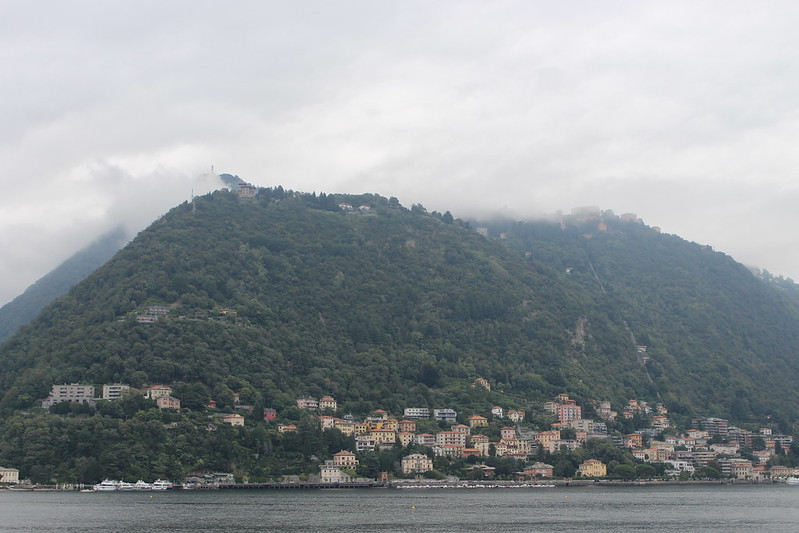
Located 50km north of Milan and nestled in between the valleys and mountains of the Alps and the deepest European lake outside of Norway is a very special city – Como.
Before the first century BC the town centre was situated on the nearby hills. It’s current location is owed to Julius Caeser who ordered the swamps at the southern tip of the lake to be drained and laid the plan for the walled city in the typical Roman grid system. Over time the city greatly expanded past the walls, including the additional defensive works added in the 12th century by Frederick Barbarossa. Of these only one of the towers – the Baradello, remains.

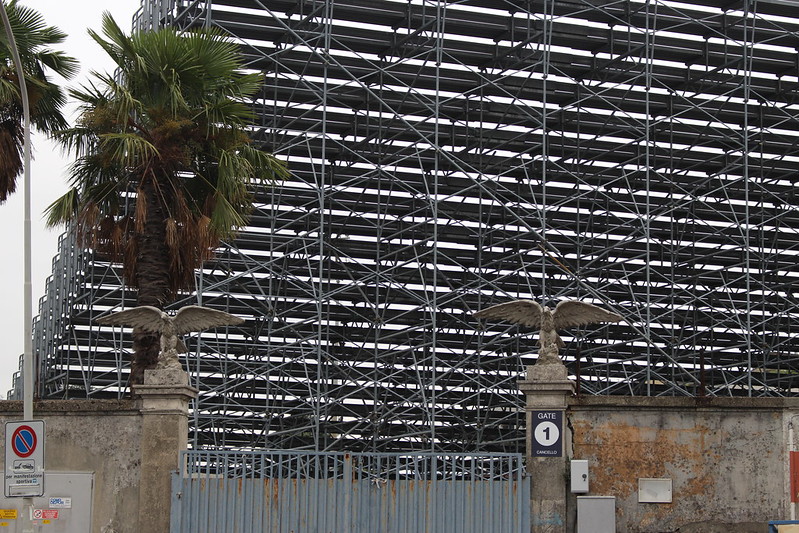
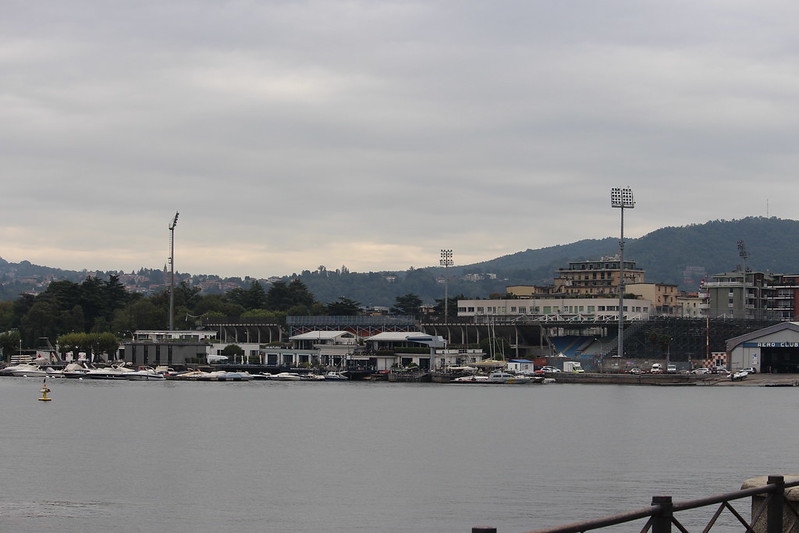
Walking through the city provides a number of contrasts – the narrow straight streets open up to the huge lakeshore, the lakeside inhabitants range from the new – the football stadium and ferry terminal to the old – 15th century mansions.
A good walking route full of wonder begins at the Ferry Terminal. Head east and you come to a large park – the Giardini a Lago. Among the trees, benches and walkways are a number of important monuments and structures.
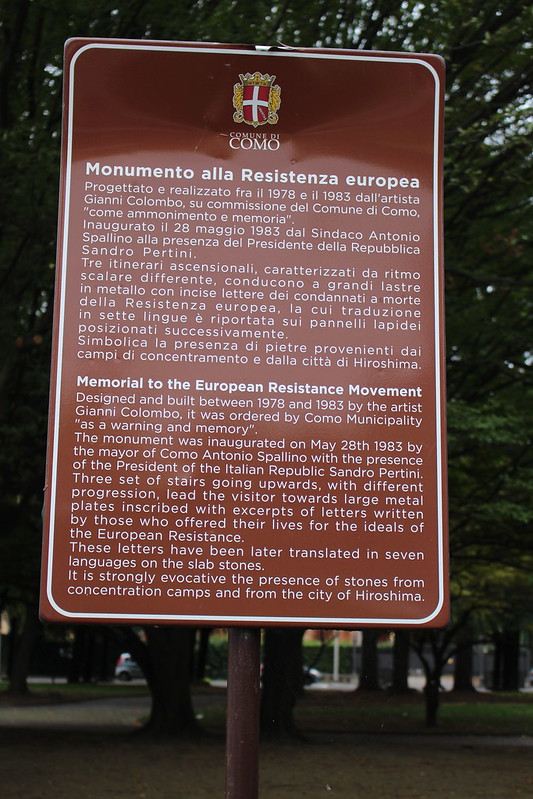
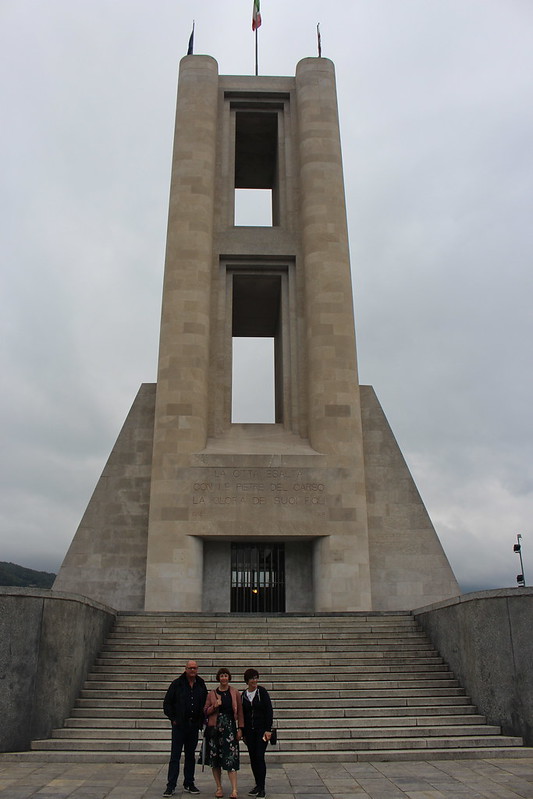
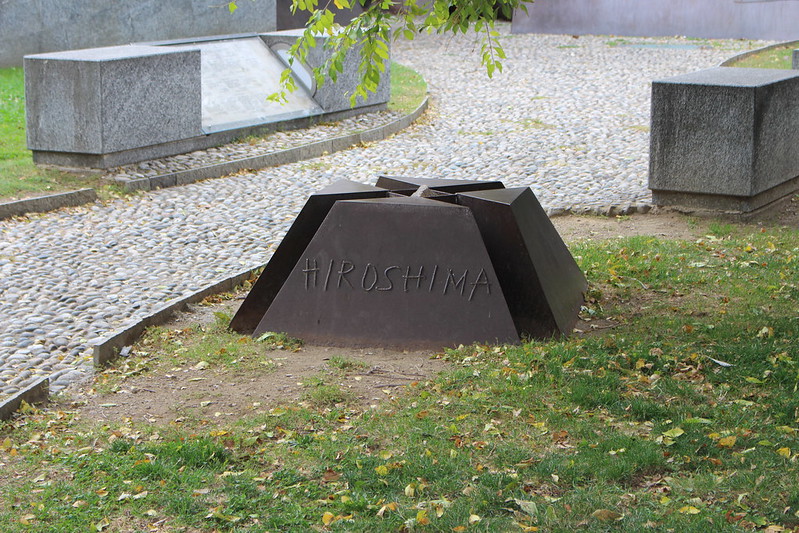
Among them is the Monumento alla Resistenza europea (Monument to the European Resistance) that is dedicated to World War 2 resistance movements. Part of the monument contains stones from all the Nazi extermination camps across Europe and from the Japanese city of Hiroshima. A couple of hundred meters next to the water is the Monumento ai Caduti – the Monument to the Fallen. A 30 meter tall tower engraved with the names of 650 Como soldiers who were killed fighting in World War I. It’s design is inspired by futurist artist Antonio Sant’Ella, who was also one of the soldiers killed fighting. On a plinth on the lake front is one of his phrases “Tonight we sleep in Trieste or Paradise with the heroes”.
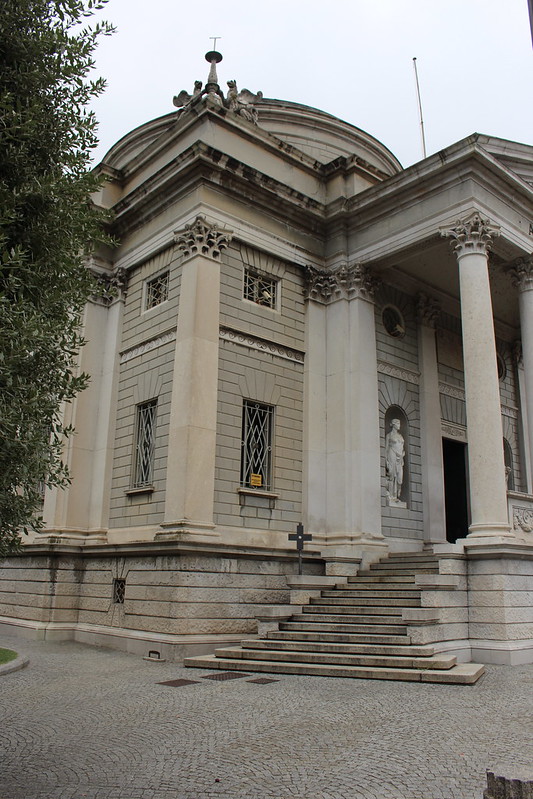
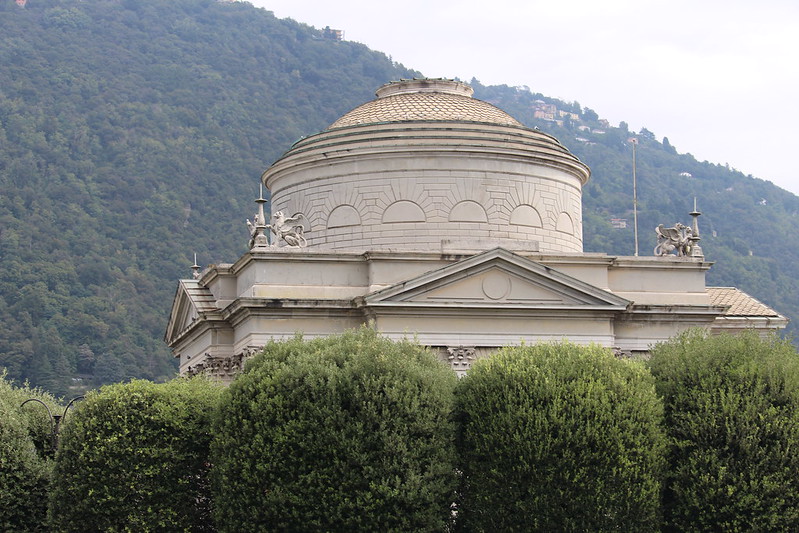
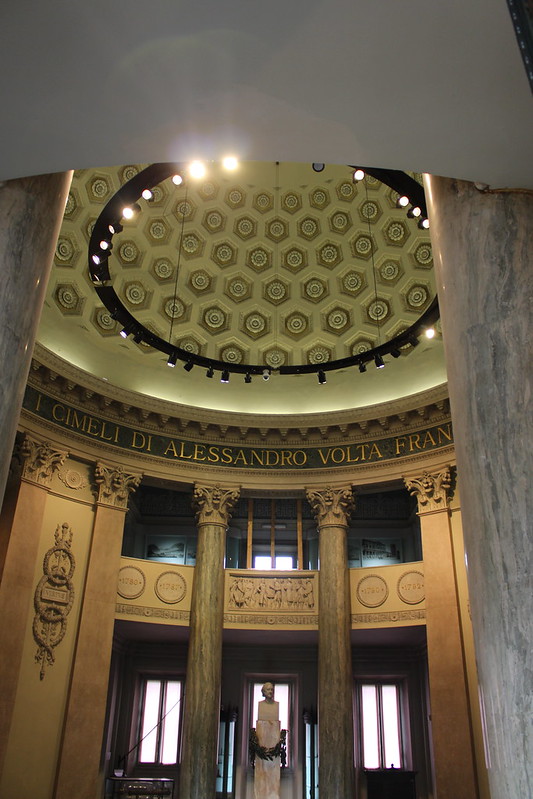
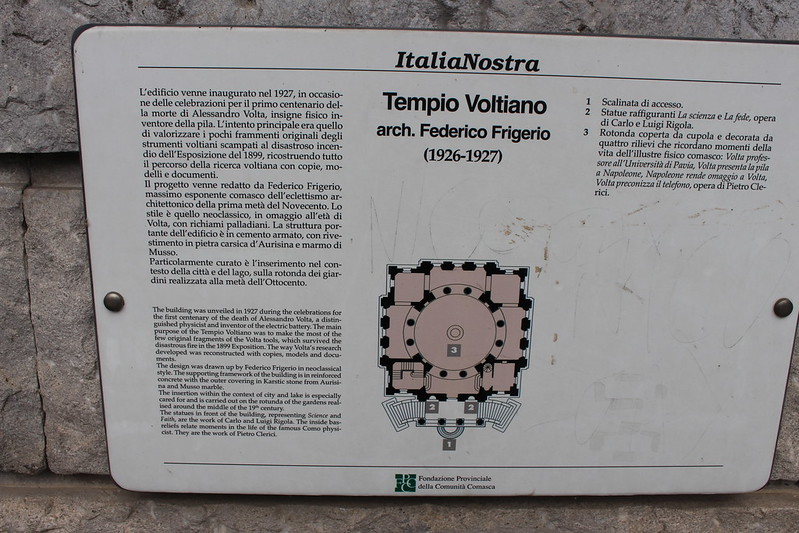
In the top corner of the park, next to the water’s edge is a Tempio Voltiano. A neoclassical monument that was built to commemorate the 100th anniversary of the death of scientist Alessandro Volta – the inventor of the electrical battery (and where we get Volts/Voltage from). A native of Como – it hosts a collection of instruments used by the physicist including his early batteries.

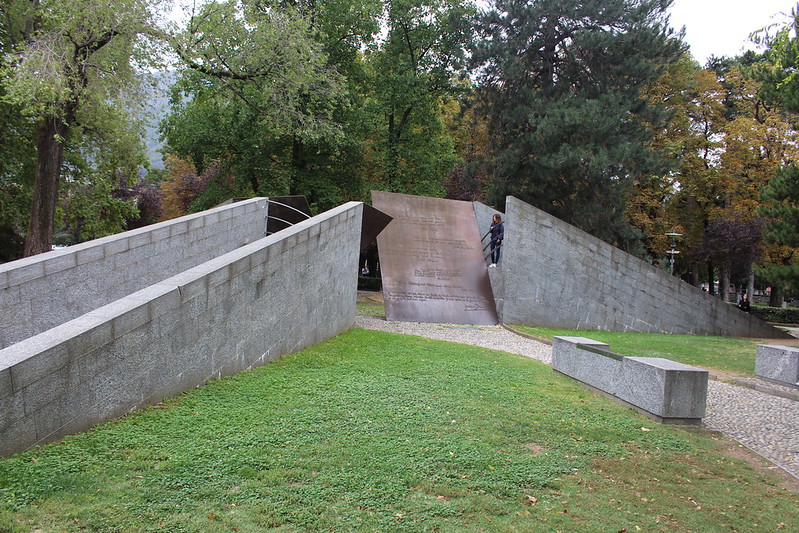
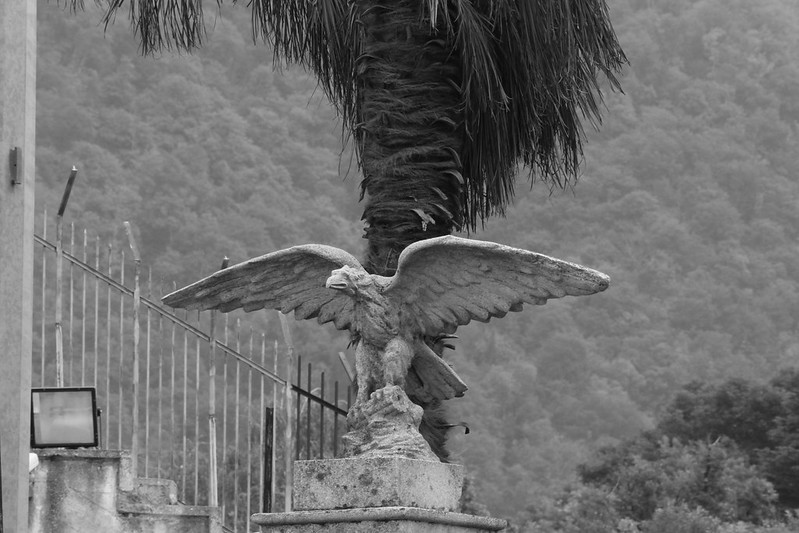

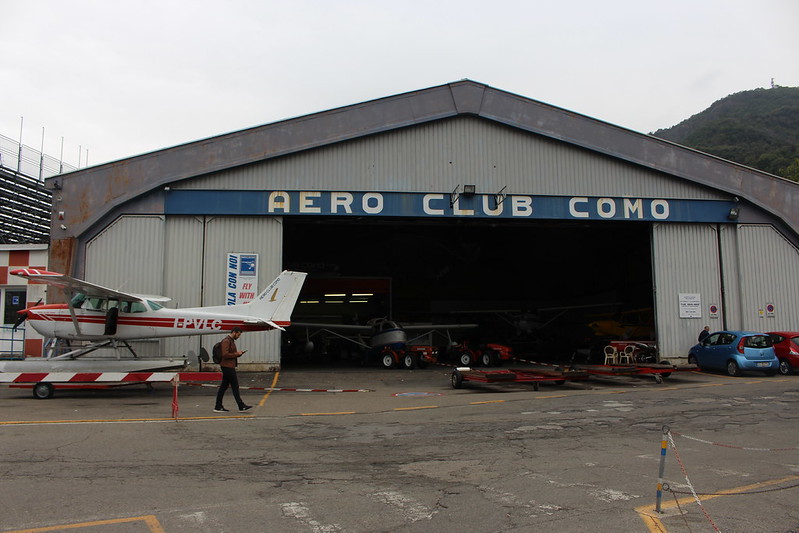
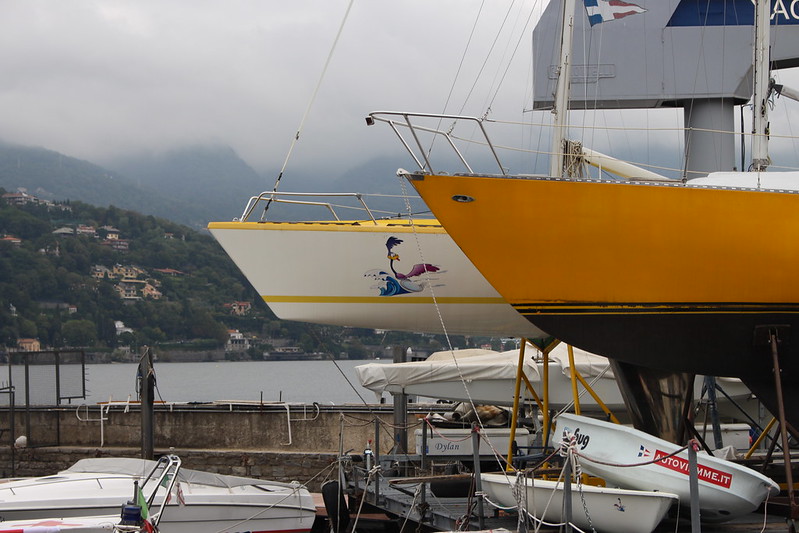
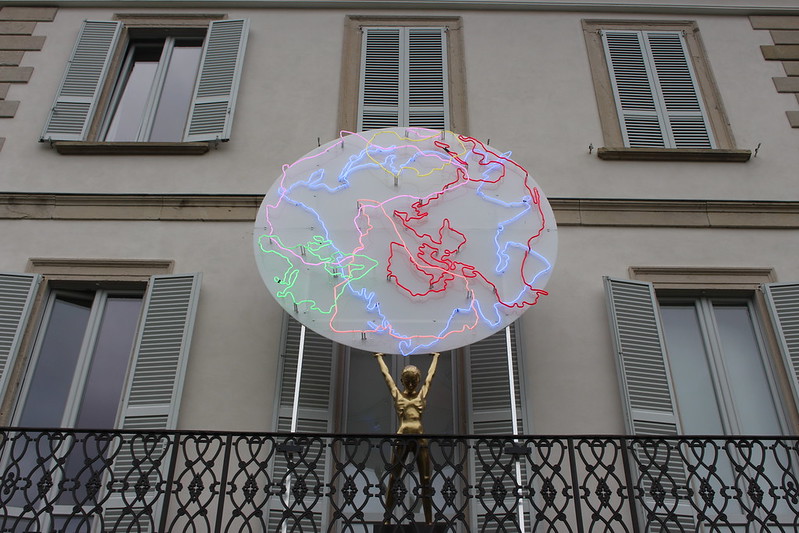

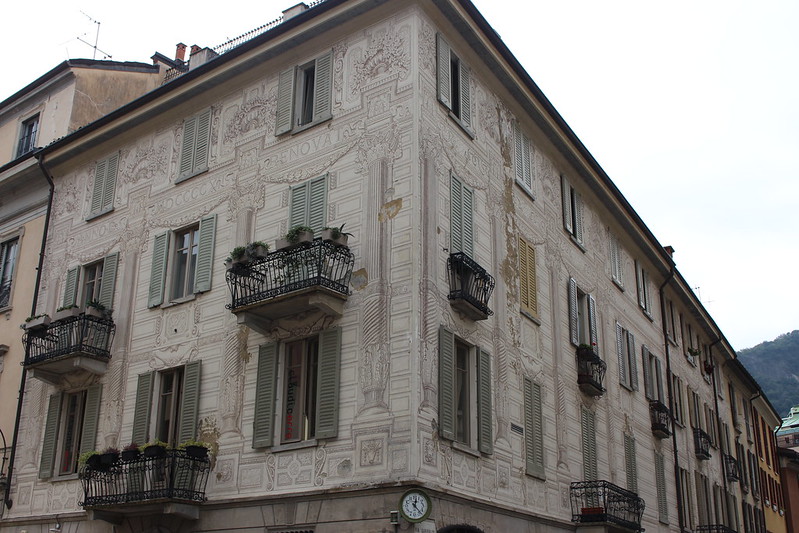
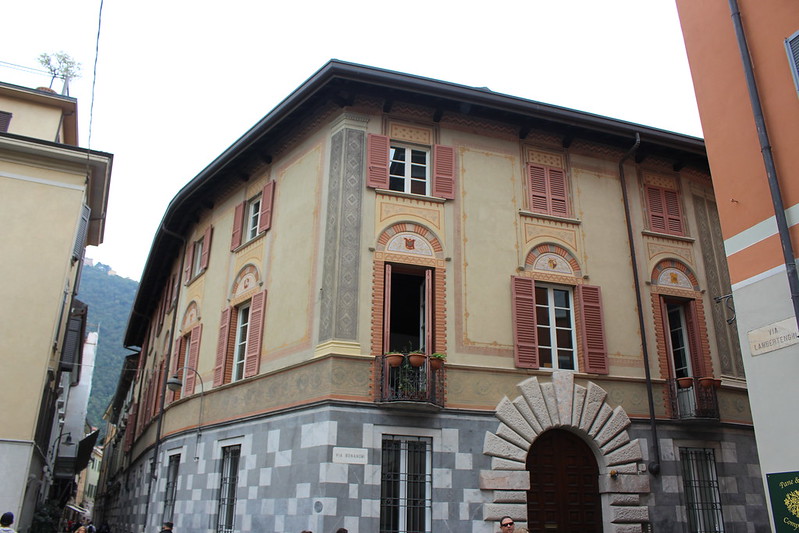
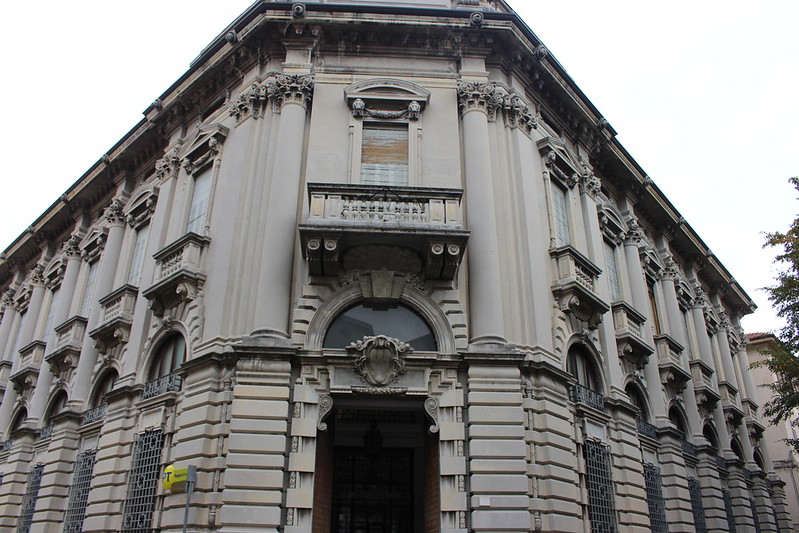

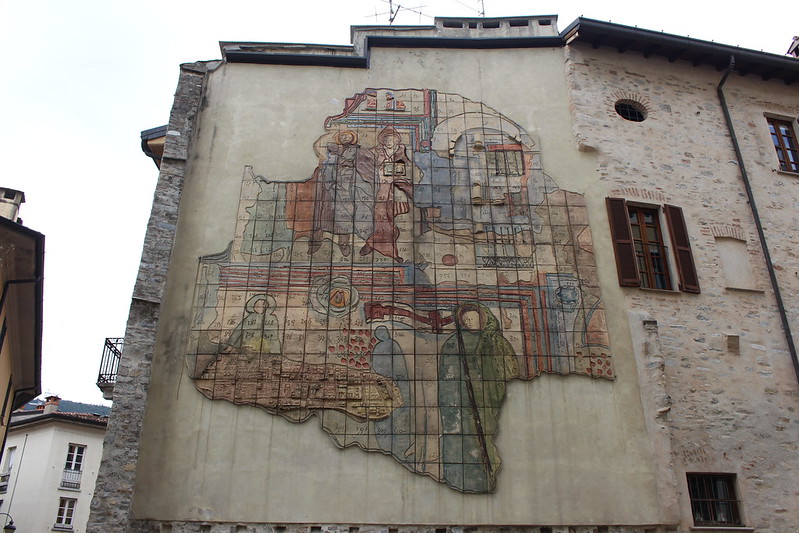

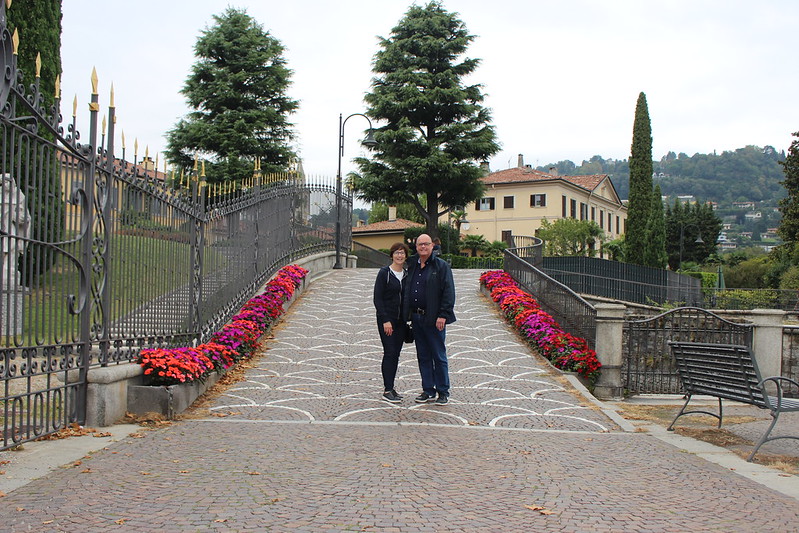
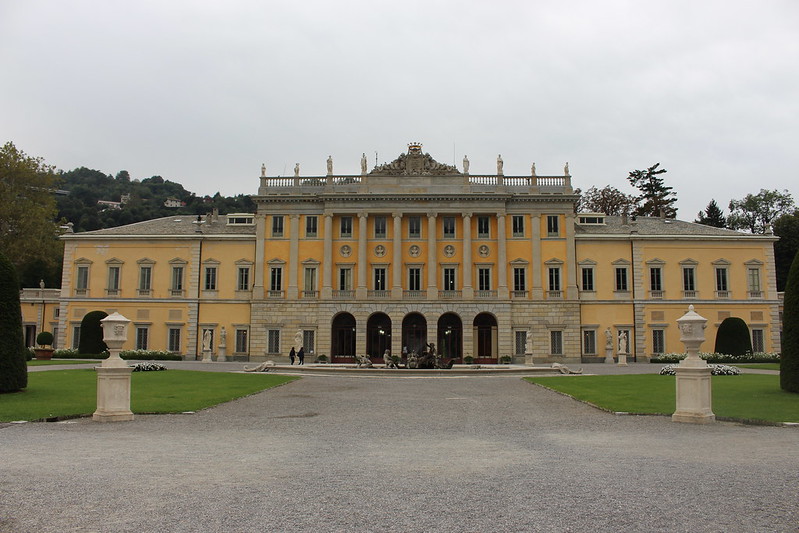
Continuing along the waterfront you enter the Passeggiata Lino Gelpi – a pedestrian walkway that skirts the outside of a number of villas – ending at the grounds of the Villa Olmo. Completed in 1812, the grounds contain 800 varieties of trees and today it serves as a museum, lido and public park after a history as a summer retreat for the aristocracy.


The Frog Song
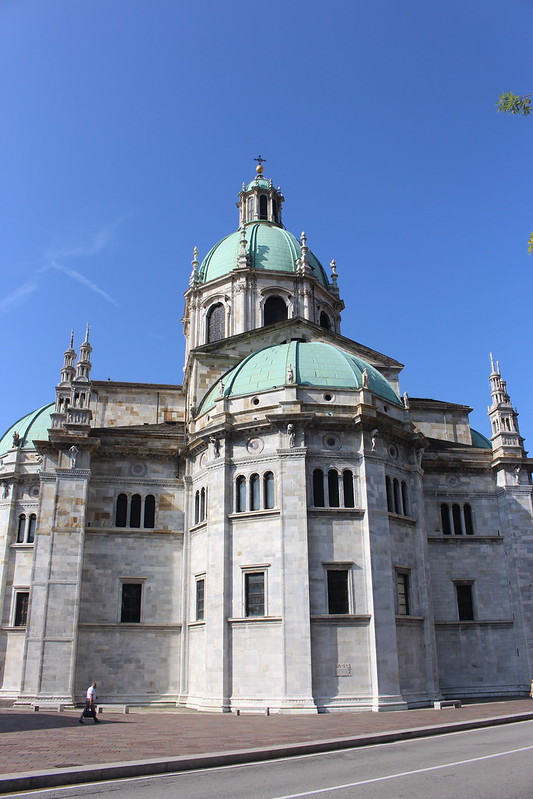
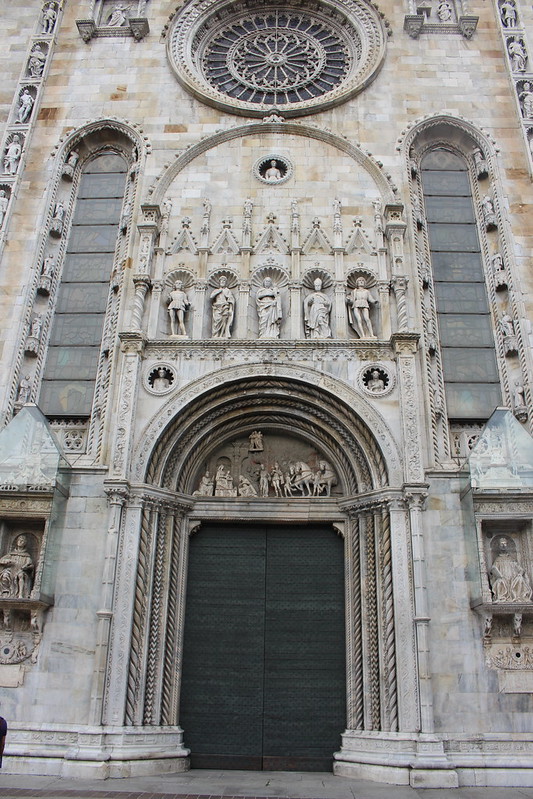
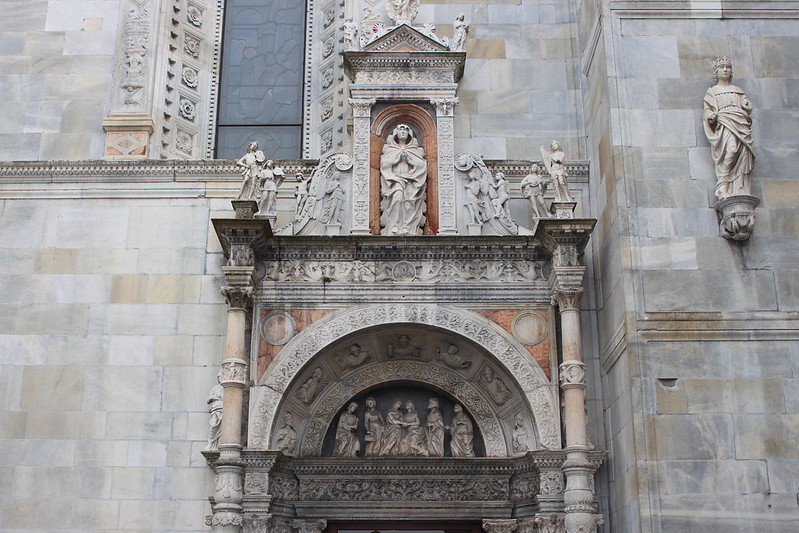
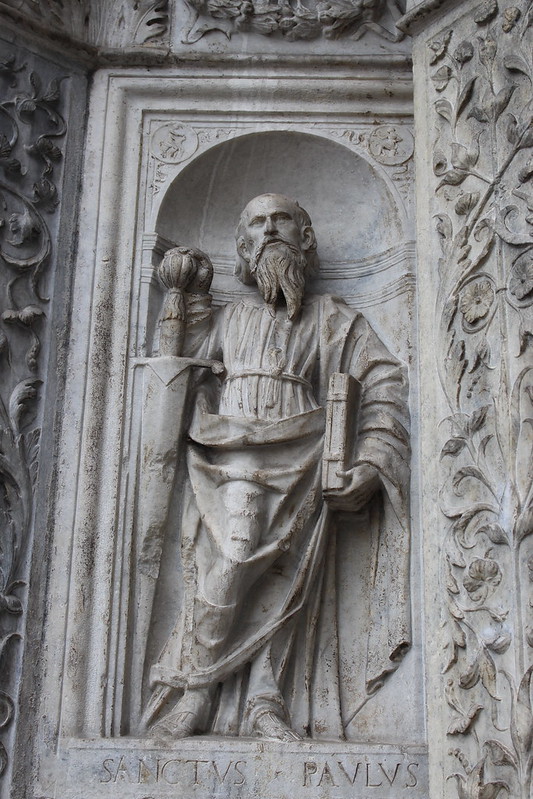
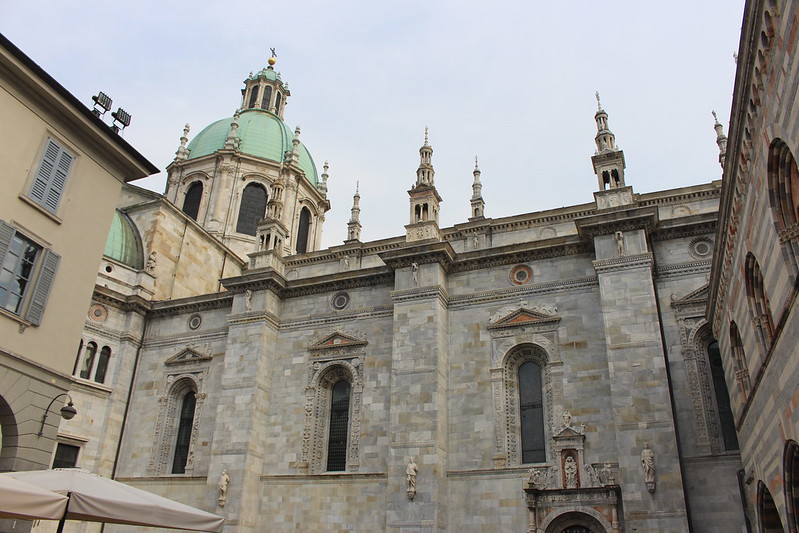
Located between the Piazza Guido Grimoldi and Piazza Giuseppe Verdi is the Como Cathedral (Cattedrale di Santa Maria Assunta), commonly described as the last Gothic cathedral built in Italy. Completely finished in 1770 it has an interesting doorway on the north side – ‘The door of the frog’ – about 7 feet up in the portal is a small statue of a frog trying to catch a butterfly, sculpted in 1400 it is thought that to touch the frog brings you good luck. So when in Rome..





New Silk Route
The Ancient Silk Route started in China, specifically the city of Xian , in the east and ended in Anatolia in modern day Turkey. On land at least. The maritime leg extended to Venice, Italy where towards the Alps a new centre of silk existed in Como.
Silk made in Como finds itself in the fashion houses of the west, namely Milan, Paris and New York. These days it is mostly only processing and finishing as the majority of farming moved back to its roots in China after World War II, yet there are over 800 companies in the surrounding hills in this industry.
Two main factors meant Como was a hotbed of the silk industry, plenty of water from the nearby lake and a plethora of mulberry farms in the Po Valley.
Mulberries are key to silk production, as according to third-generation silk farmer Moritz Mantero;
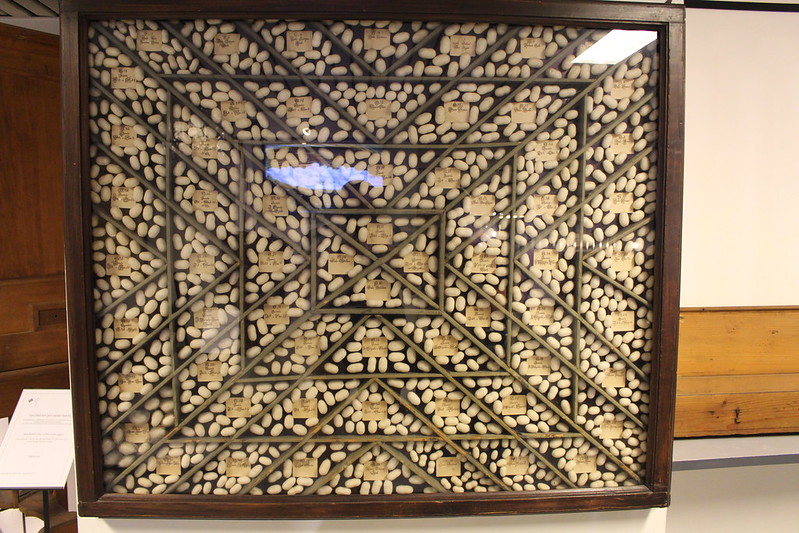
The silkworm is a snob, he’ll eat anything, but he produces silk only if he eats mulberry!
Silk Museum
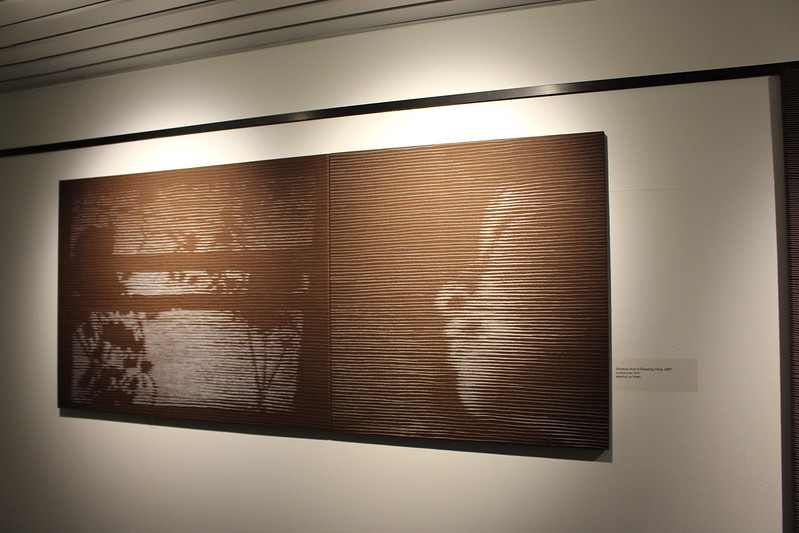
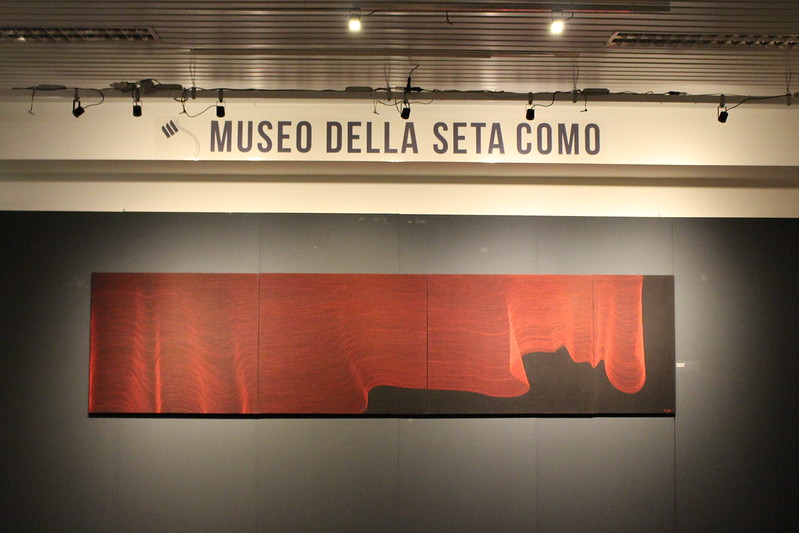
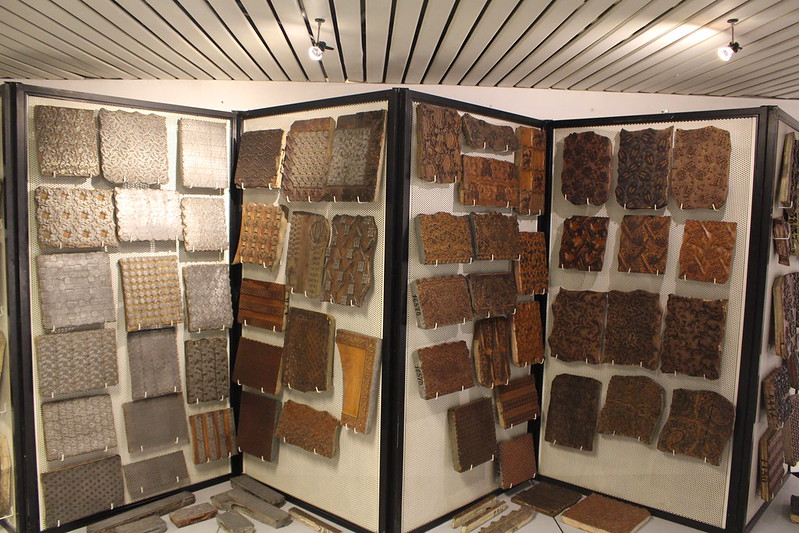
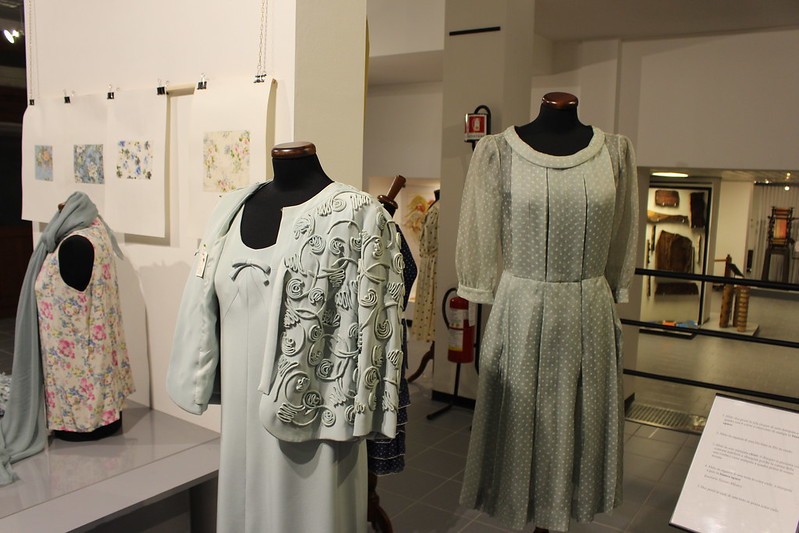
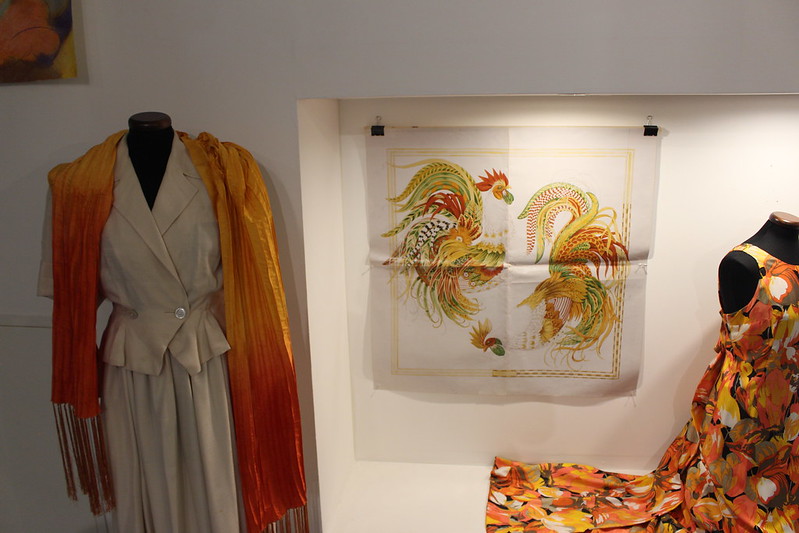
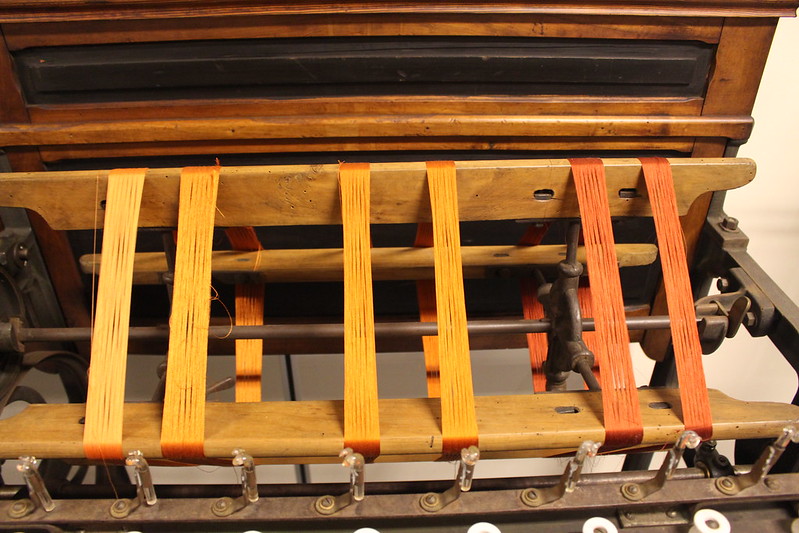
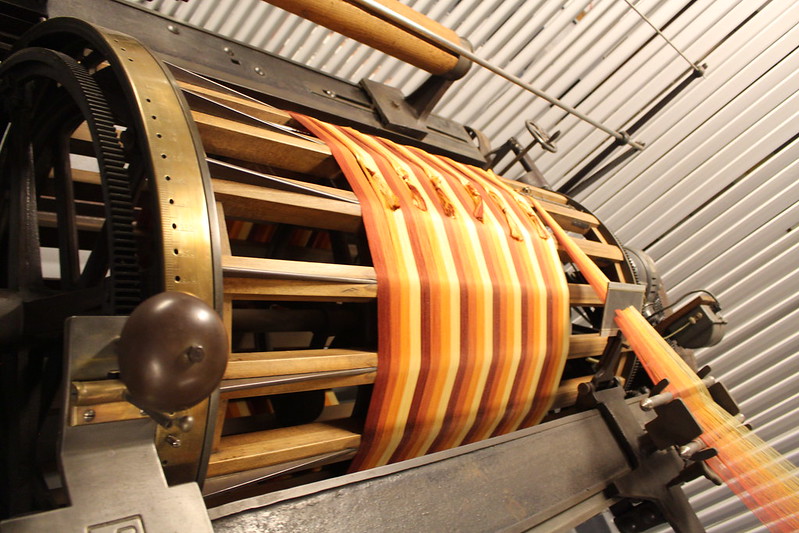
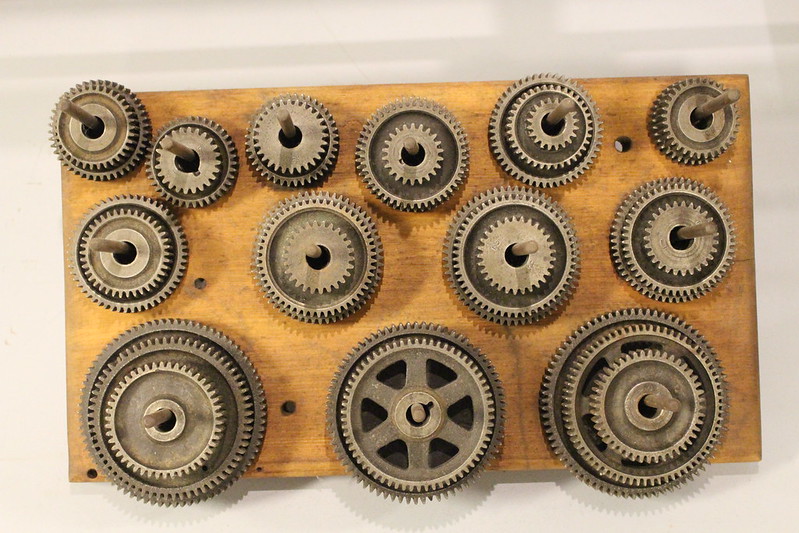
To only way to pay homage to Como being the end of the Silk Route was to end our trip to Como with a visit to it’s main museum – the Museo della Seta Como – situated on a 1,000 square metre block just outside the town walls. It is a walk down memory lane covering a century of history of silk manufacturing in Como (1850 to 1950) and the output in all its forms comprising donated machines and and material collected since 1985.



After spending some time in the town it was time to jump on a boat and explore the Lake and some of its 11 towns that cling to it’s shores.
References:
https://www.smithsonianmag.com/travel/silken-treasure-20586/
https://www.robertspublications.com/blog/last-days-of-the-war-in-como
 JKRoaming - Travel Blog
[…] spending sometime exploring the town of Como – it was time to jump on a boat and head up the lake. After Lake Garda and Lake Maggiore this […]
LikeLike